View from the Foothills of France

Some personal views on living, working,
bringing up family and making the dream happen in the most beautiful region of France. View from the Foothills of France also includes some personal and professional thoughts and tips on finding and buying the perfect property in the Ariège and Haute Garonne regions.

Archives

Categories

Five reasons (of many) to visit Toulouse

(With thanks to Lonely Planet Guide)
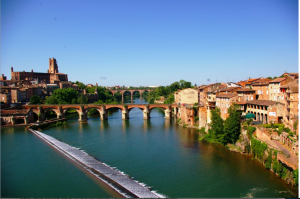
Toulouse river


Toulouse is one of France’s most historic and fascinating cities. Known to locals as La Ville Rose (The Pink City) after the distinctive pink stone used to construct many of its buildings, Toulouse is a cosmopolitan melting-pot that’s awash with culture, art, industry and architecture, not to mention some of the tastiest French food this side of the Côte d’Azur.

Explore this compact city on foot. Toulouse city centre is small and walkable, closer in atmosphere to a country town than a big provincial capital. With its elegant squares, atmospheric old town and lively covered markets, there are few cities which feel quite as authentically French as Toulouse – it’s like a southern version of Paris only smaller, cheaper and friendlier, with fewer crowds and warmer weather. Win-win.


1. Relax along the River Garonne

Toulouse’s greatest asset is its location on the River Garonne. The stately waterway bisects its city centre and is the heart of everyday life in the city. Flea markets and pop-up food stalls spring up along the riverfront several times a month and public parks sprawl along its banks, perfect for a picnic or an afternoon stroll.


2. Relics of the past in Toulouse’s old quarter

Toulouse was one of France’s most important trading cities and its merchants became fabulously rich. Their wealth can be seen in the delightful Vieux Quartier (old quarter), which centres around the fabulous place du Capitole – a vast public square covering two hectares, lined by lavish buildings including the city’s town hall and opera house.
The old quarter is a photogenic tangle of winding lanes and part-medieval streets. The most distinctive buildings are the stately mansions, which were built by the city’s rich merchants and nobles during the 16th and 17th centuries. More than 50 of these grand houses still survive, such as the Hôtel d’Assézat, now home to a prestigious private art collection. Though few are open to the public, their ornate facades, decorated with stonework and sculptures, provide a visual reminder of the great wealth that once flowed through the city.
The city also has several impressive churches to explore, most notably the Basilique St-Sernin, built between 1080 and 1120. One of France’s finest examples of Romanesque architecture, it is constructed from rosy-red brick and graced by an elegant spire and octagonal tower. The basilica contains the bones of St-Sernin himself and was once an important stop on the medieval era’s most important pilgrimage route.


3. Hearty southern French cuisine

Toulouse is best known for its food. This is the home of classic French country dishes such as cassoulet, a nourishing meat and bean stew, and confit de canard, duck that’s been preserved and cooked in its own fat. Many dishes also feature haricots blancs (white beans), a staple of southwest cuisine. The city even has its own trademark sausage – saucisse de Toulouse, made to the same recipe since the 18th century and now protected by its own AOC (appellation d’origine contrôlée – a certification granted to geographical indicators for French produce). There are also some very good tapas and Spanish restaurants – Toulouse has a fantastic Spanish vibe which shows in its food, culture and laid-back way of life

Toulouse has several atmospheric covered markets where you can soak up the city’s culinary culture. The best is Les Halles Victor Hugo, home to the city’s top food producers, many of which have been run by the same family for generations. Even if you’re not buying anything, it’s a fantastic place to experience the almost theatrical relationship France has with its food. Upstairs from the market are several bistros that serve traditional dishes. Go early as they are usually packed at lunchtime.


4. From astrophysics to art galleries

Toulouse’s university was founded in 1229 and is now home to more than 100,000 students. Many of them are drawn here by the city’s illustrious engineering heritage: Toulouse is the centre of France’s aerospace industry, home to one of the world’s largest aeronautics manufacturers, Airbus, which has its main base just outside the city (plane junkies can even take a guided factory tour – manatour.fr/Let-s-visit-Airbus-The-shop).
The city’s high-flying credentials go positively interstellar at the Cité de l’Espace (cite-espace.com), an innovative museum where the exhibits include a shuttle flight simulator and full-size replicas of the Mir Space Station and a 53m-high Ariane 5 space rocket.


5. Culture and Arts

It’s not all about planes and interplanetary travel, though; Toulouse has an arty side too. As its name suggests, Les Abattoirs was once the city’s main slaughterhouse, but it’s been redeveloped as an impressive gallery for exhibitions of modern and contemporary art. The Musée des Augustins focuses on more classical forms of art, encompassing eras from Roman right through to the 20th century. It’s housed in a former Augustinian monastery, which is a work of art in itself.
Toulouse’s passion for rugby

If you want to endear yourself with the locals, then make a mention of ‘Les Rouges et Noirs’ and you’ll immediately find yourself among firm friends. Officially known as Stade Toulousain (stadetoulousain.fr), the city’s rugby team is one of France’s most successful. Rugby is a religion in this corner of France and on match days the whole city covers itself with the team’s colours (red, black and white). Tickets for the games are like gold, but you can still soak up the atmosphere with a visit to its stadium, which has a museum and a good brasserie (this is France, after all).
Read more:  https://www.lonelyplanet.com/france/travel-tips-and-articles/toulouse-la-vie-en-rose-in-frances-pink-city#ixzz2yt6XlvBZ

Foreign buyers return to the French property market

IMG_5171

Following the disastrous local election results for President Hollande, he has sacked his cabinet and installed a Spanish born Prime Minister who has sworn to shake up and turn around the French economy. This positivity combined with the glorious Spring sunshine has created a sudden air of optimism in France and this seems to have already trickled down to the property market which is now ‘on the move’ according to the majority of agents and notaires who I work with here.

In fact, despite the fact that the economy in France is still performing poorly, the number of prime properties being sold is now growing according to the latest figures that have been released by Knight Frank which shows that sales are slowly starting to climb out of the doldrums.

Its report stated that the number of people applying to buy prime properties in some of the most popular areas of France is up by as much as 28 per cent. Meanwhile, the volume of viewings being carried out on prime French homes is up by 52 per cent. Demand depends on two factors apparently – ‘pricing and the area in which the homes are situated’ (aka location, so nothing new there).

Many of the people investing in the prime French market are those who have come from overseas looking for second homes – largely because pound and dollar investors can now get more for their money against the weaker euro which has spurred the level of demand in the last few months.

The arrival of Spring has also brought some interesting new properties onto the market, most of which appear to have been priced to sell – and selling they are. It appears that we suddenly have that perfect mix of market factors for any potential buyer; very low interest rates, reasonably and fairly priced property, realistic sellers prepared to negotiate and some very nice properties available for sale. I am now having to move fast for clients to ensure that I view before or as soon as a property comes on the market and I am having to view an increasing number of properties before being able to narrow down to those good enough for a short-list.

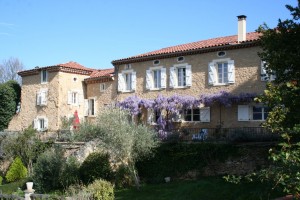
This lovely Mas pictured above, is a good example of one of the high quality properties now on the market at an excellent price. Set in almost 6 hectares with lovely views and no close neighbours and priced at 759,000 Euros, it is likely to be snapped up very quickly. For more information, contact: Jonathan Benn: jjbenn@mac.com or 00 33 6 32 63 58 38

The enduring popularity of the French farmhouse

P1120831

According to the latest Savills research in the UK, “buyers are feeling more positive about renovating houses and are again on the look out for big projects to do”. Couples in their forties are apparently the biggest spenders, and 82 per cent of them are keen to take on work in order to create their dream home and add value to a property.

The survey, which ranked popular house types in order of preference, also showed that the farmhouse has outstripped the manor house and the cottage to take the number one spot as Britain’s most desired type of property.

According to the report, “farmhouses have a comforting feel, they offer better value and more space with lots of potential to use the outbuildings as offices or holiday lets. Everyone wants a big farmhouse kitchen and a home which is flexible, informal and comfortable.”

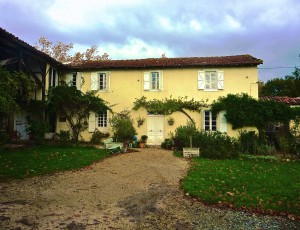
Which makes me think that the French property market is about to experience a housing boom or certainly in this part of the Midi-Pyrénées where we have more than our fair share of lovely, stone farmhouses with outbuildings, many of which would make fantastic renovation projects. There was a drift away from these in the last few years with buyers looking for smaller, renovated village properties but it appears that certainly the British love affair with stone farmhouses is far from over.

These are the figures which came out of the report:


The Farmhouse

  • Desired by 27% of buyers
  • Believed by 12% to offer growth in next five years
  • 54% think it has most potential to add value
  • The informality, the stone flagged floors, the jumble of barns and stables, the sense of working history, all make the farmhouse number one
  • It offers better value than a manor house, especially a renovation
  • Renovating means the chance to incorporate modern luxury within original features and character.

In the UK the average price of a farmhouse is between £500,000 and £2 million. Here is the foothills, a farmhouse for renovation starts at around the 100,000 Euros mark, and what’s more, you are likely to get substantially more land and woodland, you might well get mountain views, planning permission to convert outbuildings will be easier to obtain and you will get a great deal more sunshine. I know where I would choose to buy my farmhouse….

French house buying guide

Stunning Chateau currently for sale Haute Garonne

Spring has arrived in the Haute Garonne                         Chateau, 4,068m Euros

1.Making An Offer

Once the seller has accepted your offer on a property, the agent or your property finder will contact the Notaire to arrange for the first contract to be drawn up. Notaires are public officers in France, appointed by the Minister of Justice and, as such they are invested with a delegation of public power. The use of a Notaire is required to conclude a marriage contract, conduct real estate sales (due to the Land Registry), make a will, etc. The rules of ethics applicable to the Notaire mean they can act alone to represent two parties in a single act, such as the seller and the buyer of a property. However, either party may request their own Notaire, without increasing the cost of the operation: in fact, the notarial fee is essentially based on the act, so that if two Notaires are involved in the implementation of a sale or a mortgage loan, the fee is the same as if there had been one Notaire and will simply be divided between them. However, more often than not the seller and buyer will use the same Notaire for speed and ease.

2.The Compromis de Vente (Or Sous Seing Privé)

The Compromis de Vente or Sous-Seing Privé sets out the terms and conditions of the purchase and manages the schedule of the sale. Both parties become tied into the purchase of the property subject to various conditions – “Clause Suspensive” – that have to be met prior to completion, such as obtaining a mortgage, etc.  Once the conditions are met then the sale will occur.  If the conditions are not met, both parties become free of the engagement and the deposit is returned to the purchaser,

3.Seven-Day Cooling-Off Period

There is a seven-day cooling-off period after first contract stage, the signing of the Compromis. This starts on the day following signature of the contract if this is carried out in the presence of the Notaire in France.  If you are signing by power of attorney then the seven-day cooling off period starts the day after you sign for the recorded delivery containing the contract.  At any point during the seven-day cooling off period you are able to withdraw from the purchase without providing a reason and your deposit must be returned within 21 days of the date of the withdrawal.  The vendor does not benefit from a cooling-off period.  The deposit can be up to 10% of the purchase price and should be paid direct to the Notaire.

4.Surveys/Expertises

In order to do draw up the Compromis or Sous-Seing Privé  the Notaire must first have in his possession the obligatory surveys, all of which are at the charge and responsibility of the seller and for the information of the buyer. These surveys are:

lead/termites/asbestos/thermal efficiency/electricity & gas/drainage

General surveys are not common in France. The property is purchased in the condition that it is in on the date of completion. If the buyer requires a survey then this should be carried out before the end of the cooling-off period.  With the agreement of the vendor, it is possible to include a survey as a Condition Suspensive but this needs to be worded carefully in order to ensure that the buyer is protected if the results are unsatisfactory.  A general clause, subject to survey, would not be sufficient.

5.The Intermediate Stage

This follows the seven-day cooling off period and usually takes around three months. During this time the Notaire and his staff will carry out the various checks and searches and inform the necessary bodies of the potential sale.  During this period mortgages are also usually completed and issued.

The buyers’ responsibility at this stage is to provide the Notaire with any outstanding paperwork, such as birth and marriage certificates.  It is also the buyers’ responsibility to ensure the final balance is deposited in the Notaire’s account in time for the final Acte de Vente.

The sellers’ responsibility at this stage is to provide the Notaire with any outstanding paperwork, such as guarantees for any work on the property by registered artisans, as well as any invoices they may have that can be used against their capital gain – where applicable.

6.Final Stage, the Acte de Vente

The final stage is the signing of the Acte Authenique or Acte de Vente.  Funds need to be transferred to the Notaire’s account by the time of the signing and so it is advisable to arrange for this to occur allowing some leeway.  The seller should visit the property before the final signing.

The Acte Authenique is carried out by the Notaire with all parties present – unless a power of attorney has previously been established.  The Acte Authenique contains all of the information present in the Compromis de Vente as well as mention of all the notarial checks that have been carried out.

If the property is mortgaged then the mortgage will be paid off from the funds by the Notaire and the balance returned to the seller. If the buyer is purchasing with a mortgage, then this too is administered by the Notaire and will incur a further fee – calculated by the Notaire at the time of the Compromis de Vente.

Declarations will be made to the tax authorities by the Notaire.

Possession generally takes place immediately following the signature of the Authentique. If there is any delay with the seller’s moving, then there will be a clause in the Acte Authenique with a specified moving date and a daily penalty clause (clause d’astreinte) in order to ensure this date is adhered to.


Costs and Fees

Agency fees

Agency fees in France vary depending on the value of the property, but are generally around 6% and should be included within the advertised price – frais d’agence compris (FAI) but this is not always the case.

Notarial fees

These are around 6.5% of the purchase price but are not included in the advertised price.  These are in addition to the advertised price.

Mortgage fees

These are calculated on a fixed scale and are around 0.5 – 1% of the mortgage value. The Notaire will advise you of the approximate figure during the signing of the compromis de vente

VAT or TVA

This is payable by the vendor on any property that is under construction or that is less than five years old.