View from the Foothills of France

Some personal views on living, working,
bringing up family and making the dream happen in the most beautiful region of France. View from the Foothills of France also includes some personal and professional thoughts and tips on finding and buying the perfect property in the Ariège and Haute Garonne regions.

Archives

Categories

How to buy your house in France – some options

P1130954

1. The internet
A great way to start but also a great time waster; it is very easy to idle away many hours of time you haven’t really got looking at houses that frankly are not going to suit your needs. In France there are no multiple listing sites so you will need to trawl through hundreds of sites to come up with a list of potential properties and then spend many more hours trying to persuade agents to return your calls or emails and arrange viewings. If you manage that, the likelihood is that 95% of the properties you make the trip to view will be nothing like their descriptions and photographs and you will have to start all over again which is fine if you have all the time in the world…

2. Estate Agents Windows
This is a method that works in many countries but France does things differently. It is not usual practice to turn up to agencies in France and get given a handful of property details that you can go and scout from the outside or arrange to view then and there. Here, an estate agent will expect you to make an appointment in advance, lasting half a day or longer and will then show you what they have for sale by driving you around to what may turn out to be a variety of unsuitable properties. Remember that the estate agent is there to sell you a house and it doesn’t matter which one; he gets paid just the same. No agent in France will tell you the exact location of a property and let you go and have a look yourself – they are too worried about being cut out of the deal and that is just not the way things work here. And don’t expect them to keep in touch with you once you have left their office either.

3. Magazines
Not a bad way of narrowing down areas of France that you think you may like but, as a method of finding property for sale, these are becoming less useful as national agents will often advertise together properties they have for sale all over France and for all different budgets so the likelihood of finding the one for you in such a narrow selection is very small. Also, beware private advertisements in magazines because the owner’s pricing of their property can be a long way out from actual prices in the area.

4. Notaires
A Notaire deals with the property conveyancing side of buying a house but they can also act to sell properties and currently 15% of French property is sold via Notaires. However, while being good at the legal side of a property purchase, they are less good at the marketing so very few display property they have for sale or advertise them so you need to go in to their offices and ask them what they have for sale – and don’t expect glossy brochures or photos; usually they have a typewritten list with very few details at all and again, you will need to make appointments to view any that they have to sell on a day which suits them which may well be in three weeks time.

5. Property Finders
Property finders work exclusively for the buyer not the seller. They will start by asking you for a list of your most important criteria for your French property and they will then spend a few weeks, doing all the time-consuming research outlined above including looking at agency sales, notaire sales and private sales until they have a short-list of houses that meet your requirements. They will write up detailed reports on each possible property, provide you with expert advice and keep your search on track (it’s very easy to get carried away), arrange viewings to fit in with your timings and advise you on each area and village when you view. And finally they will negotiate the deal for you, ensure that you buy the right property at the right price and in the right location and hold your hand throughout the buying process.

Of course I am biased and it is clear which of these methods above I would recommend for anyone looking to buy a house in France so let me just finish by saying that the French property market is very specific; it is not the same as any other country in the world and it is very easy to waste a lot of time, energy and money looking for the perfect house in France if you don’t have a professional helping you through the process.
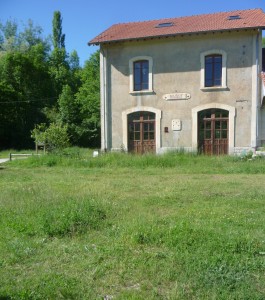
Houses with a cycle route attached – La Voie Verte

photo 2

France sadly had it’s Beeching moment as did many other European countries, predominantly in the 1950s and 60s, when train travel came to be viewed as an unprofitable business rather than a much needed service and hence many smaller lines were taken out of service. This of course resulted in many unintended consequences, the most obvious being an increase in cars and pollution and the isolation of many rural areas.

I am not going to start a rant on the subject here but rather focus on the far more positive recent regeneration schemes for ancient railway lines in both Europe and America. These have included wildlife havens and pedestrian walkways such as the High Line in New York or tourism projects where old rolling stock has been converted into various hand or pedal powered transport to be trundled along the old tracks in an eco-friendly form of sightseeing.

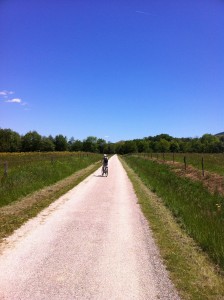
Here in the Ariège, already one of the most eco-friendly and most unspoiled regions in France, a co-ordinated project involving many local bodies and communities over four years and with four million Euros of investment has resulted in the transformation of the former railway between St Girons and Foix into a 42 kilometre car-free cycleway along the valley between the two principle towns of the region. This is a truly pleasurable bike ride, well maintained and safe with wonderful views for all ages and abilities of cyclists. Visitors can hire bikes from both towns and cycle the route in a day stopping en route for a picnic or to visit the many small villages along the route while locals can now safely jump on a bike to do their shopping without having to venture onto the road.

From a property point of view, what I found fascinating when cycling the route was the huge number of former signal boxes and small station houses that have now been turned into lovingly restored homes while retaining the ambience and character of a former time. I have never seen one of these buildings come up for sale so I imagine they are the kind of properties that have remained in the same family for generations and are passed on by word of mouth alone. I shall keep my eye out though as they have become a wonderful place to live with a cycle route on the doorstep so that anyone living here now has access to some of the nicest towns and villages in the Ariège and all by pedal power alone plus that dream of being able to pop out for a ‘baguette on a bike’ has now become a reality.

Or course it would be nice to still have a railway service in operation but at least something positive has resulted from that crazy political decision to close so many regional lines and this is the kind of project that really does improve the quality of life for so many people in this beautiful part of rural France.

More information on the Voie Verte here


P1130744

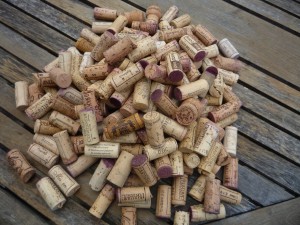
Another good reason to drink wine (sealed with a cork)

P1130758

This excellent article first appeared in France Today magazine and is reproduced here with thanks to Linda Johnson-Bell. See her website at: www.thewinelady.com

I am a huge fan of using corks in wine bottles; any natural and renewable material has got to be good in my book and I have been convinced for a long time that producers are turning to plastic corks and screw tops for their own benefit rather than that of the consumers despite their arguments as to the superiority of these manmade alternatives. So I was delighted to read this article and very happy to promote it in a blog that not only covers property but all aspects of living in France of which wine is, of course, a very important part. It is rare that I view a house without a wine cellar and hence I think that qualifies wine as a subject which has relevance here, albeit slightly tenuously.

The reason that screw caps for wine bottles were even brought into the equation is because natural cork was proving an unreliable and expensive material. With the boom in New World wine production and the ensuing overall increased consumption, such traditional cork regions as Portugal, could not keep up with demand. Errors were made and tainted corks seemed to be a bigger problem than before. In truth, taint was always a problem, but traditionally, consumers were able to simply return their corked bottles to their wine merchants for a refund. Today, consumers buy their wine from supermarkets, which usually means that ‘after-care’ and customer service is no longer part of the deal. However, the cork trade has caught up and is even way ahead: it is set to be one of the surest economies of the future.

Around 340,000 tonnes of cork are extracted annually from 2.3 million hectares of cork oak forests around the world, which go to make 12 billion stoppers. Portugal accounts for some 55 per cent of world cork production, with its 716,000 hectares of cork forest, exporting around 90 per cent of its raw material. This level of production ensures that both cork oak forests and the industry itself, which is perfect for arid and semi-arid areas, remain sustainable. In fact, regularly stripping cork oaks helps them to regenerate naturally and during this process, the tree absorbs, on average, five times more CO2. It is estimated that every year cork oak forests retain up to 14 million tonnes of carbon dioxide. Portugal reforests at a rate of ten thousand hectares per year, that is, an annual growth of around 4 per cent, with two new cork oaks being planted for each old tree.

I think that most wine lovers would agree that a real cork stopper will always win over a screw cap both for the enhanced experience and the extra element it brings to the wine. Thankfully, here in France, most producers still favour the traditional and all-natural cork so here’s hoping that it may be able to shake off that bad-guy image once and for all and become the norm once again.

Here’s why more and more people are using a property finder

P1090014

France remains one of the world’s most desirable locations but finding the right property here can be extremely difficult. In most other countries, there are one or two property portals which will list every property on the market with every agent and every private seller but that is not the case in France. Here, 50% of properties for sale will not even appear on the internet.

Agents operate very differently here too; you won’t be given a handy map with the exact location of the property marked on it because agents are far too worried that they will be cut out of the sale so property details will only give a very vague location, often not even the name of the closest village. Plus most agents give out only the most basic information about each property; certainly no ‘to-scale’ floor plans, nor even many photos (again so as not to give away the location or because photos are more likely to put off potential buyers). Which means you really do need to view a large number of very unsuitable properties here before finding ‘the one’.

And of course, agents are working for the seller and have the sellers interests at heart, not the buyer. We, on the other hand, work exclusively for you. We are not estate agents nor do we have a list of properties to sell – we act only for the buyer and we are completely independent so we can show you properties with every agent (we do not take any commission from agents and hence have no bias), as well as those being sold by Notaires or being sold privately or those not even yet on the market at all. We offer you expert and impartial advice throughout the search and buying process.

Not only do we find your property, we view and analyse it and report back on it to you, negotiate on the price to secure it and then help you through the buying process. We find the best property matching your criteria at the best price and best terms to match your needs, lifestyle, aspirations and budget.

Moreover, we know what the market is doing, where prices are going, what is good value and what is not. We are here, on the ground, tapped into the local property market with local knowledge and contacts knowing people, properties, prices and understanding what’s going on.

Many think that we provide our services only to the super-wealthy.  Not true, our clients have budgets ranging from €100,000 Euros upwards and we find and secure for our clients any type of property from renovation projects to manoirs, barns to châteaux, holiday homes to businesses and everything in between. If you want the best choice of property for sale in France within your budget, then you need a property finder.

You can trust us; we are fully registered, licensed, insured, part of the largest and best known network of property finders for foreign buyers in France and members of the French national association of property finders; FNCI (Féderation Nationale des Chasseurs Immobiliers) and, most importantly, we have a huge number of very happy past clients.

In an increasingly busy, competitive and international world, engaging a professional property buying agent to find your home in France is just good common sense and probably the best decision you will make this year if not ever.