View from the Foothills of France Some personal views on living, working,
bringing up family and making the dream happen in the most beautiful region of France. View from the Foothills of France also includes some personal and professional thoughts and tips on finding and buying the perfect property in the Ariège and Haute Garonne regions.
|
By nadia, on 24th March 2021 
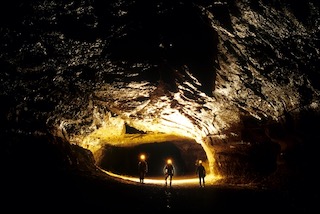
It seems that not everyone is fed up with lockdowns. On March 14th a team of volunteers – eight men and seven women – were sealed into a deep cave here in the Ariège for 40 days. They are part of a scientific experiment called the Deep Time project. It is the first of its kind in the world and is currently underway in the Pyrenees, in the Grotte de Lombrives, the largest cave in Europe by volume.
The experiment is part of a wide-ranging study into human behaviour; to study how humans manage and live together in completely unknown situations, and how the brain deals with time when there is no physical indication of its passage.
The Franco-Swiss leader of the experiment, Christian Clot, is one of the participants, and was inspired to set up the project having seen the problems of isolation caused by the COVID-19 pandemic. Hence the goal of observing the effects of long-term isolation, without any concept of time. “Losing time is the greatest disorientation there is,” according to the project’s website “And it is this aspect that the mission Deep Time wants to understand better. Because to this day, we do not know how our cognitive system understands and manages this indefinite continuity.”
The volunteers, including a jeweller, an anaesthetist and a security guard, from all over France are taking part in the project on a voluntary basis, without any compensation. Arnaud Burel, a 29-year-old biologist, agreed to take part in the mission “to get a taste of this timeless life, impossible outside with our computers and mobile phones constantly reminding us of our appointments and obligations,” he says.
They will have no source of light, no phones, watches, or any other method of knowing even what day it is and will have to get used to the 12 degrees and 95% humidity of the cave, generate their own electricity by means of a pedal system, and draw the water they need from a depth of 45 metres. They will also be equipped with an assortment of sensors that will allow a dozen scientists to follow them from the surface. The cave has been divided into three separate living spaces; one for sleeping, one for living and one for carrying out studies on the topography of the place, the fauna and flora in particular.
“This experiment is a world first,” Professor Etienne Koechlin, a neuroscientist at the École Normale Supérieure in Paris, said: “Until now, all missions of this type focused on the study of the physiological rhythms of the body, but never on the impact of this type of temporal rupture on the cognitive and emotional functions of the human being.”
The findings of the project could be relevant to future space missions, submarine crews, mining teams and other settings where people are enclosed for long periods.
The ‘Deep Time’ experiment began at 20:00 local time on Sunday, March 14 and, if all goes to plan, the volunteers will come back out on April 22.
You can read more about the experiment on the Deep time website here
Find more information on the Grottes de Lombrives here
If you would like help finding a property in France, please get in touch: nadia@foothillsoffrance.com
Like this:Like Loading...
By nadia, on 11th March 2021 
For many buyers, it is the perfect storm in the French property market right now. There are very few houses coming onto the market for sale, everyone seems to be looking for the same type of property and travel restrictions mean that international buyers cannot even get to France to do any viewings.
In addition, prices have been on the increase since 2015 and country properties particularly are selling at asking price and even above in some areas.
Despite the pandemic, at the end of 2020 the French real estate market had proved itself very resilient (Notaires de France latest report), and this trend is expected to be confirmed in 2021, driven initially by interest rates remaining very low and falling steadily since July 2020. Indeed, rates are currently very close to their historic low. And due to the dominance of fixed rate mortgages, France’s housing market is much less prone to sharp upturns and downturns than housing markets in other countries, where variable mortgages are a major source of instability.
In addition, since the start of the pandemic, there has been a noted change in demand for property away from the cities and towns and this is already having an impact on prices which are rising less quickly, for example, in the French capital than in the rest of France, something that has not happened since 2013.
According to the latest analysis of the French property market by the Notaires de France, there has been a shift among the urban population towards greener areas and a continuing and more permanent shift towards a real estate market that is more provincial, closer to nature and with more space, while still remaining connected. Whether this is merely the acceleration of a lifestyle change that was already in motion prior to the health crisis, a fundamental movement in the property market seems to be underway.
Foreigners are notably absent on the national map. The share of non-resident foreign investors is now close to its lowest level in 10 years but, interestingly, in the same vein as French residents, non-resident foreign buyers are also shifting their investment from urban centres to rural areas.
During the long housing boom which lasted from 1997 to 2007, French house prices surged by 150% (112.5% inflation-adjusted). Since then, the housing market has not moved much. It started to weaken in 2008 and while price falls were moderate, so too have been price rises since then. After falling by an annual average of 1.7% in 2012-2015, house prices started to rise again in 2016 as shown below.
| HOUSE PRICES IN FRANCE, ANNUAL CHANGE (%) |
| Year |
Nominal |
Inflation-adjusted |
| 2008 |
-3.75 |
-5.41 |
| 2009 |
-4.09 |
-4.44 |
| 2010 |
7.60 |
5.86 |
| 2011 |
3.68 |
1.20 |
| 2012 |
-1.96 |
-3.44 |
| 2013 |
-1.81 |
-2.44 |
| 2014 |
-2.52 |
-2.79 |
| 2015 |
-0.50 |
-0.59 |
| 2016 |
1.50 |
0.99 |
| 2017 |
3.25 |
2.08 |
| 2018 |
3.34 |
1.41 |
| 2019 |
3.78 |
2.67 |
| Sources: National Institute for Statistical and Economic Studies(INSEE), Global Property Guide |
Bear in mind, that the French property market is full of micro-markets so it is always very difficult to generalise and also, most importantly, French country property, despite having increased in price, is still better value than most other countries for similar quality houses. If you need help with your property search, please get in touch: nadia@foothillsoffrance.com
Like this:Like Loading...
By nadia, on 23rd February 2021 
Life has of course become more complicated since Brexit for British nationals living in France and for Brits wishing to move to France and live here permanently. But it is still entirely possible, there is just a bit more paperwork and a few more hoops to jump through than previously was the case.
You still have every right to buy a property in France after 2021; the difference now being that, since January 1st this year, British buyers are now non-EU citizens which means that for anyone wanting to move to France to live, you will first have to go through the immigration process as a ‘Third Country National’ and apply for a long stay visa known as a Visa Long Séjour valant Titre de Séjour or a VLS-TS. To do this, you need to apply in advance (leave enough time as it can take weeks or even months) to the French Consulate in the UK. To make an appointment, you need to go to this site: https://france-visas.gouv.fr/en_US/web/france-visas/
Expect to be asked for various documents such as
– Proof of medical insurance
– Proof of accommodation as to where you will be living
– Proof of funds
– Reasons for coming to France (to work or study/ join family members etc)
Once you have your visa and are in France, you have two months to apply for a non-European carte de séjour, as long as you fulfil certain requirements such as being able to support yourself financially. The website for applications is: https://www.service-public.fr/particuliers/vosdroits/N110
If you are hoping to move to France for your retirement, this is also still possible for British nationals, but you will similarly need to apply for a VLS-TS, and you will need to prove sufficient resources to support yourself and proof of health insurance. It is thought that income requirements for retirees will be lower than that of a working household and will take capital assets into account so for example, if you are a retiree who owns a home in France without a mortgage, you would be likely to have your visa approved.
If you need help with finding property and moving to France, please get in touch: nadia@foothillsoffrance.com
Like this:Like Loading...
By nadia, on 18th February 2021
This is an interview I did for a magazine that might answer a few questions about using a property finder and about the Midi-Pyrenées region:
Where in the Midi-Pyrénées are you based?
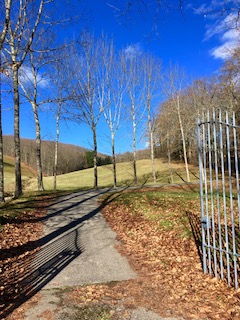
I am based on the border of the Haute Garonne and the Ariège, located an hour south west of Toulouse in the Ariège national park and the foothills of the Pyrénées mountains. It is one of the most unspoiled and authentic regions of France with stunning scenery, a mild and sunny climate and pretty villages set against the stunning backdrop of snowy peaks in the distance.
What sort of people hire a property finder?
I work with a varied clientele from all over the world, each with their own specific criteria and requirements. Nationalities of my clients include British, Australians, South Africans, Americans, Danish, Canadian and Dutch. Every client’s brief is different; some are looking for holiday homes, others are relocating with young families and hence require information on schools and local facilities while others are retiring and need advice on local communities and investing their nest egg wisely. Many of my clients have already spent a great deal of time looking, unsuccessfully, for their dream home, which is why they come to me and others are only too aware that they cannot afford the time and costs involved in doing a really thorough property search at a distance and hence hire me to do all the time-consuming and costly research for them. All of my clients want to have a professional on their side (just as the seller does) to ensure that they find the very best property for them at the very best price.
What attracts people to your area?
Where do I start? It has become a cliché to say that an area offers something for everyone, but I think it is true to say that it would be hard to find another region that ticks so many boxes for so many people. For nature lovers, this area is just teeming with unspoiled natural environment and a huge variety of fauna and flora while for sporting types, this same environment provides the perfect location for walkers, cyclists, canoeists, horse riders plus, in winter, there are numerous excellent ski resorts for all levels, most of which are an easy drive away from just about anywhere within my area. Most of my clients are, of course, Francophiles and there is ample opportunity to enjoy the wonderful food and wine of the region, numerous local markets such as that in St Girons which attracts people from miles around and the usual wide selection of restaurants serving local produce. In addition, we have, within an hour, the region’s capital, Toulouse which is a thriving and fashionable metropolis with all the culture, arts and shopping that anyone could want. An added bonus is that this region is perfectly located to make the most of Spain on the doorstep, an easy day trip away and to enjoy the best of both the Atlantic and Mediterranean beaches which are both around two hour’s drive.
What sort of budgets do your clients have?
There is a common belief that property finders are only for those with very large budgets but that is not the case in reality. I have worked with clients with all budgets and I will take on any search as long as my clients have realistic expectations as to what their budget will buy.
What sort of properties are available in your area?
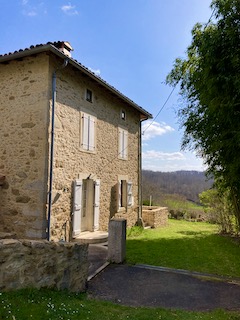
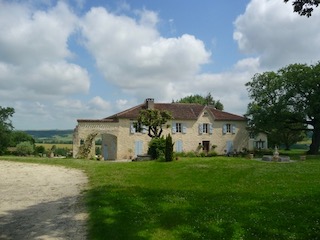
This is another advantage of the region; we have such a wide selection of properties here ranging from small village houses, to sprawling farmhouses and from renovation projects to ski apartments or mountain barns to Manoirs and Châteaux. Finding the right house in France, however, is about so much more than the actual bricks and mortar and a big part of my job is not only finding the right property for my clients but also the right location whether that be close to the best schools, best restaurants, best transport networks, best ski resorts, best doctors and all and any of those aspects of daily life that you can only discover either by living here or by working with someone who lives here.
For more information, please get in touch: nadia@foothillsoffrance.com
Like this:Like Loading...
|
For further information please contact us:
|


You must be logged in to post a comment.