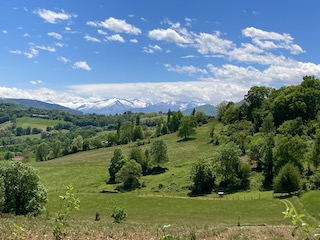
View from the Foothills of France

Some personal views on living, working,
bringing up family and making the dream happen in the most beautiful region of France. View from the Foothills of France also includes some personal and professional thoughts and tips on finding and buying the perfect property in the Ariège and Haute Garonne regions.

Archives

Categories

Buying a holiday home and visiting France post Brexit; what has changed?

There still seems to be a lot of confusion as to the rights of British passport holders looking to buy holiday homes in France post-Brexit (and also confusion for Brits coming on holiday to France).

Many people, especially those with second homes in France, have been used to coming and going without restriction but, post Brexit, Brits are now classed as Third Country Nationals, having lost our EU citizenship and hence the right to free movement.

The 90-day rule

With the ending of freedom of movement comes the 90-day rule applicable to non-EU nationals, which states that out of every 180 days, Third Country Nationals can only spend 90 days within the EU without a visa or residency permit. Note this is 90 days in Europe which means that you can’t just pop over the border to Spain on day 89 for a couple of days and then come back to France; the 90-day limit applies to the whole EU and Schengen zone, not just France.

So to clarify, as a Third Country National, you will be able to spend 90 days in every 180 days in the Schengen area. For example, if you arrive at your French house on 1 March, you can stay there until the end of May. Then you must return to the UK for another 3 months before you can travel again, so you would not be able to return to Europe before September.

What about if I want to stay longer?

If you want to stay in France longer than three months, your right to remain is subject to national immigration rules as follows:

1.Before you leave the UK you will need to apply to the French Consulate in the UK for a long stay visa.

2. Once in France, you have two months to apply for a titre de séjour. If you are retired or otherwise inactive, you apply for a card entitled ‘Visitor’ which doesn’t allow you to work. You will need to show evidence of ‘sufficient and stable resources’ – currently set at the minimum wage.

Just visiting

In addition, all British citizens living in the UK and wanting to travel to the Schengen area will need to register under the ETIAS scheme – the European Travel Information and Authorization System even when simply coming on holiday. This is a new and completely electronic system, expected to be in place later this year, which keeps track of visitors to the Schengen Zone. Its prime function is security, but it’s also designed to help manage borders and impede irregular immigration. Registration will have to be done online before travel.

So much for all those people out there who said nothing would change after Brexit….

If you need help finding and buying your home in France, please get in touch nadia@foothillsoffrance.com


Subscribers Please Note
My blog feed provider is changing which I’m afraid means that if you subscribe to this blog, you will need to re-subscribe (above right) please to continue to receive it in your inbox. I am very sorry for the inconvenience and please email me if you have any problems. Also, if there are any subjects you would like me to cover here, please do let me know

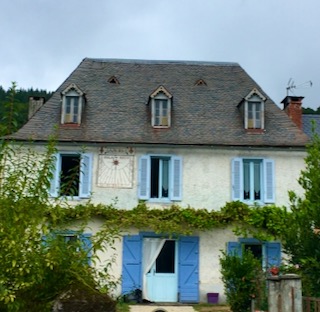
Paris gets closer to Toulouse

French Prime Minister, Jean Castex, announced last week that the long-promised TGV fast train link between Toulouse and Paris will be in service within 10 years. Work has been brought forward to start in 2024, five years ahead of schedule (and after 40 years of discussion). It means that the train journey from Toulouse to the centre of Paris will take just 3 hours and 10 minutes (it is currently 4h30).

Toulouse is the fourth most populated city in France as well as the fastest growing and it is the capital of the Occitanie region but it is also the last major French city currently not served by the TGV. Toulouse is often cited as one of the best cities to live in France for quality of life so, once connected by a high-speed train connection to Paris, it is likely to see a popularity boom akin to that seen in Bordeaux following its connection to Paris via the TGV. Many Parisiens are likely to be attracted by the ability to work in Paris during the week but live in south west France during the weekend and, likewise, Toulousains will certainly appreciate the ability to travel easily to the centre of Paris after work on Friday to spend the weekend.

Already more than 50.000 new residents arrive in the Occitanie region each year, making it the most sought-after region in France and this is expected to accelerate with the news of the TGV, hence causing an increasing demand for property everywhere directly surrounding and within an hour of Toulouse.

The Prime Minister has committed 4,1 billion Euros to the project and hopes to finance an extra 20% from the European Union. Overall, the line is expected to cost around 7 billion Euros and will cross four departments (The Haute Garonne, The Tarn et Garonne, the Lot et Garonne and the Gironde) covering a distance of 253km. The trains will travel at 320km per hour.

Paris here we come.

If you would like help or advice in finding your property, please get in touch nadia@foothillsoffrance.com


Photos do lie

Beware the tightly cropped photo

I have just completed part of my annual course which is obligatory for any business involved in property in France. Normally I do this sitting in a classroom over two days which, if nothing else, is good for my French. Sometimes these courses have proved to be useful but generally I find the most helpful element is just meeting people from other businesses and hearing their personal experiences and anecdotes. The legal side is always useful too.

However, since Covid I am able to enrol in a whole range of different online courses via a digital app. Things are changing in rural France! Hence, I spent all day yesterday in yet another Zoom meeting but this time with people from all over France learning all about property photography, video editing techniques and virtual viewings as well as other aspects of the French property market.

Most of the other participants on the course were estate agents or marketing professionals for property websites from all over France and, much as I don’t enjoy staring at a screen all day, it was interesting to hear experiences of the property market in the different regions of France.

Also interesting was to see the tricks of the trade of property marketing which are not much in evidence as yet here in this little corner of South West France but are clearly being used to great effect in other regions. This is particularly the case for photo editing and virtual tour/video tour creation. There is some seriously clever kit and software out there enabling all sorts of editing of photos including some that will clear everything off the surfaces of your kitchen, empty your garage and repaint your walls and hide that terrible rug. All virtually of course. Ugly, compromised or very untidy, unloved properties suddenly looked fantastic.

So what did I learn? Well mainly, that with some investment in hardware and software, I could take some very pretty photos and videos of properties I see when researching for clients. But that is the opposite of what I actually want to do. So most importantly I learned that photos can and do lie. As do videos. Everything you see online can be edited. And if it looks too good to be true, it probably is. All of this I have said before, but I can see that this is going to become more of a problem in the future as the technology gets better and better and when sellers become more technically savvy, and anyone can edit anything. And above all, it means that the chances of expectations exceeding reality is much greater and hence the likelihood of you being disappointed when viewing a property that you have seen online will increase in line with this clever technology. There is a very good reason why I will continue to send ‘warts and all’ photos with my property reports; like that my clients know all the potential downsides and disadvantages of every property before they visit and will know exactly what to expect and hence will not be wasting their time.

If you want all the information and to be prepared before you view, get in touch: nadia@foothillsoffrance.com


Subscribers Please Note

My blog feed provider is changing which I’m afraid means that if you subscribe to this blog, you will need to re-subscribe (above right) please to continue to receive it in your inbox. I am very sorry for the inconvenience and please email me if you have any problems. Also, if there are any subjects you would like me to cover here, please do let me know
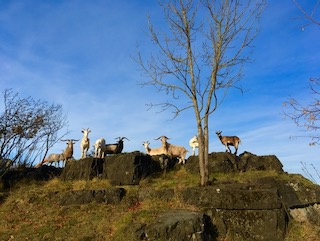
Anyone for cheese? Half a kilo per week if you are French

Did you know that you can study for a degree in cheesemaking in France? In fact, not only a degree but you can then follow it with a Masters as well. Cheese making is taken very seriously in France and considered a highly respected profession. I suppose it makes sense; France has one of the highest consumptions of cheese in the world at around 26kg per person per year. The figure is the equivalent to half a kilo a week whereas the British, for example, consume only 11.6kg per person per year.

And consumption of cheese increased even more during 2020, up by over 20%, presumably as the French sought comfort food during the pandemic. According to data from the French agency AgriMer, sales of cheeses produced from cows’ milk rose by 9.4%, organic goats’ cheese jumped by 32.2% and organic sheep’s cheese rose by 5.5%.

Former president, de Gaulle, is famous for asking: “How can you govern a country which has 246 varieties of cheese?” but today it is thought that, if you count varieties and sub-varieties, there are closer to a 1000 types of cheese in France. There are also 40 cheeses that have been awarded the Appellation d’Origine Contrôlée status (better known for wine), which means those cheeses, such as Roquefort, can only be produced in a certain region.

The most popular cheese in France is Camembert, closely followed by Comté. When pollsters ask the French for their view on having a meal without cheese, the most common response is “unimaginable” despite the fact that cheese in France is not cheap; the average cost is €20 per kilo. Remember too that, because the French take cheese so seriously, there are rules as to how it is eaten. Firstly, the French unlike many countries have cheese as a third course before the pudding course. Secondly and very importantly, you should slice it correctly depending on its shape: This means that, for round cheeses, you should cut pie-type wedges whereas for log-shaped cheeses, it should be parallel slices and, for square cheeses, you should aim for triangles. When it comes to wedge shaped cheeses such as Roquefort or Brie, you should cut along the side and certainly not cut off the ‘nose’ because the cheese develops differently from the centre outwards.

In this region, we predominantly have sheep and goats cheese usually made with unpasteurized milk by small producers from start to finish which are then sold at the local markets. Some of it is more expensive gram for gram than gold but that doesn’t stop the lengthy queues at the favourite stalls for those in the know as to the very best producers.

Cheese is not only a staple food in France but it is part of French heritage and identity; a way of life with cheese being eaten by 96% of French people (according to planetoscope.com). So while there has definitely been a rise in vegetarianism in the last decade in France and a steady reduction in meat consumption, prising the French away from their cheese looks unlikely to happen anytime soon and if you are looking for job security and a good income, going into the cheese business might well be the way ahead, in France at least.

Courses up to Masters level are offered at Les ENIL, Ecoles Nationales d’Industrie Laitière: https://www.enil.fr/metiers/fromage

If you need help or advice with finding the perfect property in France, please get in touch: nadia@foothillsoffrance.com