View from the Foothills of France

Some personal views on living, working,
bringing up family and making the dream happen in the most beautiful region of France. View from the Foothills of France also includes some personal and professional thoughts and tips on finding and buying the perfect property in the Ariège and Haute Garonne regions.

Archives

Categories

House-hunting out of season

Autumn in the Foothills – Betchat, Ariège

Traditionally late November is the start of the low-season in the property world; summer and autumn house hunters have usually found the home of their dreams or, if not, have decided to wait and try again in the New Year and somehow our thoughts turn to hibernation and home comforts rather than new horizons and starting over.

In this part of France however, late autumn and winter is a beautiful time of year with lots of sunshine during the day, followed by chilly evenings that provide the perfect excuse for hot chocolate in front of the fire. It is also an ideal time of the year to visit the region and discover it laid bare; no roses around the door, wisteria over the pergola and shimmering swimming pools to distract from the actual property and your list of must-have criteria which can all go out of the window on a perfect summer’s day.

The lovely thing about this area is that there are many thriving, all-year-round communities unlike so many places in France which literally shut up shop in the winter months. Before arriving here, we spent a winter living in an area that went into complete hibernation from November–March; every house was shuttered and abandoned, every restaurant closed and the few locals who remained barely ventured out. Hence it was a relief to find a region that does not rely just on summer trade and tourists, where people actually live and work all year long. Here of course we are only an hour from numerous ski resorts which means that the winter ski season is about to begin (it is beautiful weather down here but I am looking at fresh snow on the mountains). We are also only an hour from Toulouse which, like any city, has something going on at all times of year and whatever the weather.

The property market has been very busy here since the Spring and there are still a great selection of properties for sale at all budget levels, as well as some good deals to be had with sellers keen to accept an offer before Christmas so that they can move on in the New Year.

Finally, here is a list of the Top 20 property blogs which I discovered quite by accident – and as I am on the list (albeit at the very bottom!) I thought it would be a shame not to pass it on: https://www.quickmovenow.com/Top%20Property%20Blogs.php


Toulouse, ‘la ville en rose’

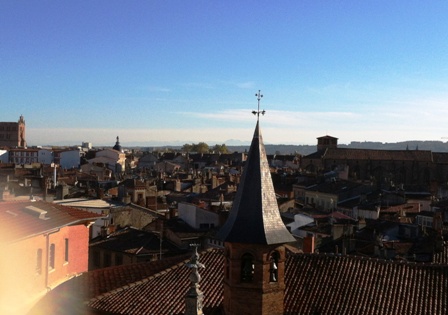
The Pyrenees viewed from central Toulouse

People choose this region for many and varied reasons but an oft cited one is the preference to be within striking distance of a vibrant and thriving city and Toulouse fits this bill perfectly.

Toulouse is one of the fastest growing cities in Europe and the fourth largest city in France (after Paris, Marseille and Lyon). Toulouse has been a major success story since World War II and whilst much of the world is seeing stagnation and unemployment, companies in and around Toulouse are expanding fast. The city has attracted a vast range of investment from companies in the high tech sector, the aeronautical industry and the medical world, including public and private sector investment in the largest cancer hospital and research centre in Europe, the Toulouse Canceropole.

A young and vibrant city with a strong economy, Toulouse is an important centre for education with a world famous university and more students than any other provincial city in France. It also has a strong Latin vibe thanks to its close proximity to Spain which inspires its architecture and its temperament. Also known as ‘la ville rose’ due to the predominant colour of the bricks, Toulouse is a major cultural centre, packed with museums, galleries and interesting architecture. This is a city that is a pleasure to visit; its transport system is exemplary, with a clean and efficient metro line and plenty of underground parking while much of the old centre has been given over to pedestrians and a popular bike hire system implemented. More and more of my clients are looking to be within an hour of this great city and it is easy to understand why.


It’s never too late

I just met a lovely couple, both in their 70s, who wanted some advice about moving out to France and buying a property here. They had always dreamed of living in France for as long as they could remember and they had talked about it many times. But each time they seriously considered making the move, something seemed to happen that persuaded them to put if off for another year or two.

So here they are now 75 years old, determined to finally fulfil that dream. Their children are grown up with lives of their own and there really is nothing to stop them making the move – except fear. But they have now admitted that it was exactly this fear of the unknown which has prevented them taking the plunge year after year and they refuse to let this fear control their lives any longer; it is time to turn that dream into reality.

They have decided to embrace the unknown with all the adventures such a leap may involve. Bad things and good things happen wherever we live and whichever path we choose but allowing fear to dictate the course of our lives means that we will never experience the highs and thrills that come with embracing new and unexpected opportunities; “if you can meet with Triumph and Disaster and treat those two imposters just the same…”

OK so I tend to leap first and then look but this couple have filled me with optimism for whatever the future may hold because, as they have proved, it is clearly never too late to just leap, follow your dreams and take charge of your life so that you never end up regretting un-followed paths and wondering what could have been.

Heating your house for free

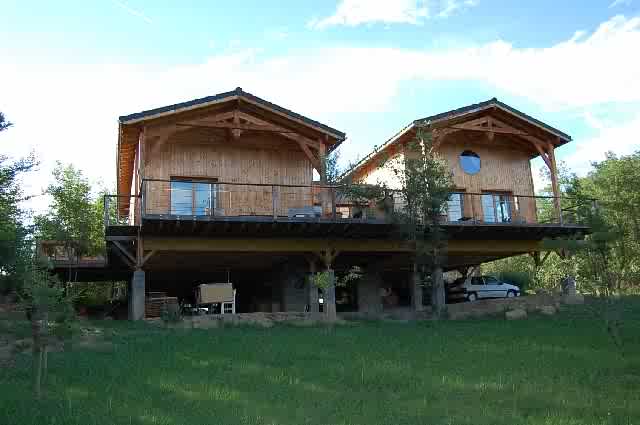
Future-proofed, ecological house near Aurignac, south-west France

A few years ago nobody was really interested in central heating systems when house hunting, especially not in southern France. The only question occasionally posed on viewings was whether a house had heating or not and whether it was actually necessary (yes). How things have changed – heating systems and energy efficiency is now recognized by sellers, buyers and governments as one of the major considerations and high on the list of criteria when viewing and buying property, even out here in sunny south west France.

Nowadays we are all looking for alternative ways to heat our houses that don’t involve increasingly expensive fossil fuels and finally we are all beginning to understand the importance of living a more ecologically friendly lifestyle. Worryingly, I am clearly getting old because I find myself now really quite fascinated by the various heating options that I am starting to see appear in many of the houses I view for clients and I have to admit to sometimes even getting a severe case of heating- system envy.

Old fashioned, stand alone oil or gas central heating systems are becoming rare; almost without exception (ruins excluded), most houses I view now have at least one wood burner and often a selection, usually with means of heating other rooms simultaneously. More and more houses also now have solar panels for hot water and increasingly for running low level heating systems, under-floor being the most usual. This makes so much sense in a region where we get a very high number of sunshine hours throughout the winter months and warm sunny days even in February but cold mornings and nights. And, more recently, I am seeing both geo-thermal and aero-thermal heating systems which appear to be fantastically efficient and cost effective, at least over the longer term.

Big properties clearly present the most difficult challenge when it comes to finding an affordable method of heating but are coming up with solutions which might well benefit us all in the future. In the last few months I have viewed three châteaux all with completely different heating-systems, each apparently effective and economical as well as ‘green’:

The first had a state of the art, wood-fuelled central heating system; effectively a huge wood-burner but on a much larger scale than usual (we are talking twice the size of a standard oil tank located in the outbuildings) connected to a huge boiler. The burner was filled with logs from the grounds once a week and then comfortably heated a 20 room Château.

The second was a large biomass boiler linked to a huge storage tank in the ground that was filled with all sorts of natural forest waste, branches, leaves, walnut shells, bark etc collected from the land around and belonging to the Château. A huge cork screw system ensured that there was a continual supply of fuel pushed through the system, controlled by a thermostat; hence heating this huge property to a really comfortable level all winter practically for free.

Thirdly, just last week, I viewed a huge manor house/château that had decided on the pellet burner option but on a far grander scale than I had seen before, with an enormous storage hopper for pellets in the adjoining barn that was filled a couple of times a year directly from a delivery lorry to fuel the heating system that was fed automatically by a pump, heating the house at a tenth of the cost of the previous gas system.

Of course, none of these options are cheap to install; each cost well over 30,000 Euros and all rely on an abundance of large outbuildings for boilers and hoppers and, in the case of the first and second property, land and trees to provide the fuel. But, as a long term, ecologically friendly and affordable way to stay warm, these systems all have a lot going for them and will undoubtedly become more refined, efficient and cheaper over time.

It again makes me realize how lucky we are to live in this region with its plentiful wood supply, year-round sunshine, an abundance of spring and mountain water available for hydro-electric systems and masses of available land for growing and providing natural fuel. More by luck than judgement, we live in an area where we have the resources to heat our houses sustainably and in harmony with the environment as long as we learn to innovate and make the most of and replace what nature has so kindly provided us with here.