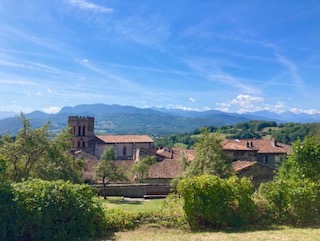
View from the Foothills of France

Some personal views on living, working,
bringing up family and making the dream happen in the most beautiful region of France. View from the Foothills of France also includes some personal and professional thoughts and tips on finding and buying the perfect property in the Ariège and Haute Garonne regions.

Archives

Categories

Things to consider when retiring to France

France is still the retirement dream for many people and although Brexit has made it a little more difficult and marginally more expensive to move to France in retirement, it is by no means impossible.

Despite Brexit, the French government has a lower requirement for income than most other European countries. Moreover, UK pension rights were retained in the Withdrawal Agreement which means that even after Brexit, a British retiree can carry on receiving their British state pension which will continue to increase each year in line with the rate paid in the UK. In addition, British state pensions and private pensions can still be paid into EU bank accounts.

Be aware, however, that any private pension lump sum payable on retirement is taxable in France unlike in the UK where the first 25% is tax free. In addition, Brits applying for a retirement long-stay visa to France are required to prove that they have income or funds equivalent to the French minimum wage which, in 2022, is €19,237 a year before deductions for tax and social contributions; equivalent to a monthly net income of €1,266. This applies to individuals, or couples and the income can be from any “resource”, which includes any type of accessible capital.

Most British pensioners pay tax in the UK, but you should still make an annual tax declaration in France and declare your pension income. Under the double taxation agreement between the two countries, you will not be charged twice, and the French taxman will assess your tax liability accordingly.

Although straight-forward, it is always worth taking financial advice when retiring to France just as it is when searching for the right property.

If you would like help with your move to France, please get in touch: nadia@foothillsoffrance.com
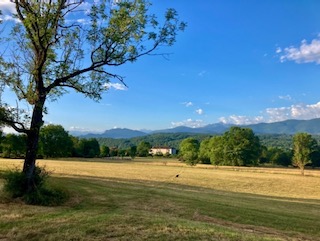
How to trust your instincts when searching for a French property

The internet has in many ways proved a boon for house hunters in France making it possible to browse numerous listings and arrange viewings from the comfort of home instead of trailing around numerous estate agents in different towns and departments to view wholly unsuitable properties.

The downside, however, is that there is now so much information available out there that it can be frightening. Every possible pitfall is outlined in all its detail and every disaster that might befall you when buying a house shows up during any search about French property. So much so that I know buyers who have abandoned their dreams of a home in France completely because of fear that there might be something wrong with the house or the location or the neighbours……

The list is endless and there are, of course, numerous potential problems and difficulties, just as there are buying a house anywhere, or making any important decision in fact.

But then fear of something going wrong sucks the joy out of every opportunity; sometimes we just have to make the leap – or not leap at all and most likely regret it. When it comes to buying a house in France, it is the start of an adventure and of course there are risks, that’s why it is an adventure. But there is also so much to be gained and so much joy to be had. Daring to move out of our comfort zone is all about expanding our experiences so that life becomes bigger, more interesting, more colourful, more fulfilling.

I’m not advocating jumping first and looking afterwards of course. It is always worth doing your research and taking professional advice but don’t believe every story you read and remember that there is only so much you can research and so many boxes you can tick before you decide to take the plunge. It may be a cliché, but it is almost always true that we finish by regretting the things we didn’t do, not the things we did.

If you would like to discuss your property search, please get in touch: nadia@foothillsoffrance.com
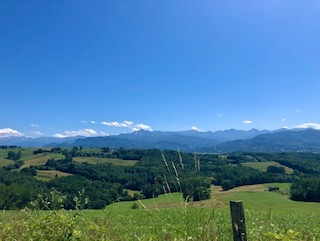
Choosing a French property with climate change in mind

After an unprecedented hot summer across much of Europe, there is no doubt that many of us are reviewing how and where we want to live in the future to deal with the sad reality of climate change. Raging wildfires, droughts, flooding, and dangerous high winds seem to be increasingly regular occurrences which can only lead to a greater emphasis not just on how we live but also where.

In the past, many people, particularly those from more northern climes, have dreamed of owning a house in the sunshine of the Côte D’Azur or amongst the lavender fields of Provence. Demand, however, is now strongly shifting towards regions with more rainfall and less extreme summer heat as everywhere gets hotter and drier and weather patterns more pronounced.

Of course, nowhere is immune from climate change but, when deciding where to buy a property, it is worth looking at the average temperatures throughout the year, particularly the peaks and troughs as well as the yearly rainfall in order to get an idea of the weather trends in the area. For example, if there are lots of wind farms on a ridge along a valley, you can be sure that there are no shortage of windy days, such as for example in parts of the Languedoc (where the Tramontane blows frequently) or the Provence region (where the Mistral blowing down the Rhone valley is famous for sending people mad).

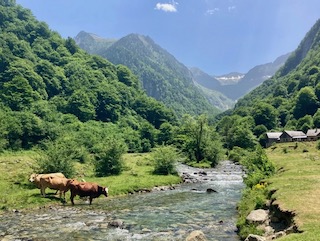
Personally, I would also choose an area with predominantly pasture rather than crops (generally a sign of plenty of rainfall), mixed, natural forests (unlike regions where pine forest plantations have allowed wildfires to spread fast and uncontrollably this summer) and plenty of rivers and streams. And I like to see mountains on the horizon too because sometimes just the sight of snow on very hot days can make you feel cooler and we also benefit from lower night time temperatures thanks to the breeze trickling down from higher up.

In terms of choosing a house, for both extreme heat and cold, old stone properties have much better natural insulation thanks to the thick, stone walls meaning they stay much cooler in summer than new houses and also retain the heat in winter. Plus, shutters are not just to look pretty, they do a fantastic job of keeping the heat out or in depending on the time of year. A north facing terrace in summer is also vital; much as it is lovely to sit and face south, looking at the mountains in winter, in summer you will appreciate being able to relax in the shade on the northern side of the house.

So just a few more things to think about when choosing a region and a house either for a permanent home or a holiday house. If you would like some help or advice, please get in touch: nadia@foothillsoffrance.com

Where to live in south-west France

The Ariège, the Haute Garonne and the southern Gers stretch south and west between Toulouse and the Pyrenees to make up one of the most enticing and enchanting regions in France. This is an area that really does have it all, from rich culture, history, natural wonders, stunning landscapes, mountains, lakes, rivers and valleys, and gastronomic excellence. Whether you are looking for the urban sophistication of Toulouse, the charm of traditional French village life or the unspoiled natural valleys and pastures of the Pyrenees, you will find it here in one of the most beautiful regions in Europe

With 2,000 hours of sunshine on average per year, this is also one of France’s sunniest regions. Spring comes early with the spring rains ensuring a lush and green landscape followed by the intense sunshine of July and August which is often very hot and then a beautiful autumn season which continues until the first mountain snowfalls which often remains on the highest peaks through until the end of June.

The green valleys and mountains are a huge attraction for those hoping to enjoy the great outdoors. In summer the whole region is an accessible paradise for walkers, cyclists, horseriders and climbers who come to enjoy the beautiful and unspoiled landscape. In winter, when the Pyrenees are blanketed in snow, these are replaced by skiers and walkers with raquettes (snow shoes) or families with sledges.

This region is also a fantastic location for exploring not just south-west France but also Spain and Andorra. Within easy reach are mountains, wild Atlantic beaches or the sunny Mediterranean coastline. You really can sit on a beach, ski in the mountains, eat tapas in Spain and explore the markets and historic towns and cities of rural France all in a weekend.

If you would like some help or advice with your property search, please get in touch: nadia@foothillsoffrance.com