View from the Foothills of France

Some personal views on living, working,
bringing up family and making the dream happen in the most beautiful region of France. View from the Foothills of France also includes some personal and professional thoughts and tips on finding and buying the perfect property in the Ariège and Haute Garonne regions.

Archives

Categories

Changes to French capital gains tax on second homes

FROM GARDEN

Since January 2015 capital gains tax (CGT) on second homes in France has been reduced to 19% instead of 33.3% for all non European residents bringing it in line with the CGT for residents of European countries including French residents.

The way CGT is calculated in France is that the 19% ‘tax’ component decreases with time from the 6th year onward to a complete exemption after 22 years, while the 15.5% ‘social charges’ component decreases slowly from the 6th to the 21st year and more rapidly after, up to a total exemption after 30 years of ownership of your French house or flat.

In addition, the ‘social charges’ component of 15.5% is being  challenged and  the European court of Justice should reach a decision during 2015. If the court considers that non tax resident who own a property in France should not pay the 15.5%, the French state might have to refund the non-resident tax payers. It is, therefore, very important that you keep your tax role, wherever you live whether in a European country (except France) or a not.

There is no CGT if your home in France is your main home where you live permanently as long as you are a French tax resident. If you do not live in France and/or do not pay your main income tax in France you are a non resident and therefore you are liable to pay CGT when you sell your French home. If you are a tax resident of a European country, you may benefit from a CGT exemption on up to 150 000 € of capital gains under specific criteria. Please note that financial and tax laws in France are constantly changing so it is vital to take professional advice.

As ever, I would always recommend having a professional on your side when buying and selling property in France. If you would like to talk through your purchase in France, please get in touch; nadia@foothillsoffrance.com

The French property hotspot of 2015

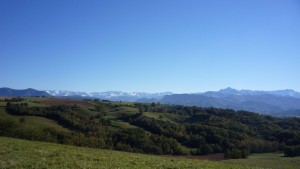
View for blog

As far as French property prices are concerned, the Ariège region, which has historically had a very stable (and incredibly good value) property market, is seeing a gradual rise in prices. Last year, the Ariège had one of the largest property price rises in France according to the association of Notaires in France. This is perhaps down to the fact that foreign buyers have started to discover this beautiful region and all it has to offer. Buyers daring to cast their nets that little bit wider have discovered what beautiful properties, fantastic opportunities and great value is still to be had in the Ariège. So much so, it is threatening to become the property hotspot for 2015. Property here is still very affordable, but that may not continue for much longer.

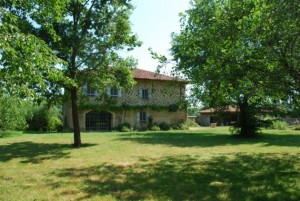
Top of the property wish list of those looking to buy in the Ariège are stone-built farmhouses which are still to be found for attractive prices. These properties usually have great views with the Pyrénées as a backdrop and are generally positioned to make the most of the summer sun and protect from the winter chill. Built from stone, they are usually spacious and come with outbuildings and a good amount of land.

For those wanting a project, it is also still possible to find plenty of houses needing renovation here which is becoming more difficult in other areas of France. In addition, many investors are looking to buy property large enough to run holiday accommodation – interestingly, the Ariège must be one of the last few remaining areas of France where there is actually a shortage of holiday letting accommodation, particularly close to St-Girons. Setting up a gîte or bed-and-breakfast with your new French property may prove to be a very sensible business decision and offer good returns on your investment.

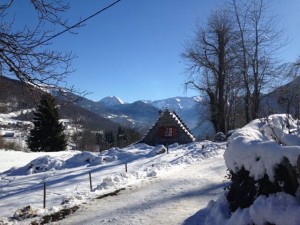
For everyone interested in mountain sports, it is still possible to buy a wooden shepherd’s hut in the mountains, minutes away from the ski slopes and walking and biking trails and complete with stunning views. Agriculture has always played a crucial role in the economy of the Ariège and thus the valleys and hills are dotted with their characteristic stone barns with the typical ‘ardoise’ slate roofs. Nowadays, many of the barns have been converted into lovely, characterful homes or into luxury ski chalets but there are still a few unconverted barns available for sale although these properties are becoming more and more sought after. However, that dream of owning a chalet or mountain retreat is still achievable in the Ariège… at the moment.

Barn in snow

It seems that the secret of this undiscovered and very special region is out so if you don’t want to miss your chance, maybe now is the time to discover the beautiful Ariège. If you need some help finding your perfect house in an idyllic location, please get in touch: nadia@foothillsoffrance.com

What to look for when viewing a house in France

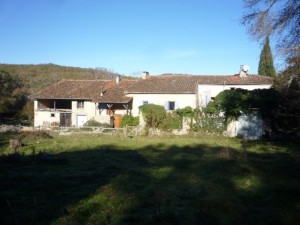
P1130091

Viewing your potential dream home for the first time is one of the most exciting aspects of house hunting. There are, however, a few things to bear in mind during and after a viewing to help you decide if it really is the house for you.

1.Location first
Most things about a property can be altered – apart from its position and the amount of natural light it enjoys. Consider these first. In which direction does it face? What does it look out on and how noisy is it? Turn the lights off to get a good idea how light the house actually is. Make notes as you go – you think you will remember but you won’t.

2. Be nosey
Be aware that you will likely be seeing the property in its most attractive state. Assess the shell of the home – not the lifestyle or taste of the current occupant. Don’t be afraid and open doors and cupboards, check the water pressure in the shower and so on.

3. Overall look
Is the house clean and obviously looked after? If so, it is likely that it has also been well-maintained and hence there is less likelihood of any nasty surprises later on.

4. Irregular rooms
Watch out for irregularly shaped rooms and think about how you’d use each space. Is there enough space for all your belongings and will there still be enough space in a year or three’s time?

5. Manners
Don’t pretend to be interested if you’re not. Be polite but no need to be over friendly. You might end up in a heated negotiation and it won’t help if you’ve upset them at the start.

6. Communicate with your property finder or agent
Always tell your property finder the truth about what you thought about a property. Property finders need feedback in order to develop a more detailed picture of what you are looking for.

7. If you’re genuinely interested, start asking questions
Have any alterations been made? What fixtures and fittings are included? How long have the owners lived there? How long has it been on the market? Have there been any offers? The more information you have, the more confident you will be.

8. Do a second viewing
Second viewings are vital as this is when you really start to see the house as it really is and yourself living there. Ideally the second viewing should be at a different time of day from your original visit. In summer, when it is unlikely you will ever see a property after dark it can be an idea to make your second viewing as late into the evening as possible. It is not just light levels that alter with the time of day, so do traffic levels and neighbour noise levels.

Of course, when buying a house, you have to have the right feeling about it and I see time and again how a property can tick every box on the wish-list and yet just not ‘feel’ right when the buyer views. This is the advantage of using a property finder who will have already pointed out all the pros and cons of each property and make sure it ticks all the boxes so that, armed with all the relevant information, you can at least feel confident in letting your feelings take over when you view.


House-hunting tips from the experts

Yoga centre

Here are five house hunting tips from my colleagues in The French Property Finders network:

1. The internet is a handy research tool and a place to begin but there is no substitute for getting out there and viewing houses – lots of houses. Usually our property finders will view up to 80 houses before narrowing down to a short-lit of about eight. In my experience, all those hours trawling property sites on the internet so often turn out to be a waste of time as, more often than not, the houses shown are no longer available (sometimes they never were) or are pictured carefully cropped so as to hide the noisy road, railway line or sewage farm. It is very easy to idle away many hours of time you haven’t really got looking at houses that frankly are not going to suit your needs. In France there are no multiple listing sites so you will need to trawl through hundreds of sites to come up with a list of potential properties and then spend many more hours trying to persuade agents to return your calls or emails and arrange viewings. If you manage that, the likelihood is that 95% of the properties you make the trip to view will be nothing like their descriptions and photographs and you will have to start all over again which is fine if you have all the time in the world…

2. Estate agents – this is a method that works in many countries but France does things differently. It is not usual practice to turn up to agencies in France and get given a handful of property details that you can go and scout from the outside or arrange to view then and there. Here, an estate agent will expect you to make an appointment in advance, lasting half a day or longer and will then show you what they have for sale by driving you around to what may turn out to be a variety of unsuitable properties. Remember that the estate agent is there to sell you a house and it doesn’t matter which one; he gets paid just the same. No agent in France will tell you the exact location of a property and let you go and have a look yourself – they are too worried about being cut out of the deal and that is just not the way things work here. And don’t expect them to keep in touch with you once you have left their office either. Agents operate very differently here too; you won’t be given a handy map with the exact location of the property marked on it because agents are far too worried that they will be cut out of the sale so property details will only give a very vague location, often not even the name of the closest village. Plus most agents give out only the most basic information about each property; certainly no ‘to-scale’ floor plans, nor even many photos (again so as not to give away the location or because photos are more likely to put off potential buyers). Which means you really do need to view a large number of very unsuitable properties here before finding ‘the one’.

3. A professional on your side – The seller has the agent working for them, on their side. Property finders work exclusively for the buyer not the seller. They will spend weeks doing all the time-consuming research, write up detailed reports on each possible property, provide you with expert advice and keep your search on track (it’s very easy to get carried away), arrange viewings to fit in with your timings and advise you on each area and village when you view. And finally they will negotiate the deal for you, ensure that you buy the right property at the right price and in the right location and hold your hand throughout the buying process.

4. Private sales – buying privately can be an appealing route to take but it’s important that you understand the French property market first. 30% of people buy French property privately (entre particuliers). This rises even higher when you take just French buyers/sellers into account.  Websites like www.pap.fr or www.entreparticuliers.com are widely used. The most common reason people buy French property privately is to avoid estate agency fees. These vary between 5% and 10% depending on the the sale price.

5. Local knowledge and expertise – We are here, on the ground, tapped into the local property market with local knowledge and contacts knowing people, properties, prices and understanding what’s going on. Moreover, we know what the market is doing, where prices are going, what is good value and what is not.
Many think that we provide our services only to the super-wealthy.  Not true, our clients have budgets ranging from €100,000 Euros upwards and we find and secure for our clients any type of property from renovation projects to manoirs, barns to châteaux, holiday homes to businesses and everything in between. If you want the best choice of property for sale in France within your budget, then you need a property finder.

In an increasingly busy, competitive and international world, engaging a professional property buying agent to find your home in France is just good common sense and probably the best decision you will make this year if not ever.