View from the Foothills of France

Some personal views on living, working,
bringing up family and making the dream happen in the most beautiful region of France. View from the Foothills of France also includes some personal and professional thoughts and tips on finding and buying the perfect property in the Ariège and Haute Garonne regions.

Archives

Categories

France is top of the pops again for property

IMG_3089

France has regained top place in the poll of the best place to emigrate published by the Overseas Guide Company (OGC). France was followed by former favourite, Spain, then Greece, Cyprus, Italy and Portugal, while Australia and New Zealand waned in popularity.

The survey suggested that people wanted to be closer to home and family, even though they are emigrating. The OGC which bases its predictions on requests for information found that 33 percent of all the enquiries were for France.

One major reason is that the euro has weakened considerably in the past few months and getting a mortgage in France has never been cheaper.

France is still largely regarded as a safe place to invest in property and, with some very negotiable prices around, many buyers are taking advantage of the opportunity to benefit from the excellent value properties of a style and quality that they perhaps cannot afford at home.

In this part of France, there is a notable upsurge in the number of buyers and buyer confidence. Interestingly current demand is for the Southern Gers region where some of the best value properties are to be found so there are clearly some canny buyers out there. However, properties are selling much more quickly than in the last few years so don’t hang about if you do find your dream home.

If you need any help with your search, please get in touch: nadia@foothillsoffrance.com. For more details about my service, click here: how the search process works
The Festival of Music in France

P1040979

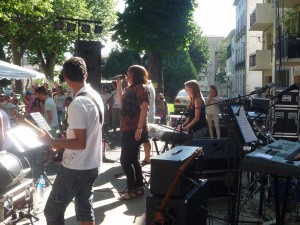
Summer here in France begins with the sound of music. The 21st June marks the date not only of the first day of summer but, more importantly, of the public celebration of music and arts that is the Fête de la Musique. Launched in 1982 by the then Minister for Culture in order to promote music for everyone, it has become a much loved and celebrated festival all over France and has also spread to hundreds of other countries around the world.

On the 21st June from midday to midnight, just about every town in France will have some sort of event or concert taking place and all genres of music on the streets, in the squares, in public buildings, parks, stations and castles along with, of course, plenty of good food, wine and merrymaking. The department of the Ministry of Culture in charge of promoting the Fête de la Musique requires that all concerts must be free to the public, that all performers donate their time for free and that it be open to any musician, amateur or professional, who want to perform in it (hence the quality of the music on offer can vary hugely!) The aim of the Fête is to attract as large an audience as possible and to popularise every kind of music from classical to rock, jazz to fusion, latino to choral, for everyone of all ages and from all backgrounds.

P1040993

Furthermore, the Fête de la Musique is a way to encourage the major music institutions (orchestras, operas, choirs, music schools) to perform outside their usual location and to develop exchanges between city centres and their outlying areas, to offer concerts in hospitals or in prisons, to promote encounters and exchanges between young musicians and well-known talents and to encourage a love of music of every and any kind.

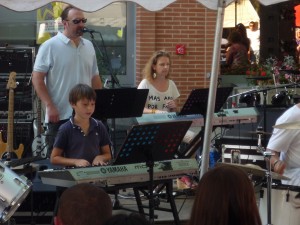
These photos are from the St Girons Fête de la Musique 2015; a fantastic evening with a great atmosphere (and very talented young musicians but I might be biased here!) The weather was perfect, café and restaurant terraces were full to bursting and there were an eclectic mix of bands and music to suit every taste; summer feels as if it has well and truly arrived.

The next French property hotspots

IMG_8189

According to the latest Rightmove Overseas Search Report, France was the second most searched for country on the website for overseas property and the Midi-Pyrénées was the most searched for department with 43.34% of people looking for property in this region – which might explain why I am so busy right now. In addition, the areas of the Midi-Pyrénées which are currently the most sought-after happen to be the Haute Garonne, the Gers and the Ariège, all areas that I cover and which makes me think that the secret might be out.

While this part of France appears to be growing in popularity, property prices still remain in line with the national average across the country. According to the Notaires de France, the current average property price in France is €156,800 and this rises to €157,000 in the Midi-Pyrenees. In this latest report, it is noted that interest is growing in these regions as the smart money looks to invest in a region of France that offers excellent value for money, is very accessible with a great climate and was also voted last year as having the best quality of life in France.

It is also a region that offers something for everyone which is why it is possible to find the perfect property for those clients looking for Chateaux, those looking for converted farmhouses and those looking for mountain barns or ski apartments all with hugely varying budgets. If you would like some help with your property search in this region, please do get in touch: nadia@foothillsoffrance.com

Everything including the kitchen sink

What constitutes fixtures and fittings in a French property sale?

DSC02618

There is no clear legal definition in France between fixtures and fittings in a property sale which can cause last-minute complications between buyer and seller.

In fact, very often in France, seller and buyer leave unstated exactly what is to be included in the sale. This doesn’t always cause problems and sometimes, the buyer can be pleasantly surprised at just what the seller has left behind. On the other hand, it can come as a shock to arrive in your new home and discover that the whole kitchen has been removed (including the kitchen sink) which does happen or that not a single light fitting remains – more irritating than anything but not welcome if you happen to arrive in your new home in the evening.

The result is that when buyers move into their new home, they sometimes feel short-changed about the extent to which the property has been stripped of what they considered to have been ‘fixtures’. Fitted bedroom furniture and kitchens in particular are often a source of uncertainty in law and between buyer and seller.

Another potential grey area concerns wood burners, particularly if the wood burner itself is removed, and the flue left in situ. The same level of uncertainly applies to garden sheds that may not be built on a concrete foundation.

So the golden rule in these matters is to ensure that the sale contract makes clear just what is to be left in the property, something I always insist on for clients.

Recently I was doing a final check of a property before signing the Acte de Vente on behalf of a client in Australia when I noticed that the lawn tractor agreed in the deal appeared to have aged considerably since I last saw it. Luckily I had taken photos and was able to check back and discover that indeed not only was the tractor in the shed much smaller and in far worse condition than the one in the photo but it was also a completely different make. Of course, this wasn’t too difficult to sort out and as soon as I had told the Notaire that I wouldn’t be signing until the agreed tractor had reappeared, sure enough it was back in the shed within the hour and we could complete the deal but I was certainly glad that I had compiled a list of goods included in the sale and also had photographic evidence.

In addition, if fittings are to be left in the property, then another advantage of making a separate inventory of such items in the sale contract is that their value can be reduced from the purchase price of the property, which in turn reduces the level of fees and taxes payable to the Notaire. As ever, it is best to have a professional on your side.