View from the Foothills of France Some personal views on living, working,
bringing up family and making the dream happen in the most beautiful region of France. View from the Foothills of France also includes some personal and professional thoughts and tips on finding and buying the perfect property in the Ariège and Haute Garonne regions.
|
By nadia, on 1st April 2017 
For anyone buying a property abroad, it is much more difficult to work out if the price you are paying is the right price. In France, it is particularly complicated to get an accurate picture.
Firstly, you are likely to see a property advertised at different prices by numerous different agencies (each will have a different commission that they add to the asking price.) Secondly, particularly in rural France, it is difficult to compare the price to similar properties sold locally as most properties are very different from each other and they also do not change hands very often. Thirdly, there is no set formula for valuing property in France; some agents value purely on the square meterage of the house or the number of bedrooms, others on the average price for property in the region (taking no account of age, character, condition, position etc.) Finally, many agents will put a house on the market at whatever price the seller asks in order to get the contract – hence prices sometimes bear no relation to actual value. This happens a lot when the seller has spent a lot on renovating a property and decides that it is worth what they paid for it plus what they spent on renovations – which may work in the UK, Australia, South Africa, the States but it does not work in France.
So how do you know that the price is right when viewing a property in France? Well firstly, make sure you look at lots of houses advertised on line in the same area and get a feel for prices and what you can get for your budget. Research is the key initially to making sure you are paying the right price. Find out as much as you can about the house; why the owners are selling, how long it has been on the market, how much interest there has been in it, how many viewings, what other potential buyers have thought about it, whether there are lots of properties available in the same area and whether there is some missing information as to why a house stands out to you against the others you have seen for the same price (for example an agent is not going to point out that a house is on a busy road or next to a factory but if the house looks too good for the price in the advertisement, then there is a probably a reason.)
Secondly view a house very thoroughly and preferably go back and view it a second time. Often a second viewing shows up details that you didn’t notice the first time, especially if you loved it as soon as you walked through the door on the first viewing. If a second viewing is not possible, make sure you take lots of photos and go through these again carefully the next day to make sure you haven’t missed something obvious.
Thirdly, if you view a house that ticks most of your search criteria boxes, this property is most likely worth your budget, especially if a large part of your motivation in buying in France is a lifestyle choice. You will know if a house is going to offer the quality of life you are looking for and this is hard to put a price on.
Fourthly, how much work does it need to make it into the home you are looking for? Get an idea of how much you think you will need to spend on it and add it to the asking price and then decide if it matches your budget and the region’s prices.
Finally, it is a cliché but a true one that the location is the most important element in assessing the price. If the house is in a good location, one that is always in demand, if it has good views and good access, near mountains or coast and near a good size and nice town or city, then it will generally be worth what you pay for it because there will always be someone else who wants this same location.
Above all, if you love the house the minute you walk in – in other words if it has that something special, that wow factor (whatever that happens to be) and this wow factor is within your budget, then it is most likely worth the price.
The right price is the one that both seller and buyer feel happy with – in which case it will usually be an easy sale with extras thrown in by the seller and champagne drunk together on the day of completion.
Like this:Like Loading...
By nadia, on 15th March 2017 
The violet is the emblem of Toulouse and much loved in the region; it is a strain of the Parma violet and is especially sweet-smelling. Everywhere you go in South West France at this time of year you will not only see violets growing wild in woodland, meadows and gardens but also products made from the extracts of violet; syrups, liqueurs, candles, honey and the crystal violet sweets which are particularly popular. There are also numerous perfumes and soaps.
Its origin in the region is not well known although it is thought to have been introduced by Napoléon III in the middle of the 19th century and it was in the north of Toulouse that the local farmers began to cultivate and export the violet to cash in on its incredible popularity. People prized Toulouse violets highly and the city exported more than 600,000 bouquets every year during the 19th century. Violets are, however, very sensitive to disease and extremes of temperature plus cultivating them is very labour-intensive (they require propagation by hand) so they almost died out in the 1950s.
Then,1985, the violet gained official protected status in France and La Violette de Toulouse became a registered trademark. Its popularity has gradually increased ever since thanks to the efforts of the association Terre de Violettes; a group of manufacturers producing perfumes or liqueurs from violets in Toulouse and exporting worldwide.
The flower of a violet is made up of between thirty and forty petals with a white heart and is particularly perfumed. It is supposed to represent peace, sweetness, modesty and shyness. Offering someone a violet is a way to declare your love in a discreet way because the colour violet symbolizes deep feelings. In addition, la Violette de Toulouse is known for its medicinal properties; it can aid breathing and soothe headaches thanks to the aspirin that it contains.
On the first weekend in February, Toulouse holds the Fête de la Violette, a large fair and market that sees the main square of Toulouse, the Capitole, covered with a carpet of purple flowers. It is also possible to visit the greenhouses of the National Violet Conservatory which was founded in the city’s municipal greenhouses in 1994 and houses a collection of 80 different strains of violet from around the world: https://www.inra.fr/Grand-public/Chimie-verte/Tous-les-magazines/Violette-de-Toulouse
Like this:Like Loading...
By nadia, on 24th February 2017 
Toulouse
Buy-to-let property is no longer the gold mine it once was in many countries; increasing costs, decreasing profitability, difficulty in getting finance and removal of mortgage relief in the UK mean that investors looking for better returns and a safe investment are eyeing up alternative markets. The same is true for South African buyers looking to invest in a stable property market with lower interest rates and for Australians looking to capitalize on the strong Australian dollar. France with affordable property, very low mortgage rates, a strong rental market with excellent rental returns and a stable political environment is proving the most popular alternative and the buy-to-let market is beginning to take off here.
Historically France has always been considered a stable place to invest but, traditionally, foreign buyers have been more attracted to France’s countryside, letting out their property as a gîte in peak holiday seasons. Having a holiday let in France can be an easy and reliable way to make money if the property is in a good location and well marketed. However, as more and more French country gîtes come onto the market, getting bookings has become increasingly competitive. Holiday lets are also labour-intensive and the investor must find someone to clean and maintain the property.
Hence property buyers wanting to generate the maximum income with the least effort are looking to more traditional, longer term buy-to-let markets, more often in French towns and cities. Longer term lets can ensure a regular stable income, have fewer advertising costs, no changeover fees, lower agency costs and are likely to have less wear and tear.
The regular long term rental market is one that frightens many international owners, either because they do not speak French, or because of the laws on security of tenure which are heavily biased in favour of the tenant in France, especially if the property is unfurnished. In this case, the minimum rental contract is for three years with the tenant having first right of refusal to stay for a further three years. At that point, they can only be given notice if the landlord plans to live in the property himself or sell it.
Furnished properties are more flexible as they have a minimum term of one year contract and, if you let to students, it can be shorter; hence this is one of the most buoyant areas of the market right now as there is a great shortage of student accommodation in France. Toulouse, for example, is one of France’s fastest growing cities with a large student population and not enough rental accommodation. Here, a standard one bed apartment in the city will rent out for an average of €596 per month while average apartment prices are €2,624 per square metre. Just remember that, even though you may not be resident in France you are liable to French income tax on your rental earnings and unfurnished lettings also face social charges.
Nevertheless, a buy-to-let property is a one of the most fiscally attractive income streams in France, as the tax breaks are generous and small landlords are not liable to self-employed social security contributions. In terms of capital gain, in the long term, French property also looks like a very sure bet; prices increase slowly and surely here and, as long as you buy in a good location, you are likely to see a long-term capital gain.
As ever, it is always important to take professional advice before buying property in France. For any questions, please email me on nadia@foothillsoffrance.com
Like this:Like Loading...
By nadia, on 6th February 2017 
According to a recent article in the New Yorker; in the week following Trump’s election, 13,401 Americans, took the first official step toward New Zealand residency by registering with the country’s immigration authorities, presumably looking for some kind of bolt-hole should it become necessary. I mentioned this to a French friend and his reply was characteristically patriotic (if slightly tongue in cheek) which, loosely translated was; ‘that’s because they haven’t discovered the Ariège.’
On further research, it turns out that he may not have been too far off the mark. Certainly, in their search criteria, these American buyers in New Zealand appear to be looking for all the elements also to be found here in the Ariège. For example, another article on the same subject in the FT points to the ‘growing number of self-sufficient estates on the market in New Zealand that are typically pushed to offshore buyers to meet the recent trend for the global super-rich hedging against the collapse of the capitalist system…..they want privacy, security and a beautiful rural landscape,” says Matt Finnigan, sales associate at Sotheby’s International Realty New Zealand. “Sustainable properties generally come with their own water supply, power source and the ability to grow food. In addition, there is the access to the ocean, mountains, lakes, beaches, streams, water, numerous outdoor activities, a safe environment and great little cities and communities while the nature in New Zealand is still relatively untouched. Plus more and more people aspire to the idea of being able to live off the land with utterly natural and pure food sources.”
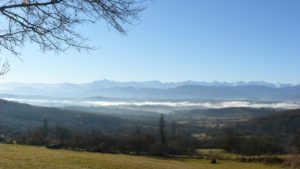
This could equally be describing the Ariège region and, indeed, what many buyers are looking for when they buy property here which explains why the region is becoming more and more sought-after in this uncertain post Brexit, post Trump, divided and uncertain world. By a wonderful freak of nature, the Ariège region happens to be set in an area of glorious, unspoiled and outstanding natural beauty, much of it national park with the Pyrénées providing a stunning backdrop. It has a great climate, plenty of sunshine and rainfall with both forests and fertile soil with fantastic food and wine, much of it organic. All of which provides the ideal conditions for getting away from everything and for living ‘the good life’. This area feels protected and authentic with traditional values and an abundance of mutual tolerance for different people from various backgrounds and origins; a very strong ‘live-and-let-live’ attitude. There are plenty of opportunities for living off-grid and, breathtaking scenery in abundance along with affordable property – you don’t need to be a billionaire to live here. In addition, the great advantage that the Ariège has over New Zealand of course is that it is much more accessible from just about everywhere.
Hence, my Ariège neighbour (despite naturally being biased) is probably not far wrong in his assessment after all. Get in touch if you need any help with your property search or have any questions about buying property in this region: nadia@foothillsoffrance.com
Like this:Like Loading...
|
For further information please contact us:
|




You must be logged in to post a comment.