View from the Foothills of France Some personal views on living, working,
bringing up family and making the dream happen in the most beautiful region of France. View from the Foothills of France also includes some personal and professional thoughts and tips on finding and buying the perfect property in the Ariège and Haute Garonne regions.
|
By nadia, on 21st October 2021 
If you are thinking of buying a property as a long-term investment, you could do much worse than buy a property to let out for holiday rentals in France. Depending on the location, it can be a year-round business with the added benefit of providing a family holiday home. In terms of lifestyle investments, it is certainly more fun than investing in shares or Bitcoin and probably safer too.
Of course, as with any investment, there are disadvantages as well as advantages (the value of your investment may go down as well as up etc!) but, if well-managed, the benefits should certainly outweigh the downsides in the long-term:
Benefits of a holiday rental property
- An opportunity to acquire an asset and use it as an income-generating business
- Generally higher yields than a traditional buy-to-let investment
- Better capital return thanks to the additional value of a business and established rentals
- You and your family can use the property if and when you wish
- Great way to buy and try out a potential future family holiday home
- An excellent alternative retirement/pension income plan
- Demand is strong for self-catering holiday accommodation all over France from the French as well as foreign tourists and, more importantly demand is growing in both markets. Remember, France gets more tourists than any other country in the world
- Holidays in many parts of France have year-round appeal so you have a continuous, annual income stream
- If you are mainly looking for a family holiday home, renting out your property for a few weeks per year can cover all the costs hence effectively providing free holidays
Disadvantages of a holiday rental property
- Involves a lot of management. This will cost you money and /or time. It takes more time and effort than a traditional buy-to-let investment. You can of course employ the services of a property management company but you will need to factor in these costs when working out your budget and your potential return on investment.Initial set-up costs can be high as a holiday rental has to be well-equipped and durable and there will be turnover of high-use items and furnishings.
- Maintenance costs can also be high especially if you are employing someone else to do the cleaning and maintenance
- Mortgages for holiday let properties can be more difficult to obtain and if you do get approval, expect to put down a 25-40% deposit.
- It is worth ensuring that you can afford an extended void period for whatever reason (pandemic anyone?)
- It is important to understand websites, marketing, and social media if you want to ensure bookings. This means making time on a daily basis to work on these, promote your property and deal with enquiries and bookings
How to identify a property that will offer the best holiday let returns
- A cliché though it may be, location is just as important for a holiday house as for a permanent home. When choosing a location, remember to keep potential future clients in mind. Imagine what most guests are likely to be looking for when on holiday
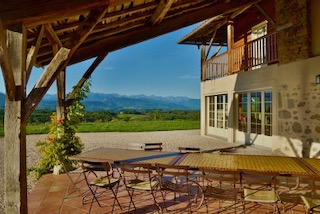
- Make sure there is some ‘wow factor’ whether this is the interior design, incredible views, fantastic coastal, mountain or city location or the facilities provided. Standing out from the crowd will ensure you get noticed and hence get bookings and good reviews
- Keep within two hours of an international airport and major city; accessibility is important
- Target areas with broad appeal and year-round attractions and activities
- Choose an area both where people are likely to want to stay for longer periods at peak times and weekends off-peak
- Make sure your location has a café, a bakery and small shop close-by at the very minimum and preferably a restaurant and good walking, cycling and activities
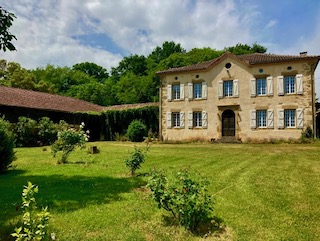
- Think about the type of property, the quirkier or more characterful the property, the more popular it is likely to be
If you need help finding the perfect French property, please get in touch: nadia@foothillsoffrance.com
Like this:Like Loading...
By nadia, on 5th October 2021
With the price of gas and electricity going through the roof, most people are looking at ways to make their home more energy efficient. Tempting as it is to replace everything with alternative energy sources, if you live in an old, stone house like many of us here in France, then generally the most ecological and cost-effective thing to do initially is to gradually improve and hence lessen the costs of each aspect of your energy consumption.
Heating
Heating is one of the major energy costs we have in France so firstly it is worth assessing your current heating system; for example, if you have an old boiler, it can be worth looking into energy efficiency grants to replace it for a new one which are significantly more efficient that they were even five years ago.
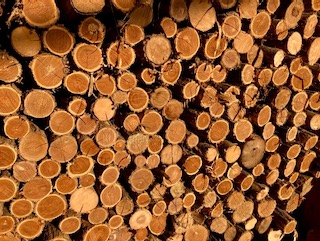
Then, look at the form of energy you are using to heat. Here in rural France, it makes most sense to heat with a clean-burning, wood-burning stove. Wood is plentiful, much cheaper than other energy sources and is a renewable energy that can be easily regulated. The most efficient of all the wood burners are ceramic stoves. These work slightly differently to a conventional wood burner as normally only two hours of burning is required and the energy produced in the combustion chamber is stored in the mass of the stove, then released over a 24-hour period. The stove is never shut down on a ‘slow burn’ and is therefore always working at a maximum efficiency of up to 90% hence, in a standard home, a ceramic stove can replace a central heating system on all but the coldest of days. For comparison, an open fireplace, achieves an efficiency of around 10%.
Solar panels
Solar panels and photovoltaic panels have improved and developed hugely in the last 10 years and have become a very cost-effective way to provide electricity and hot water for free once the payback time of installation has been covered (between 10-20 years depending on the number of panels and size of property.) It is also possible to organize a contract with an energy company to sell back any excess electricity to the grid; the amount you earn varies according to the power of your installation and is calculated per kWc, a measure of the amount of electricity produced by photovoltaic panels.
Insulation
Of course, it is a waste of time to heat your house if all the heat is going to disappear straight through the walls and windows to heat the garden. Hence sufficiently insulating your home, especially the roof and the walls, is one of the best ways to reduce energy costs. Wood is one of the best insulators of all, hence the enduring appeal in winter of a cosy, wooden, mountain chalet. Draft proofing old windows or adding double glazing is also an obvious way to prevent heat leaking out but replacing wooden windows with pvc is certainly not ecological. In France, most houses have shutters so closing these overnight provides the original form of insulation. You can also look at secondary glazing and made-to-measure, wooden framed, double-glazed windows.
Recycled Rainwater
Collecting rainwater in water butts is common practice, but sophisticated versions are now available to supply rainwater directly into the house. Rainwater can be used to water gardens and wash cars, and in washing machines and toilets. Used in this way it can save up to 50% of household water use.
Siting and Orientation
Most old houses in rural France were built with the heat and cold in mind. The majority are south facing with thick walls and few windows or openings on the north side, and many are also sheltered from the west to protect from the prevailing wind direction. If you are planning to build from scratch in France, it pays to site the house so that it faces south in order to maximise passive solar gain and hence energy savings. The south side should be up to 60% window, while the north facing side should be more enclosed with minimal glazed openings. Heat loss can be further reduced by setting the house back into a slope so that the earth acts as a ‘thermal store’; slowly absorbing heat during the summer and releasing it to the building as the weather turns cooler.
Luckily, in this part of France, winters are short and we have plenty of sunshine so, while mornings and evenings can be chilly, the temperature often gets up to 20 degrees by the middle of the day even in January and February. And old stone houses with thick walls were designed to keep in the heat in winter and keep out the heat in summer so, already, your French house is halfway to being more energy efficient than most new builds.
If you need help finding your French house, please get in touch: nadia@foothillsoffrance.com
Like this:Like Loading...
By nadia, on 21st September 2021  Prices rise in the Pyrenees Something strange is happening to property prices in France. For the first time in decades, it looks as if house prices in rural France are increasing and at a rapid rate, faster even than those of all France’s major cities including Paris. According to the annual review of the housing market by SAFER (the French rural land agency), the average price of a rural French property has risen by 6.5% so far this year.
This also mirrors the survey by the Notaires de France who showed a price increase in all older housing in France last month, noting also that, since 2020, buyers are significantly more geographically mobile.
Areas of France classed as rural include coastal regions which have seen the biggest rise in house price rises with an increase of over 12% during 2021 while mountain areas such as the Alps and the Pyrenees have seen an 8.8% house price rise. Some of this has been fuelled by people looking to buy second homes and rural boltholes because of the pandemic but there is also growing evidence that many companies (French and foreign) as well as public sectors bodies have moved to more flexible working arrangements between home and office allowing employees a much greater choice in where they live.
Whether this is a long-term trend for the French property market is, as always, difficult to predict but looking at the prices in this region combined with the huge demand from buyers and lack of houses for sale, it certainly seems to be continuing apace for the moment.
If you need help with your property search, please get in touch: nadia@foothillsoffrance.com
Like this:Like Loading...
By nadia, on 8th September 2021 
We have just had La Rentrée here in France, a very important time of year, possibly more so than the new calendar year. La Rentrée is the return of students to school and university as well as the return of the general population to work after the summer holidays. It thus heralds lots of new beginnings for all generations and is taken very seriously.
The school system in France is similar to many countries with primary schools, secondary schools (college) and sixth form education (lycée). For more information on these, take a look at:https://foothillsoffrance.com/2016/10/26/ten-things-to-know-about-school-in-france/
Further Education after school
Students staying on in education after Lycée have the choice to pursue either a vocational diploma or an academic diploma depending on their school leaving qualification. According to Insee, 72% of French students get the high school diploma (Bacalauréat) at around the age of 18. From these, around 80% go onto further education but only 52% go to university (and only 20% will graduate) while 30% go into work (or not.)
Academic diplomas:
There are three types of higher education institutions in France: universities, grandes écoles, and specialised schools.
Universities are public institutions that offer academic, technical, and professional degrees to any student who has obtained a baccalauréat or its foreign equivalent. However, while some types of degree course are open to all comers (notably courses in arts faculties and social sciences), scientific and medical courses are usually only open to students who have passed a scientific bac.
Grandes Ecoles are the pinnacle of the education system in France. These are relatively small and highly selective “schools” which provide a cosseted higher education to the nation’s future elites. In France, that mainly means tomorrow’s “haut fonctionnaires” (senior civil servants), leaders of industry, top military brass, top politicians and scientists. Despite the national preoccupation with equality and equal opportunities, the top end of the French higher education systems remains elitist.
The baccalauréat is the gold standard, when it comes to getting into university; but getting into a grande école is a whole different ball game. Entry into many grandes écoles is at “bac+2” level (equivalent of the third year of university studies) and to get into a grande école, many students actually stay on in Lycée for two extra years after the baccalauréat. These years are called classes préparatoires (or prépas) and are a highly selective alternative to the first two years of (generally unselective) university. Students in prépa are in small classes, and have an intense programme of studies, often over 30 hours of classes a week, plus plenty of homework. The course is very typical of the traditional French approach to education, which involves a lot of book-learning, long hours in the classroom, amassing of facts and information, and less in the way of questioning, discovery and creativity than is customary in the English-speaking countries and many others. This is because the lycée system was invented by Napoléon as a means to train the educated but subservient elites who would run the nation, and this is (arguably) still the case today. The grandes écoles offer a more specialized three-year course of study than university, in subjects such as business, public administration, or politics. Students are admitted to the Grandes écoles based on their scores in a competitive exam. Students graduate from a Grande école with a master’s degree.
Specialised schools and vocational diplomas:
The DUT (diplôme universitaire de technologie) and BTS (brevet de technicien supérieur) are two-year technology-oriented degrees. BTS courses are offered by high schools, whereas DUT are awarded by universities. A DUT or BTS may be followed by one additional qualifying year of study, leading to a licence professionnelle.
These courses are selective entry, and students have a heavy load of coursework to get through. The approach tends to be “scolaire”, as in a school, rather than “universitaire”, and classes are small (up to 30 or so whereas universities can be will over a 100).
This is a very simplified explanation of the school and higher education system in France but for further information take a look at:https://eacea.ec.europa.eu/national-policies/eurydice/content/france_en
And if you need help finding your French property, please get in touch: nadia@foothillsoffrance.com
Like this:Like Loading...
|
For further information please contact us:
|


You must be logged in to post a comment.