View from the Foothills of France

Some personal views on living, working,
bringing up family and making the dream happen in the most beautiful region of France. View from the Foothills of France also includes some personal and professional thoughts and tips on finding and buying the perfect property in the Ariège and Haute Garonne regions.

Archives

Categories

Latest news on French house prices and mortgage rates

As in many countries around the world, French mortgage rates are starting to rise. During 2022, mortgage interest rates rose from the 50-year low of 1.05% in December 2021 to 2.5% in December 2022. Currently it is still possible to find a mortgage offer at 2.95% fixed rate over 20 years but there is talk of another rise in the Euribor possibly reaching 3.849% by December 2023 according to the ECB. However, despite the rises this year, mortgages are still good value in France compared to many places and, because the majority of house buyers take out a fixed rate for the term of the mortgage, there is much more stability in the housing market here than in, for example, the US and the UK.

The other metric for buyers to take into account is of course house prices which have also increased across the whole of the Occitanie region since 2020. However, they are also predicted to stabilise in the next year. Rural house prices rose by a national average of 5.7% last year according to SAFER but with significant differences between departments. That compares to annual prices increase of 9.3% in 2021.

In the Occitanie region, prices increased most slowly in the eastern side of the region; up 1.9% in the Hérault region. In contrast, further west, prices in the Gers region rose 8.8%, and 9% in the Haute Garonne region (not including city prices in Toulouse) with the largest increase in the Ariège at 18%.

From these figures, it seems that buyers are looking at more rural and unspoiled regions and wanting a less hot and dry climate which would match with my own experience of client searches during the last two years.

So far this year, the housing market has felt very buoyant in this region with far more buyers than there are decent properties for sale. Will this change? Let me just clean off my crystal ball…

If you would like help or advice in finding your French property, please get in touch:

nadia@foothillsoffrance.com or 0033 6 45 23 62 48
The latest arrivals setting up home in the Occitanie region


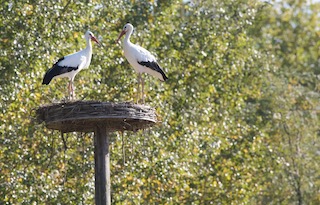
The Haute-Garonne and Ariège regions in southwest France are known for their breathtaking landscapes and unspoiled natural environment and have always attracted new arrivals looking for a better quality of life. However, in recent years, the region has also become a popular destination for an even rarer visitor looking to set up home here; storks (cigognes in French).

The storks that have arrived in the Occitanie in recent years are mainly white storks, which are known for their distinctive white plumage and black wing feathers. These birds are migratory and travel to Europe from Africa during the breeding season in search of suitable nesting sites and food sources. In recent years, many storks have diverted from their usual migratory routes and chosen to make the Haute-Garonne and the Ariège their home for the breeding season.

One of the main reasons seems to be the abundance of food sources in the area. The region is home to numerous small mammals, which make up a large part of the stork’s diet. Additionally, the Garonne River and its tributaries provide a plentiful supply of fish, which is another important food source for these birds and the region’s mild climate and large areas of open land make it an ideal site for these birds along with the availability of suitable nesting locations. Storks prefer to nest on tall structures such as chimneys, rooftops, and poles, and the region has plenty of these.

Despite their popularity among birdwatchers and nature enthusiasts, storks have not always been welcome in France. In the past, storks were seen as pests and were hunted for their meat and feathers. However, attitudes towards storks have changed in recent years and most locals generally have a positive view of the storks, seeing them as a symbol of nature and an important part of the region’s heritage. The local authorities have taken steps to protect stork populations, including providing nesting platforms (particularly to encourage them away from tall pylons where there is the danger of electrocution). Many people are also involved in efforts to protect and support stork populations, such as building nesting platforms and monitoring their breeding success.

There are currently estimated to be around 300 stork pairs in the Occitanie region and, as populations in neighboring regions continue to grow, it is likely that stork populations in this region will also increase in the coming years. Indeed, it now appears that some birds seem not to be migrating at all, preferring to stay in the region all year-round – like many of us immigrés who have moved here, they have realized they have found the perfect place to live. Let’s hope that they thrive in the region for years to come.

If you are also looking for your perfect nest in the foothills, please get in touch: nadia@foothillsoffrance.com

Buying and running a gîte in France

Owning and running a gîte in France is a dream for many people whether that be as a full-time business or as an additional economic activity to top up a pension or another income stream while enjoying a new life abroad. It can also be a great investment and lifestyle choice. However, it is important to be aware of the visas required, income expectations, and potential challenges that come with this type of business especially if you are moving to France from outside of the EU (which also includes Brits now of course since Brexit.)

Visas
If you are not a citizen of an EU member state, you will need to obtain a long-stay visa, also known as a “visa de long séjour,” before you arrive in the country in order to stay in France for more than 90 days. There are several different types of long-stay visas, including those for family reunification, work, and self-employment. If you are moving to France to run a gîte, you will need an entrepreneur visa which is designed for people who wish to start a business in France. This type of visa requires proof of financial stability, a business plan, and relevant skills or experience. It is important to consult with a French consulate or embassy in your home country to determine the specific requirements and process for obtaining a visa.

Once you have obtained your entrepreneur visa, you will be allowed to reside in France for up to four years and work on building your business. After this initial period, you may be eligible to apply for a renewable residency permit, provided that your business has been successful and you have contributed to the French economy.

Income
The income potential for running a gîte in France can vary greatly depending on location, seasonality, and marketing efforts. It is important to do thorough research into the market demand and competition in the area you are interested in. It is also important to consider the costs associated with running a gîte, such as property maintenance, taxes, insurance, and marketing. Many gîte owners choose to work with a property management company to handle bookings, cleaning, and guest communication, which can help alleviate some of the workload and stress of managing a rental property.

Is it a good idea?
Owning and running a gîte in France can be a fulfilling and profitable but, as with any business, is important to carefully consider the associated costs and challenges before making a decision. It is also important to have a clear understanding of the cultural and legal differences between your home country and France, as well as the language barriers that may exist. In addition, it is important to do thorough research, obtain the necessary visas, and have a clear business plan before embarking on this journey. With proper planning and execution, a gîte can be a wonderful way to live and work in France while sharing the country’s rich culture and history with visitors from around the world.

If you need help in finding the perfect property in France, please get in touch: nadia@foothillsoffrance.com

French village life

I am very lucky to have had lots of fantastic clients over the last 15 years of running this business, many of whom keep in touch. I love to hear how their life in France has evolved, the work they have done on their house, the adventures they have had, their favourite walks, restaurants and places to visit and how their lives have changed since buying their French house.

This week I had such a lovely message from a past client who is just getting to know the other people in her village and wanted to let me know what a great and eclectic bunch of neighbours they have met, ranging from former flight crew to a musician to a Chinese doctor to name but a few. This perfectly encapsulates the wonderful mix of people we find in this part of France; city escapees, foreigners, locals who were born here and young couples and families reassessing priorities and seeking out a calmer, more grounded and rural lifestyle in beautiful surroundings but still with easy access to the culture and buzz of the big smoke (Toulouse).

It makes me realize yet again how lucky we are to have landed in such a special part of the world where so many people dream of living but only the more adventurous (or slightly crazy) actually make the jump. The result is villages and communes peopled with a wonderful jumble of people, nationalities, professions, and cultures all with one thing in common, the love of the good life that rural France can provide.

If you need help finding the perfect house for you in France, please get in touch: nadia@foothillsoffrance.com