View from the Foothills of France

Some personal views on living, working,
bringing up family and making the dream happen in the most beautiful region of France. View from the Foothills of France also includes some personal and professional thoughts and tips on finding and buying the perfect property in the Ariège and Haute Garonne regions.

Archives

Categories

The Ariège records the largest house price increase in France so far in 2010

The Association of Notaires in France has just released the latest report into the state of the French housing market. The figures seem to confirm the resurgence in property sales reported by the FNAIM (French estate agents association) earlier this month.

They report a significant increase in sales to between 700,000 and 750,000 for 2010, compared to 2009 when sales were below 600,000.
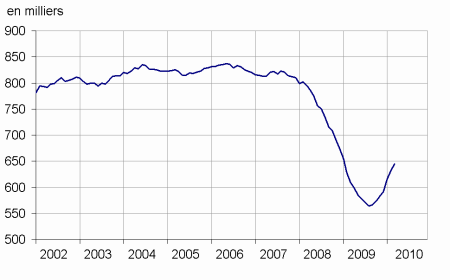
House Sales in France 2001/10

Source: Insee

Much of this increase in sales is likely to be down to the current historically low interest rates in France which now average around 3% (although it is possible to find even lower.) This has meant a reduction in average monthly mortgage payments of around 12.5%.

As far as house prices are concerned, the Ariège region, which has historically had a very stable (and incredibly good value) property market, has recorded one of the largest increases in property prices during the year:

‘…. in some departments, such as Creuse, Haut Loire and Ariège, house prices have risen on average by over 15%.’

This is borne out by my local agents in Saint Girons who say that, after a very quiet market in 2009, buyers are back and property has started to move again with a corresponding increase in prices. Not quite a property rush but things are looking up and this is actually great news for buyers and sellers alike as some interesting properties are now appearing on the market, especially old farms with outbuildings or village houses, both of which are generally high on the property wish list of people looking for homes in this area.

So why are sales and prices increasing here in the Ariège? Well I can only put it down to the fact that house buyers coming to France are now much more conscious of getting value for money, which is why they are being drawn to this region. Buyers are daring to cast their nets wider (as the map below illustrates) and have discovered what amazing value the houses are in the Ariège. Which just goes to show that yesterday’s backwater is tomorrow’s hotspot and, while property here is still very affordable, it will not always necessarily remain so.

The following map shows the average percentage change in prices within each department up to June 2010.
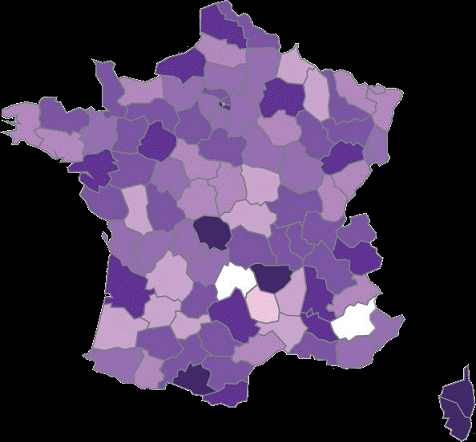
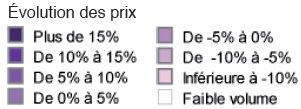
House Prices 2009/10


Source: Notaires de France

How much is a view worth?

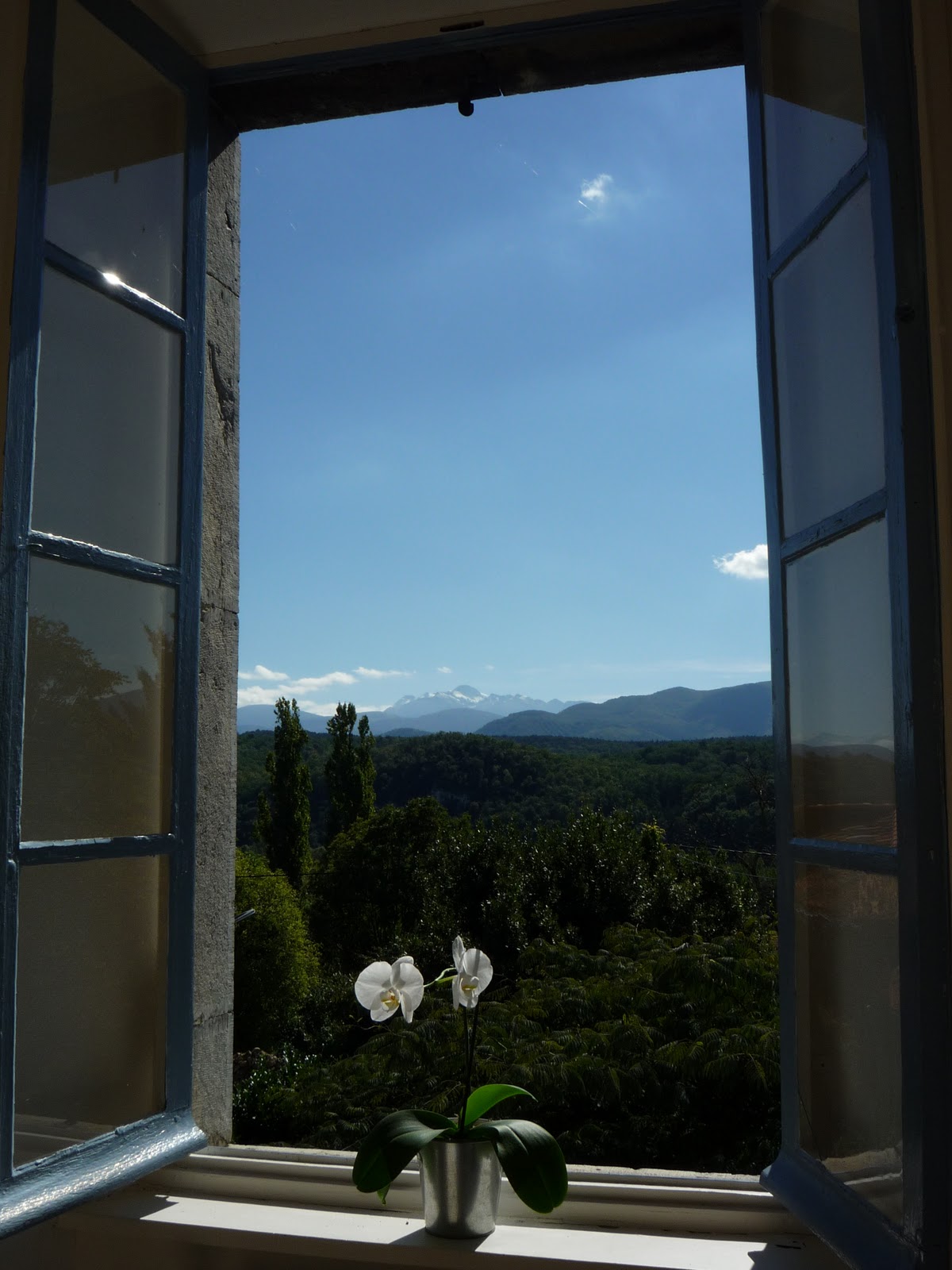
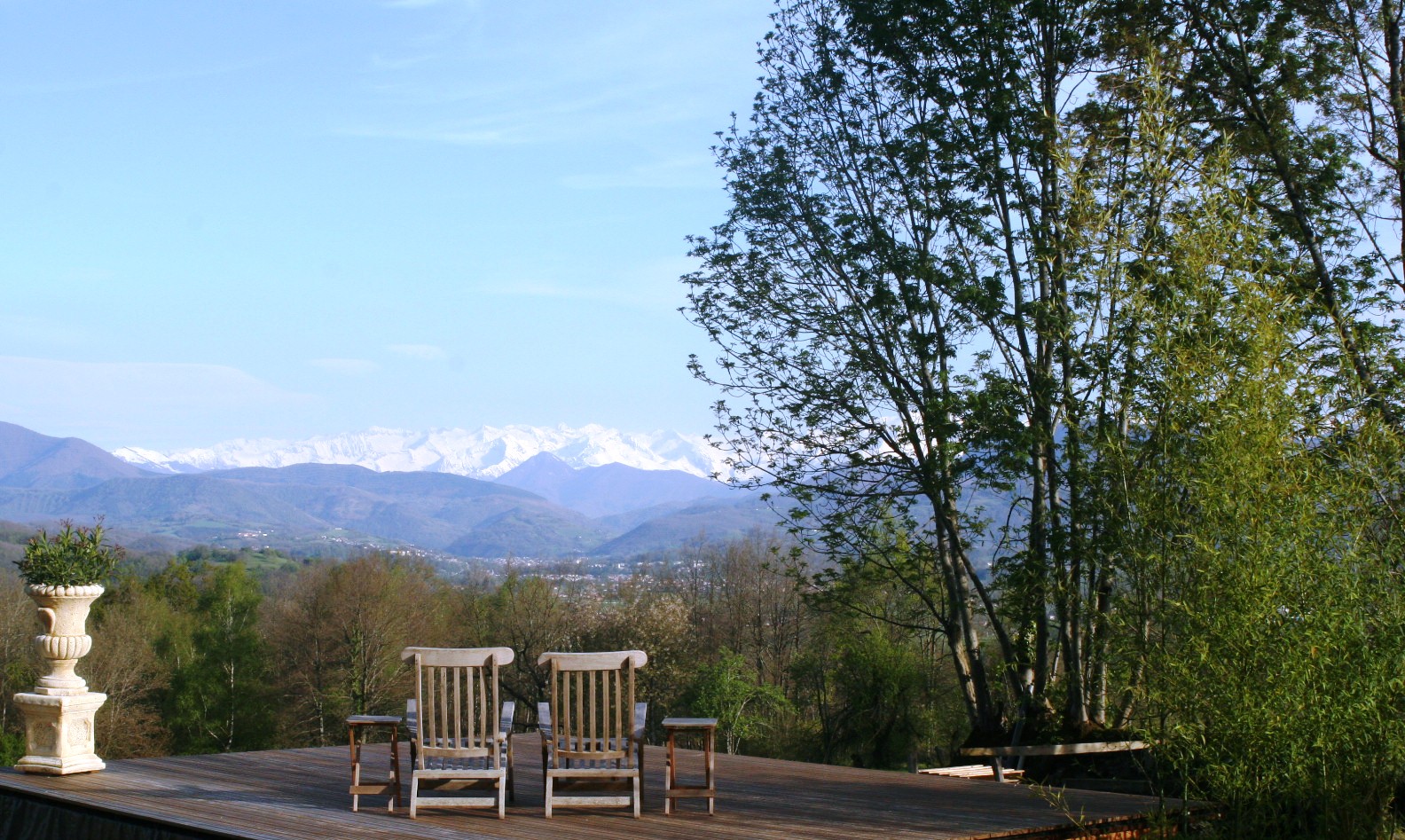
For me one of the greatest pleasures of living here in the foothills is opening my shutters each morning and looking out over the mountains, especially at this time of year when the first snow on the highest peaks is bright white against the blue sky and the leaves are a hundred shades of orange.

For most people who buy a house in this area, it is the view of the mountains which is one of the greatest attractions; it is what makes this region special and different to say living in Surrey. And, most of us really want a view of those mountains from our house here – even if it is just a glimpse from the upstairs window. There is something quite magical and uplifting about mountains and their constantly changing panorama; and who wouldn’t want to incorporate a bit of magic into their life?

But this has got me thinking – how much is a view worth in terms of property prices? I thought I would try to find out – at least for this region. There is no published research – I guess it is a hard concept on which to put a figure – but a quick visit to a few of my local agents came up with a pretty conclusive result that a view of the mountains (a proper view, not just a glimpse) from the house and garden adds at least 50% to a property. What’s more, all the agents here say that a house with a view of the mountains, however distant, will usually sell twice as quickly as one without.

Having looked at many houses in this region, both with and without a view, I don’t think this is unreasonable. In my opinion, a mountain view is worth every penny, even if it means compromising on the size or condition of the house. Both of these can be changed but, in most cases, it is very difficult to create a view where one doesn’t exist. It may be a well-worn property cliché but location really is everything and even more so when it comes to buying a house here in the foothills.

Real places, real houses, real people beat the internet hands down any day

I have been having an interesting discussion recently with a potential client who believes that, thanks to the internet, he can search for his dream house just as easily from his home in England as I can here on the ground in sunny France and therefore cannot really see why he needs me.

My argument is that the internet is actually a very limited tool when it comes to house hunting and should definitely be used as just one of many ‘weapons’ in the armoury. I bet there are not many people out there who have seen a house in the Ariège or Haute Garonne advertised on line, managed to visit and found it exactly as they had expected or hoped.

In my experience, all those hours trawling property sites on the internet so often turn out to be a waste of time as, more often than not, the houses shown are no longer available (sometimes they never were) or are pictured carefully cropped so as to hide the enormous pylon in the foreground. Estate agents descriptions only contain the most basic facts, so it is impossible to tell what a house is really like – let alone whether it’s located near a noisy road, railway line or sewage farm.


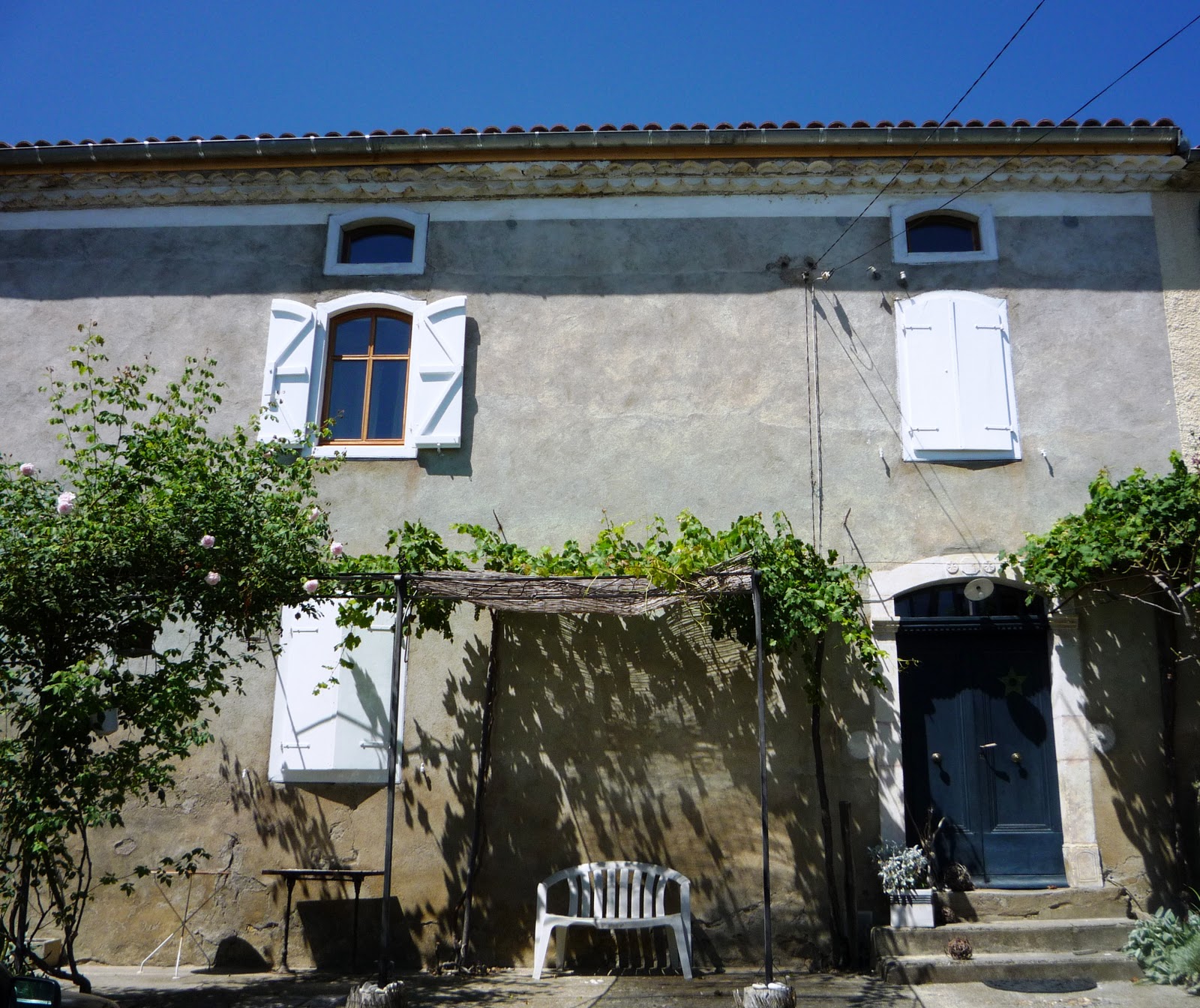
Pretty house – but why is it so tightly cropped…?

Moreover, many of the estate agencies in this region do not even have a website – part of the old fashioned charm of France can also be frustrating and you really do have to visit each agency to find out what they have on their books. Notaires also sometimes have some real gems that are only ever advertised locally, which is often also the case with private sales in the region. Many more houses are sold privately in France than in the UK and the only way to discover these is to be on the spot as lots of French people privately selling houses in this region, do not have access to the internet so will rely on petits annonces (private ads) and local boards to sell their houses.

The problem is that it usually takes a potential client a few wasted, expensive trips and frustrating viewings of completely unsuitable properties before they begin to understand my argument and actually begin to see the benefit of using a property finder. Anyway, having had the ‘finding a house on the internet – or not’ discussion a few times this week, I decided to test my theory and get out and about.

For me too, it is far too easy to sit in front of my computer and think I am doing a thorough job but I likewise need reminding that there is life outside of cyberspace – and my job after all is about knowing my region; both the good bits and the bad. So I turned off the computer and phone and went out to ‘faire un tour’  of the villages and countryside which make up my beautiful corner of France, looking out for those all important ‘a vendre’ signs and talking to local people. What’s more, it is such a pleasure to drive around this stunning area – there is nothing like fresh, mountain air to invigorate and clear the head and nothing like chatting to the eminently grounded local people here to realize that the world won’t stop if I am away from my computer or telephone for an afternoon.

The views are spectacular here in the foothills at any time of year but, right now, with all the trees beginning to turn thousands of shades of orange and red, they are simply breathtaking. I headed out south of Saint Girons towards the Pyrenees, through Moulis and Castillon en Couserans and then into the stunning Vallée du Biros and the pretty and very special village of Sentein; a truly uplifting tour that I can recommend to anyone who is feeling in any way stressed or overloaded.


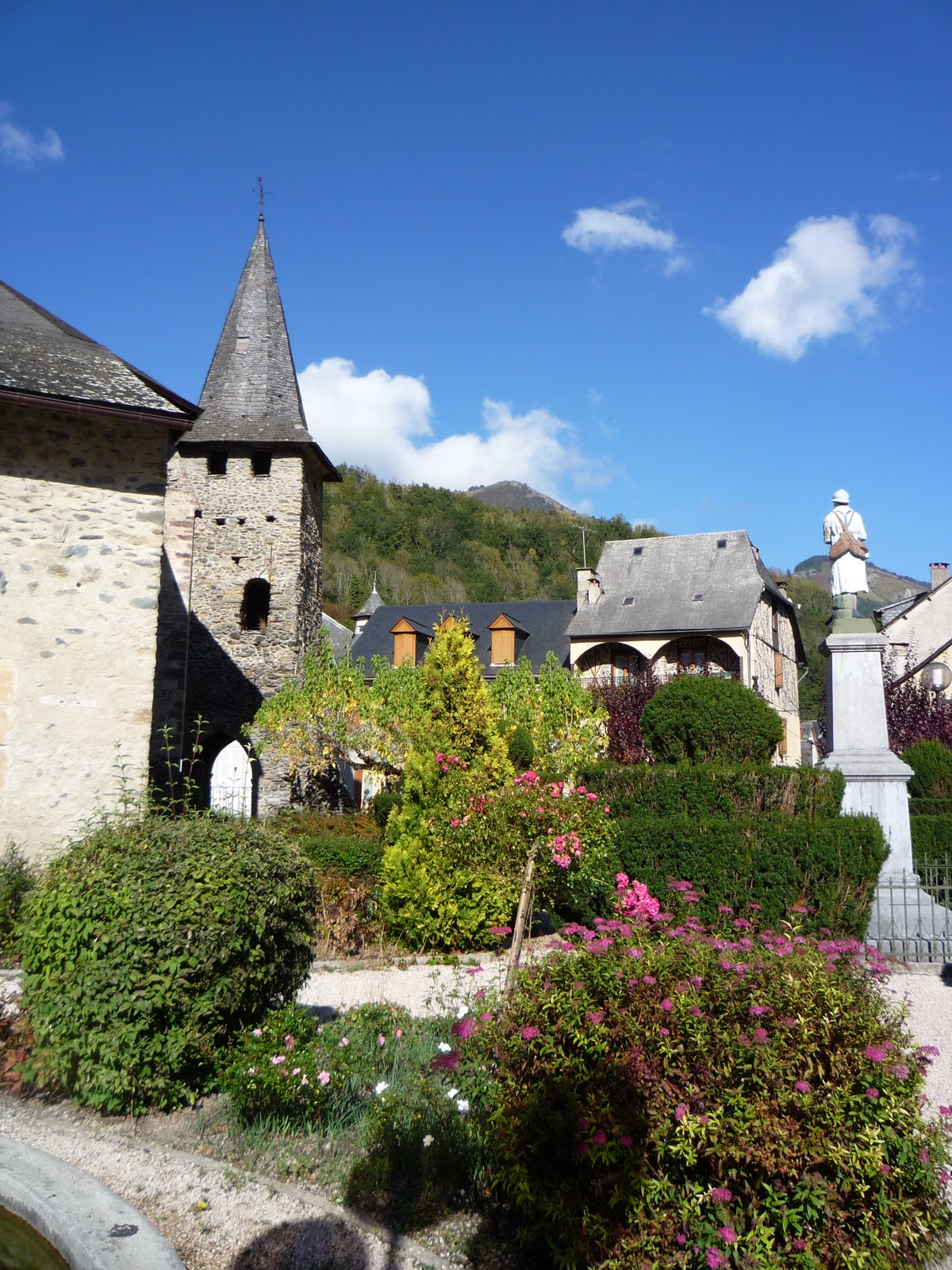
Sentein

I arrived back at my office with new energy and enthusiasm for this very beautiful part of South West France as well as with a small list of interesting houses which I had noticed for sale that were certainly not nor ever would be advertised on the internet. I also came back with renewed certainty that the only way to find the real gems of houses in the very best locations, is to get out and do my research the good, old-fashioned way. The internet is undoubtedly a fantastic invention but, at the end of the day, nothing can match local knowledge and simply being here on the ground.


La Chemin de la Liberté- a tough walk to freedom

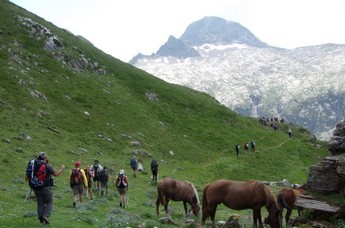
Every year a group of hikers from all over the world meet up in the lovely town of Saint Girons, the capital of the Couserans region of the Ariège, in order to hike over the Pyrenees into Spain.  But this is no gentle ramble; it is four days of serious hiking and tough conditions; this year it was the heat that caused problems, with temperatures reaching 37 degrees but fog, rain and snow are not unknown.

The group, most of whom do not know each other, meet at the vieux pont in the centre of Saint Girons, loaded with heavy backpacks. This is a challenge even for the fittest but it is, nevertheless, a walk in the park compared to the experience of the many hundreds of men and women who took this route during the Second World War. And this is why most of the group are here; many had relations who escaped the Nazis by using this route and they have come to commemorate the bravery of these soldiers and resistance fighters and of the local, mountain people who led them safely along the route and provided them with shelter and food. 


There were a number of escape routes through France during World War Two but the Comete Line, the Pat O’Leary Line and the Marie Claire Line were the most famous. One of the O’Leary networks went through central France to Agen & Toulouse then to the central Pyrenees to the starting point of “Le Chemin de la Liberté” in St Girons. The high mountain route into Spain was carefully chosen as it avoided all official checkpoints. Between 1940 & 1944, there were 33,000 successful escapes along the entire length of the Pyrenean chain and 782 escaped over the mountain peaks of the Ariège. During the war several escape trails were established near St Girons and other towns and villages surrounding it like Foix, Tarascon, Aulus-Les-Bains, Massat, Castillon, Seix & Sentein all had invisible mountain routes towards the Spanish frontier.

One of the most famous English escapees was the World War resistance fighter Nancy Wake who worked for the Special Operations Executive and was forced to flee from the Gestapo in 1943 along Le Chemin de la Liberté. Many had no food, completely unsuitable clothing and had to survive terrible weather conditions and heavy snow along the route. Most would never have survived without the help and bravery of the local Ariègeois.

By the beginning of 1943 German surveillance had increased often due to the betrayal by Frenchmen who worked for the feared Vichy-run paramilitary force “La Milice” and there were many ambushes along the trails. Despite this increased surveillance, the St Girons-Esterri escape route via Mont Valier remained operational until the end of the war.

Hence, each year, a guide leads a group along the trail to commemorate those who made it and those who did not. What a great and very appropriate way to remember such brave, determined and enterprising people.


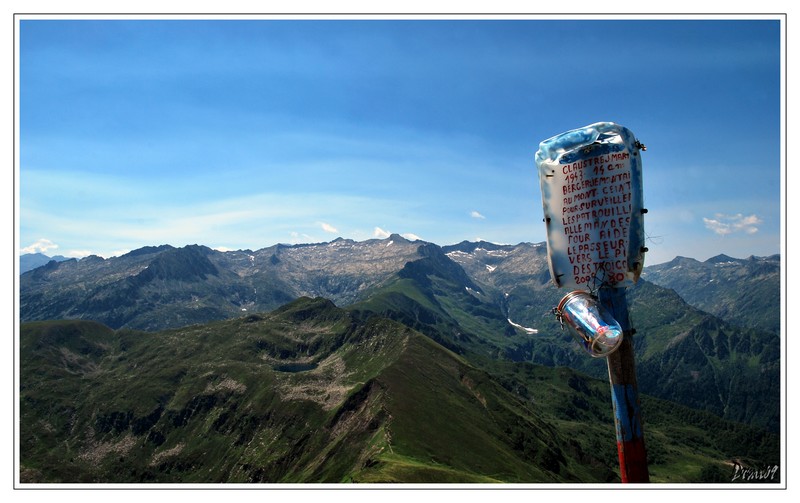
The text on this post along the route says:

“Claustre J-Marc, 1943, 14 ans berger, je montais au Mt Ceint pour surveiller les patrouilles allemandes pour aider les passeurs vers le pic des trois seigneurs.