View from the Foothills of France

Some personal views on living, working,
bringing up family and making the dream happen in the most beautiful region of France. View from the Foothills of France also includes some personal and professional thoughts and tips on finding and buying the perfect property in the Ariège and Haute Garonne regions.

Archives

Categories

Proposed tax on second homes scrapped

Good news for people looking to buy a holiday home in France; the French government has abandoned plans to levy a controversial new tax on holiday homes owned by non-residents. This has been worrying many people although, as it turned out, if this new tax had been imposed, it would probably only have amounted to a few hundred pounds a year on the average holiday home.

Up to 360,000 homes would have been liable for the tax under the proposals and it is thought that President Sarkozy backtracked when it was pointed out to him how many French nationals living abroad would also have to pay the tax. The French have a tendency, thanks to their inheritance laws, to hang onto property over generations and so a huge number of French people own second homes, including many who now live and work abroad.  The government was also said to be worried about the effect the tax would have on tourism to France. Moreover, it was suggested that this new tax could have been unlawful under European laws designed to allow the free movement of Capital.

Whatever the political ins and outs, it is good news for my clients currently buying or looking to buy holiday homes and means the France looks set to remain one of the most popular and best value holiday destinations in the world.


Atlantic or Mediterranean for a day at the beach?

We had yet another tough decision to make last weekend – should we head to the Mediterranean or the Atlantic for a day on the beach?

There can’t be many places you can live (in fact there aren’t because I checked on the map) where you can choose to spend the day either at the Mediterranean coast or at the Atlantic, depending on weather and sea conditions. We happen to live roughly equidistant to both and hence, yesterday, having studied Meteo France’s forecast the night before, we decided we would have a day on the beach in the lovely town of St Jean de Luz on the Atlantic, just over two hours’ drive away. The Mediterranean lost out this time as it was forecast to be a good few degrees cooler than the Atlantic. Had we decided to go east to the Med however, we would probably have headed down to the lovely town and beaches of Collioure,  also around a two hour drive away. Either direction is a very easy drive with great mountain views most of the way.

Often the Mediterranean coast is warmer in the Spring and Summer months than the Atlantic, as you would expect but it is also affected by the Tramontane wind which blows along the coastline from Spain sandblasting anything in its way. Not a pleasant experience and even worse for little ones who get the full force of the sand in their face.  The Atlantic on the other hand, is known for its surf and can be dangerous for swimming in places but there are plenty of protected bays where it is calm and safe to swim plus the sea stays warm through the Autumn and right into November when it is certainly still warm enough to paddle, sit on the beach and have lunch on the terrace. Well for us Brits anyway; our French neighbours think we are completely mad to venture near the sea out of season, which is just fine as far as we are concerned  – all the more beach for us. In fact we are quite happy to avoid the peak holiday season of July and August at either the Med or the Atlantic, preferring to head to the mountain lakes and rivers for our picnics and paddling, away from the tourist crowds.
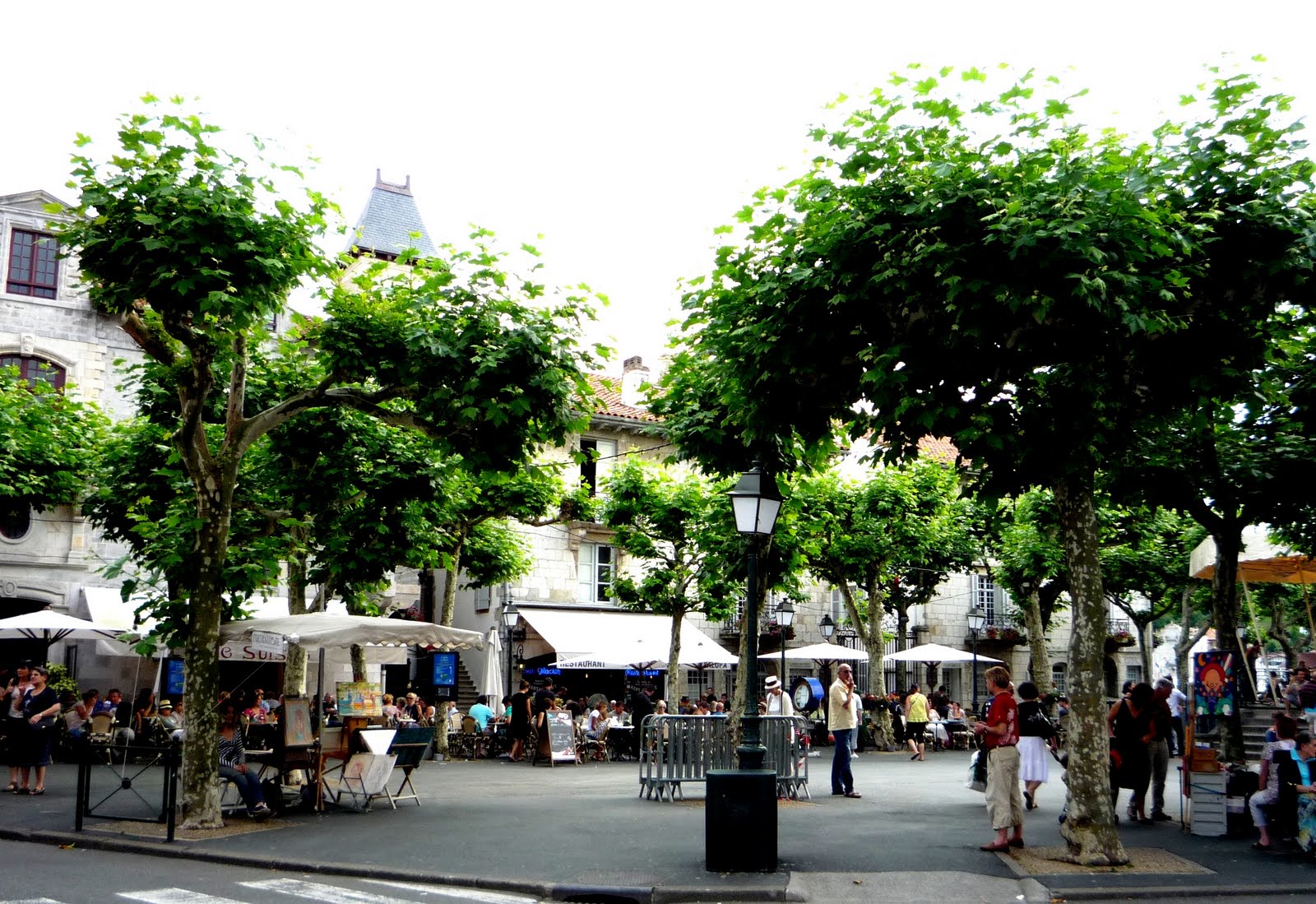
St Jean de Luz yesterday was just perfect – we were enjoying coffee and Gateau Basque on the terrace by 10am and then spent the morning on the beach before tucking into plates of seafood at our favourite restaurant for lunch. Then back to the beach for some tennis, serious sandcastle construction and swimming. We finished the day with a final ice-cream and walk around the pretty streets before heading off around 7pm. A great day out and another tough decision made successfully!

The perfect French house?

More often than not when I view a house for a client, it does not live up to expectations or meet important criteria which means that the majority of houses I view never make the short-list of ‘possible properties’ to show my clients. There could be many reasons for this such as location, the state of the property or unrealistic pricing. So when I see a property which ticks all the boxes, I can’t help getting excited.

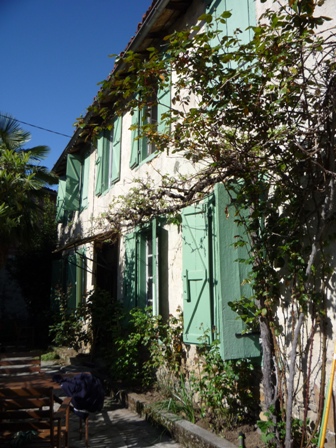
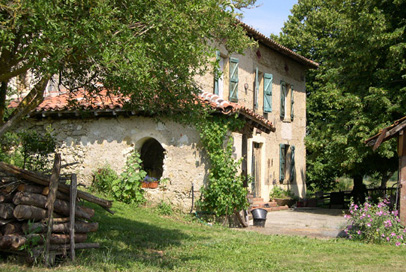
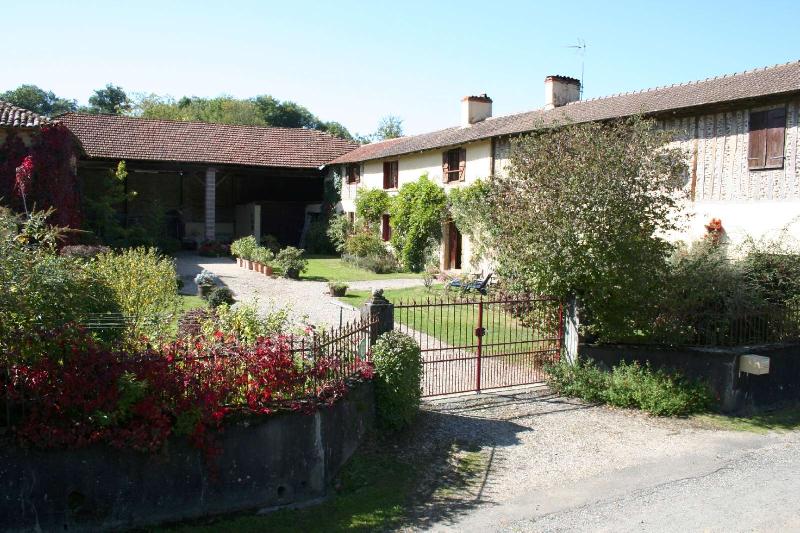
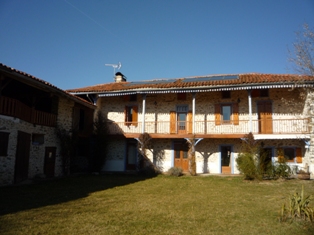
Today was one such day when I saw what I might even be prepared to call the perfect French house. By that I mean the type of house which is the epitome of the French dream for many; a classic, stone farmhouse full of character with lots of original features, some outbuildings and land, quiet but not isolated and lots of potential for the new owners to make it their own. This one even had roses around the door. What’s more, it was in that sought-after location on the edge of a nice village within walking distance of a bakery and a cafe.

Actually this is also the type of property that so many people are looking for in the UK but the prices have become prohibitive over the last decade putting such properties out of the reach of most of us. This is not the case here in the Ariège and the Haute Garonne though where you can still find a fantastic farmhouse (needing a bit of TLC) for between 200,000 and 300,000 Euros.

Thus, when I am exploring, I am always on the look-out for any property that might fit this bill. Certainly in this region we are lucky enough to have plenty of lovely traditional stone farmhouses but the difficulty is finding those owners ready or willing to sell.

Sure enough the house I just viewed is exactly what my clients have been looking for (unsuccessfully) for the last two years and they put in an offer on the first viewing which, after a bit of negotiation, has now been accepted. I do like a happy ending.

Delays ahead – with bells on…

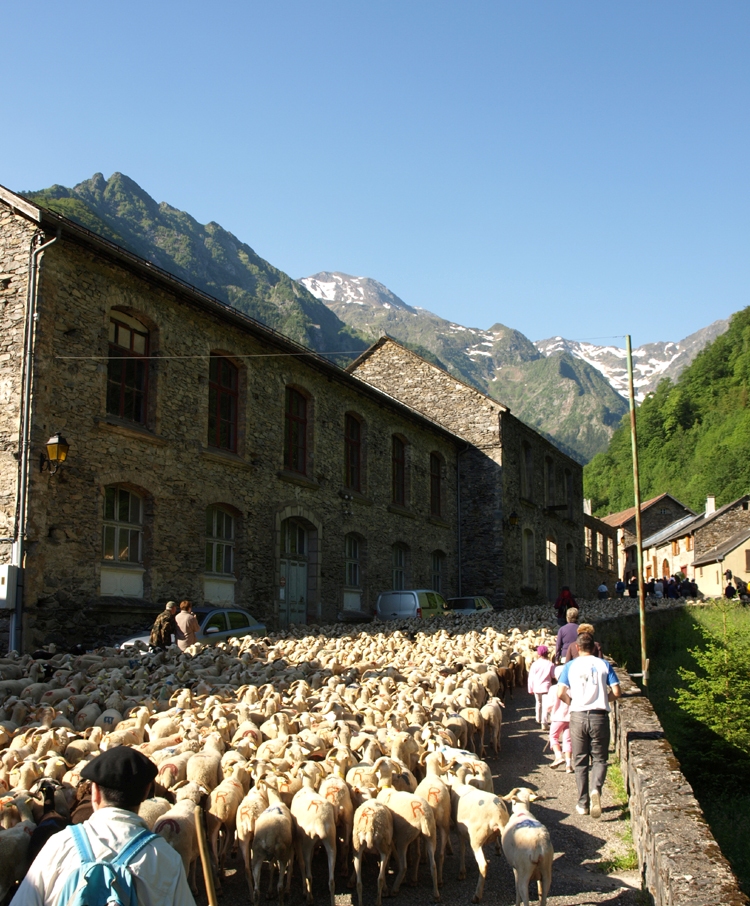
In the next couple of weeks I will be allowing extra time when out on property searches and viewings in the high valleys of the Pyrenees. At this time of year roads and even whole villages are likely to be closed at certain times to accommodate one of the great cultural traditions of this part of the Ariège; the transhumance or literally ‘the seasonal movement of livestock,’ a practice which dates from at least the Middle Ages.

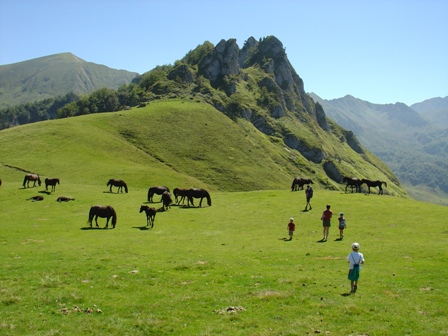
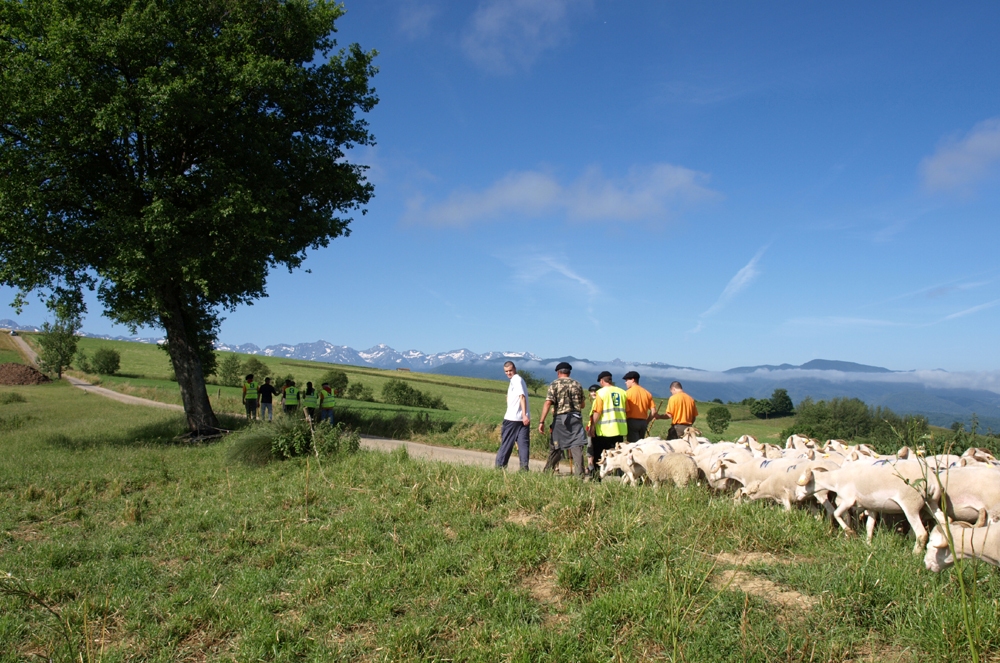
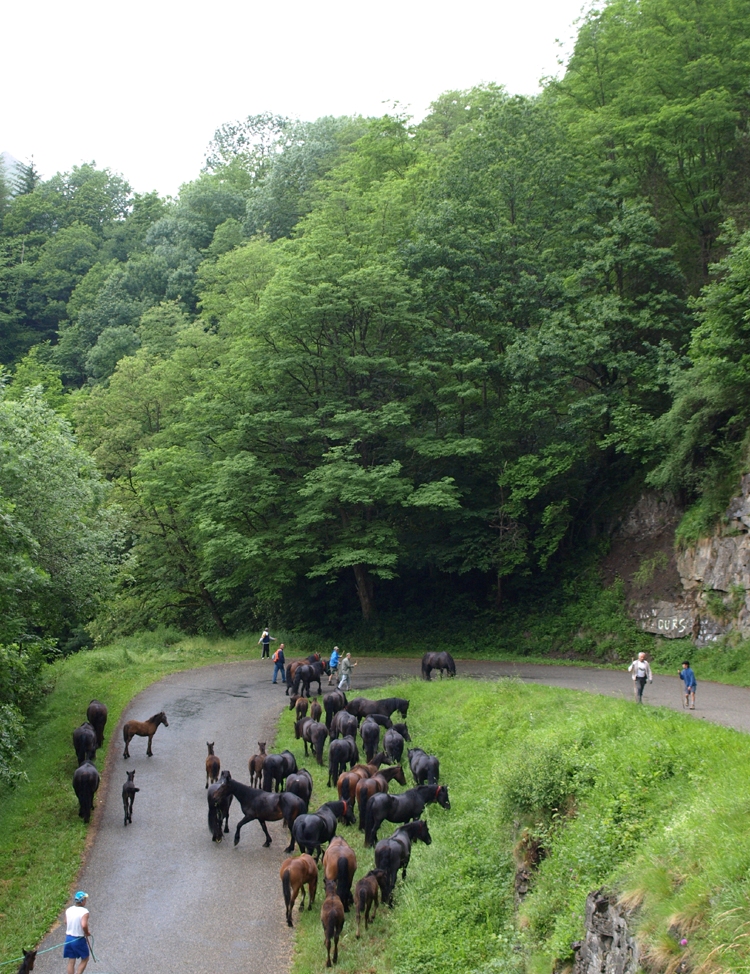
This happens twice a year and takes on epic proportions when the animals from the farms on the valley plains are herded up to the high mountain pastures to spend the summer months in freedom. In October it is the opposite procedure with the descent back down from the mountains to the valleys for the winter. The numbers are impressive – in the Ariège over 12,000 cattle, 40,000 sheep and over 1,000 horses make this annual pilgrimage to higher pastures. This is why, when walking the mountain trails and passes around here in the summer, the hills are alive with the sound of bells; you will often come across groups of Merens, the local breed of horse, a bell around the neck of the leader, free to wander where they please, or cows similarly oblivious to the gentle chiming they make with every move. Likewise, you will find herds of sheep seemingly quite alone but actually guarded by the beautiful white dogs of the Pyrenees, the Patou, who stay with the animals and protect them from attack or harm.


The journey from valley to mountain with the herds of animals during the transhumance can take several days and takes on a holiday atmosphere with many members of the villages and surrounding farms helping out and camping together each night. The whole event has become a friendly social gathering and walkers are always welcome to join the farmers as they move their animals. Many have no experience of farming but take part in order to encounter a way of life still so firmly rooted in tradition and something that probably most of us imagined had died out centuries ago.

For me, the most dramatic procession from a spectator’s point of view is the troupe of 200 or so Merans horses (the local breed) making the journey from their fields in St Lizier through the narrow streets of the towns and villages and then slowly up the mountain roads, expertly herded by a few brave souls whose main means of controlling them seems to be a frantic waving of arms. It’s certainly not a sight that you see every day and a perfect illustration of the enduring and unchanging way of life here in the foothills of the French Pyrenees – and certainly a more entertaining way to be delayed on the way to work than heavy traffic on the M25.