View from the Foothills of France Some personal views on living, working,
bringing up family and making the dream happen in the most beautiful region of France. View from the Foothills of France also includes some personal and professional thoughts and tips on finding and buying the perfect property in the Ariège and Haute Garonne regions.
|
By nadia, on 28th May 2024 
This is one of the busiest times of year for the property market in France so if you are planning to come and visit some potential houses in the near future, here are a few tips to make your viewing trip as productive and hopefully as enjoyable as possible
Book viewings in advance
Remember that sometimes agents won’t have updated their listings online and the house you are hoping to view might already be under offer or sold. Alternatively, the owners might be away, and agents don’t always hold a key. Either way, to avoid disappointment, it is always better to make an appointment and give agents enough time to arrange the viewing.
Don’t view more than about four properties in one day
Bear in mind that agents in rural France cover big areas and the properties you have requested to view could easily be an hour apart plus each viewing will generally take around an hour so leave plenty of time. Usually people find that, although fun, it is also very tiring viewing numerous houses and if you try to see too many in one day, they all begin to blend into one and you will forget the important details of each, so it makes sense to give yourself a break in between viewings and not to cram too many visits in a single day especially if they are all listed with different agents.
Explore the local area
It is important to give yourself enough time after viewings to explore the area around any favourite property(ies) to make sure that you like the region as much as the house and to be sure it is the right place for you. Try out the restaurants, talk to people, go for a walk and generally get a feel for the area.
Write yourself a clear brief outlining your main criteria
Remember France is a big country with a huge number and variety of properties on the market so it is easy to lose focus and forget what is you originally started looking for in a French house. You will also find that, during your viewings, your search will evolve so you might need to update that wish list…
..But be prepared to compromise
While you should be clear on your absolute non-negotiables, know that there are always compromises to be made; no house will tick every single box whatever your budget.
Give honest feedback
Tell the agents what you like, what you don’t and, crucially, why, so that they can think of other houses that might suit you better. Hopefully it goes without saying but I will just in case; don’t be so frank with the owners of any house you really don’t like; they can’t change the house and it doesn’t help anyone (it is the agent’s job to feedback to their clients any comments about aspects of the house that might be putting off potential buyers).
Secure financing before viewing
Knowing what you can realistically afford makes your decision easier and helps to focus your search. You don’t want to fall in love with your dream property and then realize it is out of your price range. Agents will also take you seriously and be prepared to put more work in if your finances are already in place and you are ready to make an offer. Make sure also that you have a 10% deposit accessible as this is payable on signing the first contract, the Compromis de Vente, usually about three to four weeks after your offer has been accepted.
Don’t be alarmed if you’re asked to sign a “Bon De Visite” by an estate agent
As a single house can be marketed by several estate agents in France, these documents are simply there to show the vendor which agent has shown you the property and hence is owed commission on the final sale.
Don’t be afraid to make an offer if you’ve found “the one”
Don’t lose out to another buyer. There is a 10-day cooling off period for the buyer if you change your mind even after you have signed the Compromis de Vente. Equally, don’t be rushed into making an offer if you are not sure and need to discuss it with other members of your family; the housing market does not move very quickly here so usually you have time to be sure of your decision.
If all of this seems exhausting and stressful, why not get in touch and I will organise everything for you. Not only will I preliminary view all the houses that might suit you in your preferred area, I will also send you a report and photos and together we will draw up a short-list of properties for you to come and view over a few days once you are ready. I will make all the appointments for you, accompany you on viewings and discuss the good points and bad points of each house and area as well as negotiate the final deal for you and help you through the buying process.
You can email me at: nadia@foothillsoffrance.com or call me: 0033 6 45 23 62 48
Like this:Like Loading...
By nadia, on 23rd April 2024 
Despite the fact that every buyer looking for a property in France has different priorities and an individual wish list there are still some criteria that are listed on pretty much every property search brief I am given. These are the top five, not necessarily in any order:
1. A community
This is a difficult concept to apply to a property but buyers definitely hope to connect with others in the place they are looking to buy. Maybe this is since (and because of) the pandemic but more and more buyers want to feel as if they are part of a community whether that be a market town, a village, a hamlet or rural community. They also want to be a short distance from shops and cafés (but also completely private and peaceful!) If I had a Euro for every buyer who asks to be on the edge of a village, with no close neighbours, lovely views and walking distance to all facilities…..
2. A character property
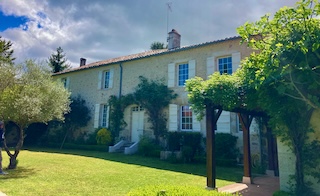
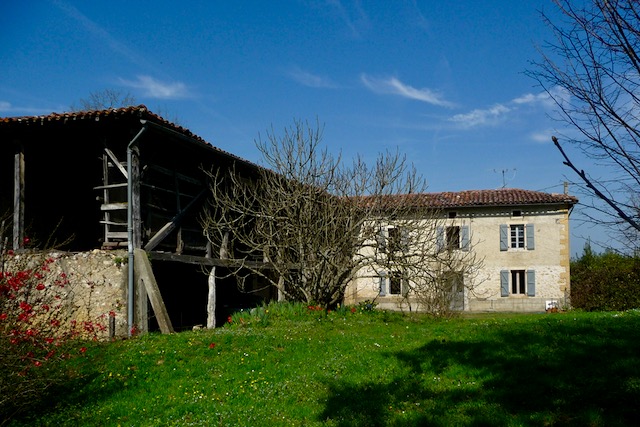
Period houses are top of the wish-list for the majority of people looking for a property in France. The type of period house is often less important so it could a manoir, a maison de maître, a farmhouse or a village house, just so long as it has plenty of character and original features. Anything that encapsulates the history of the region and is built from materials from the landscape in which it sits is very attractive to foreign buyers.
3. A beautiful garden and swimming pool
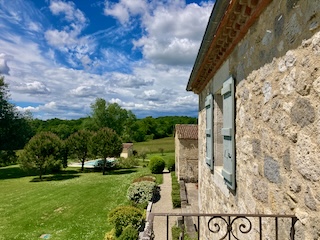
The majority of buyers in France are looking for plenty of outside space, a pretty (but not labour intensive) garden, lovely terraces and, ideally, a swimming pool. Not necessarily lots of land but a private, green space with shade for the summer and sunny, protected areas for the winter.
4. Amazing views
In this part of southwest France, a country view is the most desired outlook with a mountain view coming second. A view is usually one of the aspects of a property which sways a decision during viewing. It is not necessarily what the buyer thinks they want most but can often be the deciding factor in the purchase. A beautiful view that changes throughout the year and with the seasons adds huge amounts of interest to a house.
5. The wow factor
What constitutes a wow factor depends on each buyer and is hard to predict but it can often be an unexpected space such as a double height living room, a vaulted ceiling, impressive structural beams, beautiful elements such as marble fireplaces, a glass fronted room, spectacular views from a terrace or simply a fabulous finish with thoughtful fixtures and fittings. Equally it can be a fantastic pool house, a summer kitchen or a luxury bathroom. It is important however to make sure that the wow factor is part of the house and not simply the seller’s art or furniture which will go with them when they leave.
What all of these things really amount to is that buyers are, consciously or sub-consciously looking for a property that offers a fantastic lifestyle. This can seem random but is, in fact, fundamental to any property search, whether that be for a permanent home or a holiday home. Buying a house is not simply about bricks and mortar (or stone and oak), rather lifestyle opportunities provided by the house and its location. It is not just a roof and some land, people have higher expectations and buying a property in France is still a dream for many people and dreams are notoriously very hard to pin down. But while many of us can’t change our lives completely, we can certainly enhance and improve them and one of the very best ways of doing this is buying a beautiful home in a lovely part of the world.
If you need help or advice in finding the perfect property in France, please get in touch: nadia@foothillsoffrance.com
Like this:Like Loading...
By nadia, on 7th March 2024

In my many years of doing this job, I have viewed thousands of properties so I thought it might be helpful to draw up a 10-point list of the major factors I make sure to consider when I view a house for a client:
1. Location (of course)
Consider factors such as proximity to amenities, schools, and healthcare facilities and an international airport or train station if you are likely to be travelling abroad often or receiving overseas visitors. Can you walk or cycle in the immediate vicinity of the house and, for example to a school, to a village shop, a bakery, a café, a pharmacy? How far is a larger town with all facilities? Evaluate the feel of the area, safety, and accessibility to ensure it aligns with your lifestyle and preferences and the situation in terms of nice views and orientation, whether there is a farm (a geese farm is the worst in terms of noise and smells) or similar in close proximity and also whether it is on a flood plain.
2. Property Condition
Do not get hung up about chips on paintwork, scratches in floorboards, small cracks in plasterwork, peeling paint on windows and shutters and ancient woodworm holes in beams if it is an old property. These things are inevitable and part of the character of an old house but, more importantly they are things that can easily be sorted. More significant is to make sure there are not large cracks in outside walls (that you can get a fist in) which might show the house has moved, or a very wonky or wavy roof that might indicate underlying issues. Likewise big patches of damp or signs of complete neglect which probably indicate that the house has not been well maintained over many years. Signs of everyday wear and tear are fine, however.
3. Outdoor Space
If outdoor living is important to you, examine the property’s outdoor space carefully. Consider the size, layout, privacy, and potential for landscaping or outdoor activities or potential place for a pool. A garden, terrace, or balcony can significantly enhance your enjoyment of the property, especially in the lovely climate we have in this region.
4. Fixtures and fittings
What are the sellers planning to take with them and what are they leaving if anything? Is there something that would be difficult to replace or change the character of a room should they take it? If so, would they be prepared to sell it separately? For example, wood burners are considered as furniture and can be taken by the seller unless specified and agreed otherwise.
5. Internet connection
Does the property have fibre internet connection available? The majority of properties in France, even those deep in the countryside, are supposed to have this facility by the end of 2025.
6. Natural Light and Views
Natural light and scenic views can significantly enhance the enjoyment of a property and south-facing properties are particularly prized. Bear in mind when viewing that many old houses are filled with big, dark furniture and have dark wood beams and floors which can make them feel gloomy, so it is important to try to imagine the house without the furniture and rooms perhaps painted in lighter colours. It is very rare that I see a house here that is genuinely very dark inside as most old houses have big windows on all sides and are well orientated to make the most of the natural light.
7. Local environment
Take time to explore the area, hamlet, village or town and get a feel for its dynamics and atmosphere. Say bonjour to the neighbours and discover the places slightly further afield where you are likely to find most of the amenities you will need.
8. Budget and Financial Considerations
Ask how much the property taxes are and how much the insurance costs plus factor in any potential renovation expenses if you are planning to change kitchens, bathrooms or renovate a barn into guest accommodation for example.
9. Why are they selling?
Find out how long the current owners have lived there and why they are selling. If a property has changed hands frequently over a few years, it is worth trying to find out why.
10. Find out the DPE rating of the property (the energy rating)
But, equally, don’t get hung up on this as it can be very misleading for older properties. For example, many old, French, stone houses have very thick walls and hence excellent insulation, but this is not taken into account in terms of energy efficiency in the energy reports. Likewise, thick wooden shutters offer an effective form of secondary glazing, but this is also not taken into consideration. Neither is whether the house is fully south facing or on the north side of the hill which makes a huge difference to how much you have to heat a house in winter but also doesn’t feature in these reports. The reports have very broad criteria to assess the energy needs of everything from a modern, brick bungalow to a huge, old stone chateau and hence can be misleading but it is useful to see the suggested improvements on the reports, particularly for the potential installation of newer forms of eco-heating systems now available.
It might seem a bit hard-nosed to view a house with a list of bullet points in hand to consider, but it is very easy on a viewing to get side-tracked by the space on offer and distracted by the owner’s furniture or belongings while overlooking the things that will really matter to you long-term. Which is why, even after all these years, I still have my 10-point list with me on every viewing. Everyone will of course also have their own, very individual criteria and important factors to consider for the lifestyle they are looking for and, equally, a house needs to speak to you personally before it is even worth starting to consider all these points but hopefully it will help a little to have this list when out on viewings.
If you need any help or advice with your property search, please get in touch: nadia@foothillsoffrance.com
Like this:Like Loading...
By nadia, on 17th February 2024
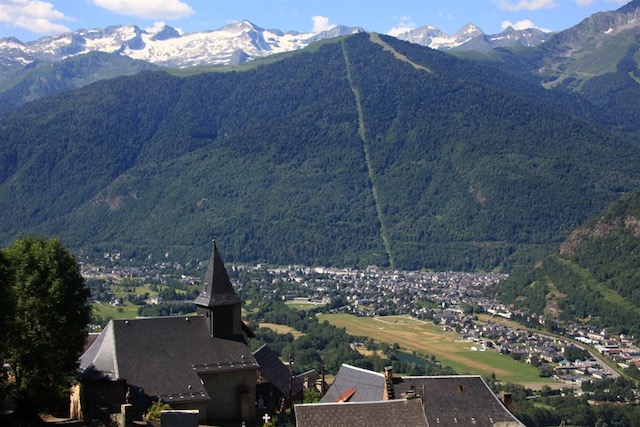
In the latest ‘Ville de Reve’ (dream town) survey of the almost 40,000 towns and communes across France, the small town of Bagnères de Luchon, here in the foothills of the Pyrenees, came 10th (out of 34,900 towns surveyed). Pretty impressive for a town of just 2,220 inhabitants.
This is, of course, great news for the town but I think it is also indicative of the generally high quality of life that exists in this region (probably not always appreciated by the locals but definitely appreciated by those of us not born and bred locally!)
Bagnères de Luchon is an ancient, elegant spa town and ski resort with grand houses and hotels testifying to its illustrious past when the who’s who of Europe descended to take the waters including Flaubert, Bismarck and Mata Hari. The spa was built in 1848 on the site of the old Roman baths. Today the waters are reputed to help rheumatism and ear, nose and throat problems. In spring, summer and autumn health seekers and holiday makers come to Luchon for the waters, the climate and mountains as well as all the facilities on offer in the town. In the winter it is the turn of the skiers and winter sports fans. Other activities available in the area include cycling (the Tour de France passes through most years), paragliding, walking, golf, canoeing, pony trekking and fishing.
The busy, tree-lined, main boulevard Allées d’Etigny, has rows of restaurants and cafés, boulangèries and chocolateries with the accompanying enticing aromas of coffee, wine and food. The town is full of flowers, fountains and gardens and well equipped with shops. Luchon also produces 30 million bottles per year of its own mineral water which has been classified since 1990 and is said to be particularly therapeutic and refreshing.
This is all surrounded by some of France’s prettiest scenery and soaring snowy peaks making one of the most dramatic backdrops you could hope to find. Plus, of course, Spain is only 10 km over the hill. The people here are also some of the friendliest I have met in the whole region.
So, it is hardly surprising that Bagnères de Luchon always comes high on the best place to live lists, ticking the boxes as it does for easy access to beautiful countryside, good accessibility by public transport (a new trainline is currently under construction which will improve this score yet further) and a great community. Moreover, all amenities are within walking distance, there are excellent sporting facilities on the doorstep, it is both dynamic and safe with excellent schooling and healthcare and a very high overall score for quality of life.
Luchon and the surrounding villages and countryside are some of my favourite search areas. Well known and loved by the French, Luchon is yet to be discovered by many other nationalities but that is beginning to change, and property prices have certainly started to rise over the last decade. However, property here is still very good value, both for country houses and for townhouses or central apartments, perfect for a permanent home or a holiday house or, equally, a rental investment for winter and summer tourists.
You can see the results of the survey (in French) here: https://www.villedereve.fr
If you need help or advice with your property search, please get in touch: nadia@foothillsoffrance.com
Like this:Like Loading...
|
For further information please contact us:
|


You must be logged in to post a comment.