View from the Foothills of France

Some personal views on living, working,
bringing up family and making the dream happen in the most beautiful region of France. View from the Foothills of France also includes some personal and professional thoughts and tips on finding and buying the perfect property in the Ariège and Haute Garonne regions.

Archives

Categories

Let them vote – the race to the Palace

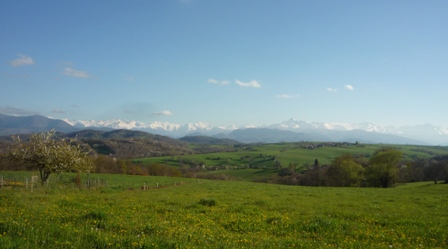
The Foothills of the Pyrenees this week in the Spring sunshine

The French do not believe in simplifying anything more than necessary, particularly when it comes to any official process; bureaucracy – and one’s ability to deal with it – being the basis of the French class system (not that the French like to admit to a class system.)

Hence, the French presidential election process is complex and full of rules and regulations; even to get on the ballot, candidates need signatures of 500 elected officials. Once this has been achieved, there is not just one round of voting but two. For 2012 the official candidates are Eva Joly, Marine Le Pen, Nicolas Sarkozy, Jean-Luc Mélenchon, Philippe Poutou, Nathalie Arthaud, Jacques Cheminade, François Bayrou, Nicolas Dupont-Aignan and François Hollande. The most notable name missing is Dominique de Villepin, who didn’t achieve the necessary 500 signatures. The first round of the election is April 22nd, with the second on May 6th. At the moment, Hollande is leading the race with Sarkozy a close second.

During the first part of the official campaign period – March 20th to April 9th – candidates have to be given the same amount of coverage on television and radio. This sounds fair but in reality what actually happens is that for some of the lesser known candidates, media channels run repeats of interviews or rallies late at night or early in the morning to ensure that the rules are met. However, from April 9th to 20th all candidates also have to be given the same type of air time; in other words if one candidate is interviewed on the evening news, then all the other candidates have to be interviewed for the same duration and at the same time.

The recovery of the French economy seems to be the main concern of this 2012 campaign although security and immigration are also a big focus. The property market in general remains an important topic mainly focusing on public housing and low energy-consumption buildings, whose number should be – according to all candidates – dramatically increased.

Although the loss of France’s triple A rating in January didn’t seem to have an effect at all on the property market, usually a forthcoming presidential causes a slight decrease in property sales and in the number of new properties coming onto the market. So far this time however, the market seems to have generally ignored the elections and property sales are strong, perhaps because France seems to be a much safer bet than most of its neighbours during the current economic crisis. Plus of course the interest rates here have remained low and stable and no candidate has proposed any drastic change in estate laws.

Whatever the outcome of the election– which I certainly would not dare to predict – it seems safe to say that French property remains as good an investment as ever and the country still offers the best available mortgage rates in Europe. Most importantly, here in this lovely part of South West France, much as everyone loves discussing politics, what really matters is family, friends, good food and good wine and enjoying life each day as it comes. Whoever wins the election and even if Europe goes into complete financial meltdown, I don’t really think much will change here.


Alive and thriving in our hidden corner of France

Nadia Jordan and family felt life was predictable, so they left for a place where no one talks about house prices

The first question we are often asked when people discover we live in France is why did we move, lock stock and barrel with three young children to a place practically nobody has heard of? It is an obvious question and most people are probably expecting an interesting answer, but usually the best we can come up with is: “Too much red wine one Saturday evening.”

Perhaps that’s a bit trite but our move here certainly wasn’t particularly well considered or well researched. It was really just one of those ideas that we had vaguely discussed for many years.

It wasn’t that we weren’t quite happy where we were in Dorset; in fact, we were incredibly content but we just felt that we were perhaps slipping too easily into a comfort zone from which we would never dare move. We had a comfortable, middle-class lifestyle, good friends and beautiful rolling countryside all around us.

Our neighbour was Hugh Fearnley-Whittingstall who had just installed himself in River Cottage and was about to launch his television career on the back of living the good life, the life we were already living. So what possessed us to give it all up?

Maybe we just felt that it was all too narrow, all too predictable. Suddenly we could see the next 20 years mapped ahead of us. Discussion about “which school” had been going on at dinner parties since the children had been in nappies and the house-price discussion was part of every conversation. It wasn’t that we wanted to escape, nor that we wanted something more, rather that we wanted to challenge ourselves, get out of that comfort zone and feel alive again.

We were lucky: our children were still young enough to adapt to pretty much anything we could throw at them and we both had jobs that we could continue from anywhere in Europe.

I would like to say that we then did copious research before we decided where in France to stick our pin – but I would be lying. We actually put our house on the market, accepted an offer, put most of our belongings in storage, packed two cars with our suitcases, the children and our long-suffering black Labrador and headed off in convoy to the ferry for a new life in France.

That was nine years ago and we are still here in our beautiful, hidden corner of South West France, the Ariège, where only the most intrepid fellow Brits dare tread. Well, I might be exaggerating somewhat, but it certainly feels like La France profonde here, tucked away, hidden and unspoilt, with open mountain valleys, rivers and soaring mountain peaks as our daily backdrop and not too many Brits taking The Telegraph with their morning crème.

In the respect that we are living a country lifestyle, our life here is not that different from Dorset but the fact that we are doing it all in another language and culture makes every day an interesting challenge that makes us feel alive again. There are no discussions about house prices and school fees here; it is rare for anyone to even ask us about work. The stereotype of good living and emphasis on food is right – people here are more interested in how you are going to cook your mushrooms for your supper and what wine you will choose to go with them.

But the French also love debate. Discussions about the important issues of the day and on all levels of politics are the norm – everyone has an opinion and there is definitely a feeling that people want and expect to be involved in the running of their community and country.

And that for us is one of the many reasons we love living here. Our French friends and neighbours have different backgrounds and different ideas but what is also very evident to us is that people here have their priorities right. I believe the quality of life here is better in general than in the UK; the schools, the health care, the food and wine and the community spirit are all fantastic. There is practically no crime (except terrible driving); our children are bilingual; and then there’s the climate. We spend most of our time outdoors, we cycle along the valleys, swim in the clear rivers and have easy access to the mountains for walking and skiing. We shop for fantastic fresh produce in markets, eat outside half the year, and we are surrounded by fabulous views.

Of course not everyone can just up sticks and move to France; we know that we are lucky. My husband is a pilot and commutes to Heathrow and I have for many years worked freelance in marketing and PR and as a copywriter.

Three years ago I set up my own fully registered property-finding company here in France so that I can combine my professional skills with my personal experience of finding and renovating old properties and living and working abroad to help others make the move. I work for private clients, with the aim of finding them their dream home but, unlike many similar property search agents in the UK, I work with all budgets from €30,000 upwards.

Agents here are really behind the times; many don’t have websites and those who do rarely update them. French estate agents also work differently from English estate agents and are not interested in taking your details to tell you of suitable properties as they come on the market.

They expect you to visit them and then will show you what they have available on their books at that time: a very frustrating and time-consuming business. Here the agent’s details contain only the most basic facts, so it is impossible to tell what a house is really like – let alone whether it’s near a noisy road, dog kennels or rubbish dump.

So I do all the time-consuming initial trawling thorough property details, then visit all possibilities before drawing up a short list of houses that meet my clients’ needs exactly, complete with photographs and in-depth description so that they do not waste time and money viewing unsuitable properties.

Of course there are things that I miss about living in England and there are aspects of living in France that drive me mad (yes, the paperwork thing is true) but it has been a fantastic experience and I would encourage anyone to try living in another country and culture if just for a short time.

If there is one thing we have given to our children (now numbering four!) by bringing them out here, it is freedom and space to be who they want to be as well as tolerance, self-confidence and adaptability to take whatever life throws at them and do something with it.
Nadia’s company is at foothillsoffrance.com.

This article was originally published in the Telegraph Weekly World Edition.

It’s all in the detail

This is a bit of a méli-mélo or hotchpotch of a blog today because I have one snippet of information that is fascinating but useless and another which is boring but highly useful! So with which to start?

Let’s get changes to french inheritance law out of the way first which will have an important affect on Britons and non-French EU nationals. Previously (and thanks to Napoleon), everyone owning property in France was subject to France’s inheritance laws which meant that, on the death of one spouse, their half of the property was automatically passed to their children rather than to the surviving spouse. This rule was introduced to prevent children being disinherited by their parents and although the surviving spouse was allowed to continue to live in the property, he or she did not fully own it and could not sell it without agreement of the children and giving them half of the proceeds.

While this is still the case for French citizens, the European parliament has now passed a regulation which allows expats in France to dictate in a will that they want the law of the state of their nationality to apply to their estate and not French inheritance law. This, in effect, means Britons in particular can leave their estate to whoever they wish and not be bound by France’s strict inheritance rules as at present, which is great news for my clients as it takes away one of the last complications of buying property in France.

So onto something far less useful but a little more interesting: Did you know that Beethoven used to keep 60 coffee beans on his desk. Why 60? Well apparently 60 is the magical number of beans that it takes to make 7 grams of coffee – which in turn will give you the perfect shot of coffee. Of course the exact formula of coffee beans make the difference, the degree of roasting and no doubt the side of the bush that they were picked from. I have never had much time for bean counters but a cup of coffee is far more important than the bottom line (I hope my accountant isn’t reading this) and this is one theory I am certainly looking forward to trying out.


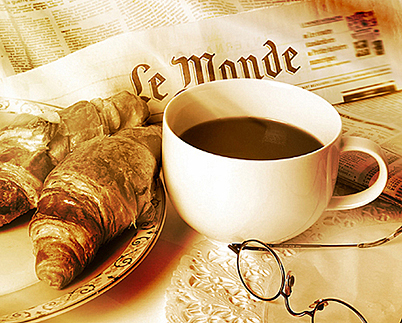
Give me my daily café and croissant

The smiliest bakers in the Midi-Pyrenees - in Salies du Salat, Haute Garonne

If I had a Euro for every time someone has explained to me that what they would really like is a house on the edge of a village or small town, within walking distance of a boulangerie and café, I would be able to retire. I keep thinking that I should be setting up a chain of boulangeries with attached cafés all over South West France, as there is clearly a huge demand.

This is part of the dream of living in France for many of us; the morning stroll for coffee and croissants in the sunshine. France, like everywhere, has lost many small, family run businesses that did indeed used to provide exactly this service in practically every village in the country; all down to changing lifestyles, more families where both partners work away from where they live and lack of customers thanks to the ease of just popping into a supermarket on the way home from work to stock up on just about everything.

Luckily, however, in this part of France at least, it is still possible to find small towns and villages that do still have some kind of amenities – so here you can live that dream. And things have also adapted; the local boulangeries have realized that, if their clients don’t have time to come to them, they must go to their clients. So there is now, just about everywhere, a boulangerie on wheels; a van that drives around to even the remotest hamlets delivering bread at a set time most days of the week. This is why, when you are passing through villages here, you will often seen a bag or basket hanging on a gatepost or left on a front step – this means that the owner is out at work and requires the daily bread delivery. It is a very similar system to the milkman in the UK but, in France, bread is king and the French cannot survive without a fresh baguette (or two) every day.

Hence, on my searches, uppermost in my mind is always how far my clients are going to have to travel for their daily bread, croissants and local café (they say once you have found your café, you have found your home) and the closer the better. There is a lot to be said for living in a village community where you get to meet your neighbours everyday in the bakery and also a huge advantage in being able to walk to get basic supplies. This is why places such as Aurignac, Castelnau Magnoac, St Lizier, Salies du Salat, Bagnères de Luchon, Aspet, Arbas, Castillon, Cassagnabere, Betchat, Monleon Magnoac and many others, nearly always make it to the short-list for my clients; location really is vital. And I am very pleased to say that one of my favourite villages has just announced the opening of a new village bakery/shop. This makes me think that perhaps, with the ever-increasing cost of driving and the rising number of people working from home, perhaps the tide is turning and that we are about to see the rise and rise of the village bakery, store and, of course café. I really hope that is the case.

In the meantime, I will continue to ensure that my clients are as close as possible to a place where they can enjoy a coffee, croissant and chat; spending time in the local café and boulangerie is, after all, the first and probably most important step to integrating into the local community here in the Midi-Pyrenees.