View from the Foothills of France

Some personal views on living, working,
bringing up family and making the dream happen in the most beautiful region of France. View from the Foothills of France also includes some personal and professional thoughts and tips on finding and buying the perfect property in the Ariège and Haute Garonne regions.

Archives

Categories

The Healing Properties of France; the advantages of buying property near a French spa town

The thermal spa in Bagnères de Luchon

The thermal spa in Bagnères de Luchon

Before moving to France I thought that ‘the Cure’ was an 80s pop group but, this being a land of hypochondriacs (and I say that in a fond way) it turns out that ‘the cure’ is actually something you can get on prescription here. I first heard about it when visiting the lovely thermal spa town and ski resort of Bagnères de Luchon; it was April and I was amazed by how busy it was and commented on this to a local restaurant owner. He told me most of the visitors were there to take ‘the cure’.

Here in France, the doctor can prescribe ‘the cure’ for all sorts of illnesses and ailments ranging from arthritis to asthma to diabetes and poor circulation to name just a few. The cure actually involves a trip to a thermal baths/spa to drink the water, soak in the water and get various treatments involving minerals and thermal mud and this treatment can take anything from a few days to a few weeks. What’s more, France having some of the best health care in the world, the majority of the cost of these treatments is covered by the French equivalent of the NHS with the rest usually being paid for by the patient’s top up health insurance known as a mutuelle. Costs covered include the cost of the treatment, the costs of accommodation in the resort while having the cure and the costs of travelling there and back again.

What does this all have to do with the property market? Well quite a lot actually because it explains the year round popularity of thermal towns in France and hence the year-round, high demand for rental properties. So, for example, in Bagnères de Luchon, the ‘Cure’ tourists tend to come in low-season which is spring and autumn while the winter season is booked out by skiers and the summer by walkers, cyclists and summer holidaymakers. So although ‘the cure’ might seem like another generous hand out by the French state, it also has a huge number of knock on benefits in numerous towns around the country and ultimately ensures both a thriving year-round holiday market and a thriving property and rentals market.

Which just shows that it pays to take care of your health as any French person would tell you.

Expat retirement in France

Retirement 'paysan' style in South West France

Retirement ‘paysan’ style in South West France


Many people dream of retiring to France to enjoy a better quality of life and climate in their later years. If this is your plan, probably the first things to consider (dull though they maybe) are the various financial and legal implications of your move including how to fund your retirement, which retirement and inheritance rules are applicable and your tax liability. Once all of this has been dealt with, you can concentrate on the more interesting things such as finding the perfect place to live, which is where I come in…but back to the basics first:

In France you may retire from the age of 62 as long as you have been in employment for 42 years, although people generally retire at 67. Whilst you can work up to the age of 70 most don’t chose to do this, and in some professions it’s even possible to retire at 50/55 (people working in public transport have this option). Women are also entitled to retire two years earlier for every child they have.

For EU citizens the process of retiring to France is relatively easy because of all the reciprocity treaties covering areas such as healthcare and taxes but it is more complicated for citizens from Australia, South Africa and the US. If you are a US citizen, you will need to communicate with the US Embassy in Paris to make sure you receive the benefits to which you are entitled. Many Australian and South African clients have a UK passport which makes the process simpler but, otherwise it is worth taking advice. Many of my clients from these countries do not spend the whole year in France and hence get around the regulations this way.

As it stands, EU citizens who have retired to France are entitled to vote and participate in local elections. If you plan to spend your retirement in France you must pay local taxes, even if your income comes from another nation. Retirees in France must be covered by a health programme (comprehensive private medical insurance etc) but retirees also qualify for daily benefits and perks, such as discounted or free entrance to museums and attractions, not having to pay TV tax and being able to use public transport for a reduced fee.

Most people moving to France have a legal will in place in their own country. However as the law stands at the moment, this may not be applicable because under current agreements, the law of the country where your house is situated governs the inheritance laws, while the law of the country of your final residence governs all of your other assets (investments etc). Thus, if you stay living in the UK, your English will would govern your English home and your other assets, while if you move to France permanently, your house in France and your personal assets are governed by French law.

There are however new rules coming into force in August 2015, the intention of which are to ensure that a person with assets in another jurisdiction will be able to apply the inheritance rules of his or her country of nationality to the assets in the other jurisdiction so current laws will no longer apply but it is certainly worth taking legal advice on the matter for inheritance tax purposes.

One last point on financial issues; there is in France the much talked-about wealth tax although this is only ever going to be applicable to a very few French property buyers. Where the net value of the estate (there are allowances such as certain debts, certain professional assets) exceeds 1.3 Million Euros, then an annual tax is applied on the total value beyond the first 800,000 Euros.

And just a general but important point on retiring to France; it will be so much easier if you can at least speak a bit of French and a much more rewarding and enjoyable experience. The more of the language you know the more easily you’ll be able to interact with your new neighbours and other residents..

Retiring to France I would suggest is probably one of the more sensible decisions you will make on many levels but it is important to take advice from legal, financial and property professionals to ensure you can really relax and make the most of your new life in France (and please note I am neither a legal or financial expert and rules change all the time so this blog is for guidance only but I would be happy to put you in touch with relevant advisors.)


France still offers the chance to follow your dream

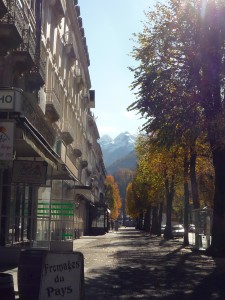
Autumn Bagnères de Luchon

Autumn Bagnères de Luchon

I have been working on a search to find two separate properties for an English client who completes on both of them this month. I know she won’t mind me mentioning her because I think she is a real inspiration to us all. Instead of taking early retirement in the UK and putting her feet up, she has decided to move lock stock and barrel to France to really make the most of her new found time and enjoy the ‘good life.’ This is brave enough on your own and at this stage of life but even all of this was not enough of a challenge for her. So she also asked me to find her a lovely rental apartment in the nearby ski and spa town of Bagnères de Luchon. This is going to provide her with a ‘job’, a steady income and also with a way of ensuring that she gets out and meets people and makes the very most of this beautiful region.

I think what she is doing is just fantastic and I hope I hope in ten years time that I have as much energy and zest to strike out in new directions, take on new challenges and head off on new adventures. Such a dream would have been very difficult to achieve in the UK but here it is more than possible. I take my hat off to her and, being the person she is, I know she will make a huge success of her new life here and never regret for an instant leaving the metaphorical pipe and slippers back in England. Bonne chance.


House buying à la français

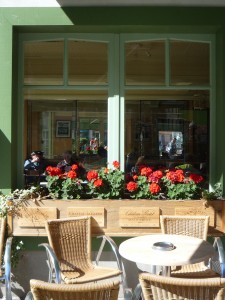
CAFE FRANCAIS ASPET

CAFE FRANCAIS ASPET

All the talk in the British press (as well as in the Australian and American press) over rising house prices, gazumping, gazundering and property bubbles makes me (yet again) very glad to be living in France where people are rather more rational about houses and the property market is hugely more stable and reliable.

I would not like to run a property finding business in a country where you can still lose the house of your dreams five minutes before exchange or even completion. I remember all that stress with horror and I am so glad that my clients do not have to go through that here. The French property buying system is much more regulated and straight forward and far less stressful for both buyers and sellers.

Here’s how it works in France: Once you have seen your perfect house, the first stage is to make an offer. I usually do this verbally while carrying on negotiations and, as soon as a price has been agreed, I put the offer in writing and the vendor signs an offer acceptance. At this point, a Notaire is appointed who usually represents both seller and buyer (this avoids all the complication and time-wasting involved when two legal bods have to communicate with each other) and the initial but binding contract, the Compromis de Vente is drawn up. This usually takes around 10 days to two weeks for this to be ready for both parties to sign (although it is sometimes possible to sign almost immediately) and both parties submit a deposit of 5-10% to the Notaire. As soon as the seller signs, they are legally bound to sell or forfeit their deposit. The buyer has another seven days after signing, known as the ‘cooling off’ period when they can still pull out but, after this, they are also bound to proceed with the sale or lose their deposit.

Once the Compromis de Vente is signed, in most circumstances, the house is yours. The only reason why the sale should fall through from this point would be if there was a ‘Clause Suspensive’ in the Compromis allowing an ‘opt-out’ if , for example, the buyer fails to get a mortgage. Otherwise, from this stage, which is usually about three to four weeks after the offer is accepted, both buyer and seller can relax and start making plans for moving house at an agreed completion date (where the Acte de Vente is signed) which is normally around three months from the signing of the Compromis. There is none of the stress that somebody might come along with a better offer and you will lose the house nor that the buyer will suddenly decide that they want to pay less than agreed and reduce their offer price – this just cannot happen.

To me the French system makes so much sense and works so well that I cannot understand why in the UK and other parts of the world, countries still hang onto a stressful and complicated process of selling and buying houses which, moreover, seems to bring out the worst in everyone.

Of course you can never eliminate all of the stress involved in finding and buying a property but at least here in France, it is a safe, regulated and usually an exciting and enjoyable experience which, more often than not, ends with a shared glass of champagne and the first of many new friendships.