View from the Foothills of France

Some personal views on living, working,
bringing up family and making the dream happen in the most beautiful region of France. View from the Foothills of France also includes some personal and professional thoughts and tips on finding and buying the perfect property in the Ariège and Haute Garonne regions.

Archives

Categories

New Year, New Horizons

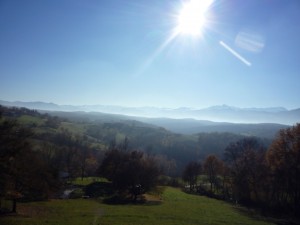
Winter sunshine in the Foothills

Winter sunshine in the Foothills

Happy 2015 to you all and I hope you were also lucky enough to be able to enjoy your Christmas Day apéritif outside in the sunshine and perhaps go for a snowy walk on Boxing Day followed by some excellent skiing in the days leading up to New Year. If not, perhaps you are living in the wrong part of the world…

It is always easy to take for granted where we live but I do find that winters out here really bring it home to me what a beautiful and blessed region of France we call home. Winters in the foothills tend to be predominantly sunny with lots of crisp, blue sky days and often warm enough for lunch outside, even in deep mid-winter. Because we are lucky enough to have views of snow-capped mountains at every turn, I know many people assume that this is a cold or even snow-bound part of France but this couldn’t be further from the truth. It is rare for us here in the foothills of the Pyrénées to have more than a smattering of snow each year and usually less than the UK. The mountains provide a protective barrier and we are about as far south as you can go in France before hitting Spain so, when the sun shines, it still has plenty of warmth even in winter.

Even better, however, we have the choice of either enjoying the view of snowy peaks from our sunny terrace or jumping in the car and, an hour later, be enjoying some first rate skiing in one of the many lovely and still relatively undiscovered and uncrowded ski resorts of the Pyrénées for half the price of skiing in the Alps. At the end of the day, we often drive back home and finish with a cup of tea in the garden in the afternoon sunshine before night falls and it’s time to enjoy proper winter evenings in front of the fire. To my mind, we really do have the best of both worlds.

So just because there is a view of the mountains from many of the properties for sale here in the southern Midi-Pyrénées, don’t be fooled into thinking that it must be a cold, mountain climate or you will be missing out on one of the most beautiful, unspoiled and truly special regions of France.

Happy New Year and may all your French property dreams come true in 2015.
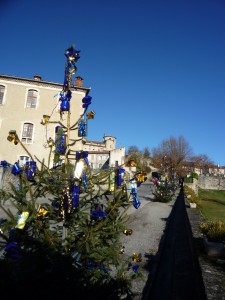
 

A Very French Christmas

IMG_0442_2

St Lizier

Christmas tends to represent a very definite deadline in the property market; sellers want to know that they have sold and can move on in the New Year and buyers want to have completed and preferably be in their new home for Christmas. By mid December, property hunters have other things on their mind (and over-stretched bank accounts) and sellers have usually decided to wait until the New Year to market their properties. As for agents and Notaires, well they generally go into hibernation in December.

The majority of my clients this year (save those currently going through the offer or completion stages) are now the proud owners of their own home in France which means that their Christmas will have a French theme, lucky them. Christmas here in the foothills of France, to my mind, encompasses all the things that are really important about Christmas while shrugging off (in a very gallic manner) all the worst elements.

The focus in our part of France is on family, food and, because we are lucky enough to be within striking distance of the mountains, snow. In the UK the build up to Christmas seems to start earlier and earlier whereas here, Christmas decorations are only just going up. Of course there is all the usual Christmas fanfare in the shops but there is just not the hype nor the stress here that there is in many places. Most people (us included) will do the majority of their food shopping at one of the many fantastic local markets in the few days before Christmas, all of which will be fresh, locally grown and predominantly organic.

The Christmas meal usually consists of oysters, smoked salmon and foie gras followed by either turkey or, more usually capon, salad, cheese and then the Buche de Noël, the traditional French log. And no shops or restaurants are open on Christmas day because Christmas is, above all, a family celebration here so nobody is expected to work and the majority of people will be spending the day en famille.

Usually the weather at this time of year in South West France is glorious with cold frosty mornings, blue sky, sunny, warm days and chilly evenings that are best spent in front of the fire. And thanks to our privileged location, we know that we will always have a white Christmas because on Christmas Eve and on Boxing Day we can drive up into the mountains for some sledging, skiing or snow-shoeing, picnics and mulled wine. Now that’s what I call a proper Christmas.

Wishing you all a wonderful and very bonnes fêtes, a very happy New Year and may all your property dreams come true.

Skiing yesterday in the Pyrenees

Skiing yesterday in the Pyrenees

When in France….

IMG_1360

France is the most visited country in the world so you would think that we would be familiar with French cultural idiosyncrasies but many of us still struggle to do ‘the right thing’ when in France. So here’s some pointers:

Christmas – Let’s start with seasonal differences as it’s that time of year. The main Christmas meal in France is usually served on Christmas Eve and presents are opened at midnight rather than on Christmas day itself. The meal traditionally consists of oysters followed by a capon (a large castrated cockerel!) and a Bûche de Noël for pudding. All washed down with some rather decent wines of course.

Happy, happy, happy new year – Sometimes for weeks (or longer) after the New Year you’ll be expected to wish “Bonne Année” (Happy New Year) to anyone you meet who you are seeing for the first time that year. But don’t say it to the same person twice, that’s not good form…!

‘Cheers’ – It is customary not to serve drinks at a gathering until all the guests have arrived. When it is time, glass in hand, to say “santé” (cheers), be sure to make eye contact as you clink glasses. Failure to do so condemns you, in French lore and in true French fashion, to seven years of bad sex.

Man kisses – A French man kissing a French man on the cheek usually means nothing more than ‘hello’. French men often kiss their male relatives or close friends instead of shaking hands.

Bonjour – Every interaction in public must begin with a clear “bonjour”, even if you are just entering a shop, asking directions or looking for something in a store. Failure to do so is seen as very rude.

French formality – In many countries, it is nowadays acceptable for salesmen to address you by your first name. In France, things are still much more formal and it is almost unheard of for someone you don’t know to use your first name. Monsieur or Madame are the only acceptable address.

Chit chat – Starting to chat with someone you don’t know in a queue or in a shop is usually best avoided. The French are generally not very comfortable about talking to random strangers or making small talk.

Tu or vous – In French, it is necessary to negotiate a minefield when deciding whether to use the informal “tu” or the formal “vous”. The golden rule is to err on the side of caution and go for “vous” if in doubt. And develop sneaky techniques to get the other person to say “you” first so you know how to reply. Once you have agreed to ‘tu’ each other, however, it is then the height of rudeness to use the ‘vous’ form. Like I said, a minefield!

Jobs and income – While it is changing for the younger generations, the French really don’t feel comfortable talking about the job they do, how much they earn or how much they spent on their car/house etc. Showing wealth is generally frowned on in French society (well country French society, Paris and Nice could be different). The taboo may partly stem from the ideal of social equality in French culture (although in reality there is as much class division here as in many other countries).

Service – The French are not renowned for their service so you will wait a long time if you expect someone to help you pack your shopping in the supermarket or for an extra till to be opened just because the two out of ten tills that are staffed have endless queues. The French generally don’t mean to be rude or unhelpful when serving but they have a horror of servility – back to the social equality thing. It’s easiest just to accept this.

Coffee-to-go – Eating and drinking in the street and on the go is still frowned on in France and is rarely seen. The French do not tend to snack and nearly all will stop for a sit-down lunch.

There are many more idiosyncrasies to be negotiated when living in France but don’t worry too much, French people tend to be very forgiving about a foreigner’s faux pas, especially if you at least make some effort to respect their traditions and culture.

Home exchange; more benefits of owning a house in France

P1150247

Living like a Parisian for a week

Owning a house in France means that you can sometimes feel as if you are unintentionally running a hotel and restaurant, especially if said house happens to have a pool, a sunny climate and interesting activities on offer in the vicinity. Many of the reasons that you chose the property are the same reasons that makes it appealing to guests which is great but hosting people for a week is a quite lot different to having someone over for a meal.

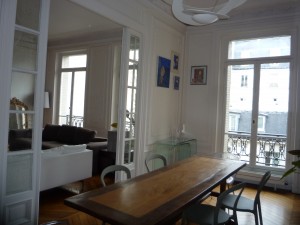
However, there is another huge plus side to owning a house in a location where people want to come on holiday; you will find that suddenly you are in huge demand for home exchanges. We have just done our second home exchange, this time to Paris and we had a week in a beautiful apartment in a stunning building right in the very centre of the city, walking distance to just about everything. An apartment in central Paris sleeping six people would be hugely expensive to rent for a week so, in the current belt-tightening times, what could be better than exchanging homes instead, especially if it is the difference between having a holiday or not? The whole idea is such a clever and obvious concept; after all, why leave your house empty for a week and pay someone else to spend a week in their house – why not just find someone who lives in a place where you would like to go, who would like to visit the area you live and then swap houses, cars, pets, neighbours etc? Obviously it helps to not be too precious about your house and the scheme is very much based on trust but it is a trust that works both ways which is why it seems to work.

What’s more, living in a real home is so much nicer and more authentic than staying in a hotel like all the other tourists; we felt as if we were real Parisians not just visitors. We were able to go out every morning to buy our croissants from the bakery around the corner, eat out in our hosts’ favourite restaurants and live like locals for the week. Of course, we also did the museums and tourist sights and re-discovered some of our favourite Parisian haunts all the time knowing that our hosts would equally enjoy swapping the grey skies of Paris for the sunshine, green hills and mountain views of our beautiful part of the Ariège.

Maybe we have just been lucky but, so far, exchanging homes seems a win-win situation and by the number of requests we get on our home exchange site, it certainly seems to be a concept that is gaining in popularity. There are many advantages of living in a very beautiful part of France but being able to exchange our home for other wonderful homes was not one we had thought of until we realised that we lived in a place that everyone else wanted to come on holiday.

photo

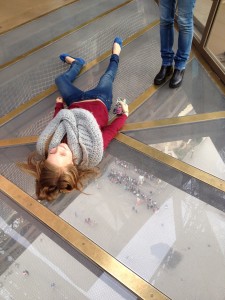
The new glass floor in the Eiffel Tower