View from the Foothills of France Some personal views on living, working,
bringing up family and making the dream happen in the most beautiful region of France. View from the Foothills of France also includes some personal and professional thoughts and tips on finding and buying the perfect property in the Ariège and Haute Garonne regions.
|
By nadia, on 24th February 2017 
Toulouse
Buy-to-let property is no longer the gold mine it once was in many countries; increasing costs, decreasing profitability, difficulty in getting finance and removal of mortgage relief in the UK mean that investors looking for better returns and a safe investment are eyeing up alternative markets. The same is true for South African buyers looking to invest in a stable property market with lower interest rates and for Australians looking to capitalize on the strong Australian dollar. France with affordable property, very low mortgage rates, a strong rental market with excellent rental returns and a stable political environment is proving the most popular alternative and the buy-to-let market is beginning to take off here.
Historically France has always been considered a stable place to invest but, traditionally, foreign buyers have been more attracted to France’s countryside, letting out their property as a gîte in peak holiday seasons. Having a holiday let in France can be an easy and reliable way to make money if the property is in a good location and well marketed. However, as more and more French country gîtes come onto the market, getting bookings has become increasingly competitive. Holiday lets are also labour-intensive and the investor must find someone to clean and maintain the property.
Hence property buyers wanting to generate the maximum income with the least effort are looking to more traditional, longer term buy-to-let markets, more often in French towns and cities. Longer term lets can ensure a regular stable income, have fewer advertising costs, no changeover fees, lower agency costs and are likely to have less wear and tear.
The regular long term rental market is one that frightens many international owners, either because they do not speak French, or because of the laws on security of tenure which are heavily biased in favour of the tenant in France, especially if the property is unfurnished. In this case, the minimum rental contract is for three years with the tenant having first right of refusal to stay for a further three years. At that point, they can only be given notice if the landlord plans to live in the property himself or sell it.
Furnished properties are more flexible as they have a minimum term of one year contract and, if you let to students, it can be shorter; hence this is one of the most buoyant areas of the market right now as there is a great shortage of student accommodation in France. Toulouse, for example, is one of France’s fastest growing cities with a large student population and not enough rental accommodation. Here, a standard one bed apartment in the city will rent out for an average of €596 per month while average apartment prices are €2,624 per square metre. Just remember that, even though you may not be resident in France you are liable to French income tax on your rental earnings and unfurnished lettings also face social charges.
Nevertheless, a buy-to-let property is a one of the most fiscally attractive income streams in France, as the tax breaks are generous and small landlords are not liable to self-employed social security contributions. In terms of capital gain, in the long term, French property also looks like a very sure bet; prices increase slowly and surely here and, as long as you buy in a good location, you are likely to see a long-term capital gain.
As ever, it is always important to take professional advice before buying property in France. For any questions, please email me on nadia@foothillsoffrance.com
By nadia, on 6th February 2017 
According to a recent article in the New Yorker; in the week following Trump’s election, 13,401 Americans, took the first official step toward New Zealand residency by registering with the country’s immigration authorities, presumably looking for some kind of bolt-hole should it become necessary. I mentioned this to a French friend and his reply was characteristically patriotic (if slightly tongue in cheek) which, loosely translated was; ‘that’s because they haven’t discovered the Ariège.’
On further research, it turns out that he may not have been too far off the mark. Certainly, in their search criteria, these American buyers in New Zealand appear to be looking for all the elements also to be found here in the Ariège. For example, another article on the same subject in the FT points to the ‘growing number of self-sufficient estates on the market in New Zealand that are typically pushed to offshore buyers to meet the recent trend for the global super-rich hedging against the collapse of the capitalist system…..they want privacy, security and a beautiful rural landscape,” says Matt Finnigan, sales associate at Sotheby’s International Realty New Zealand. “Sustainable properties generally come with their own water supply, power source and the ability to grow food. In addition, there is the access to the ocean, mountains, lakes, beaches, streams, water, numerous outdoor activities, a safe environment and great little cities and communities while the nature in New Zealand is still relatively untouched. Plus more and more people aspire to the idea of being able to live off the land with utterly natural and pure food sources.”
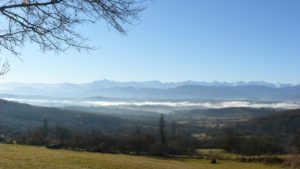
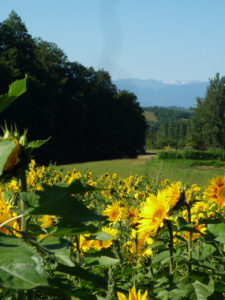
This could equally be describing the Ariège region and, indeed, what many buyers are looking for when they buy property here which explains why the region is becoming more and more sought-after in this uncertain post Brexit, post Trump, divided and uncertain world. By a wonderful freak of nature, the Ariège region happens to be set in an area of glorious, unspoiled and outstanding natural beauty, much of it national park with the Pyrénées providing a stunning backdrop. It has a great climate, plenty of sunshine and rainfall with both forests and fertile soil with fantastic food and wine, much of it organic. All of which provides the ideal conditions for getting away from everything and for living ‘the good life’. This area feels protected and authentic with traditional values and an abundance of mutual tolerance for different people from various backgrounds and origins; a very strong ‘live-and-let-live’ attitude. There are plenty of opportunities for living off-grid and, breathtaking scenery in abundance along with affordable property – you don’t need to be a billionaire to live here. In addition, the great advantage that the Ariège has over New Zealand of course is that it is much more accessible from just about everywhere.
Hence, my Ariège neighbour (despite naturally being biased) is probably not far wrong in his assessment after all. Get in touch if you need any help with your property search or have any questions about buying property in this region: nadia@foothillsoffrance.com
By nadia, on 19th January 2017 
Since the start of the year, local authorities in France have been banned from using chemicals to clear weeds in public spaces, on roads and on paths. From 2019 this law will also apply to private householders. This pesticide ban is part of wider legal change in environmental law which will includes a ban on throwaway plastic bags for fresh produce (including at markets) and, from 2020, a ban on plastic cups, plates and utensils.
Pesticides are now proven to be dangerous to health (as well as destroying fragile ecosystems and destroying natural balance) and, in the last few years many French communes have already begun to rethink how they can maintain public spaces without using chemicals. Many have already turned to gas burners to get rid of weeds and traditional methods such as salt and vinegar on paths.
The city of Lyon has been pesticide free since 2008 in all its 300 parks and gardens, turning instead to the help of thousands of ladybirds brought in to eat aphids and other bugs and by using mulch to stop weeds on the soil, beer traps to cut down on slugs and natural compost from its garden waste. Before 2004 it spent €30,000 a year on chemicals and pesticides on transporting 3,500 tonnes of leaves and grass clippings by lorry to a company that turned it into compost. Now the city has bought its own garden shredders and created its own composting area, increased its green spaces by 10% and the whole system pays for itself.
France does not shout about its green credentials but it is way ahead of many countries in this area and it is these continual little improvements (which often go unnoticed) that gradually but substantially improve the much talked about quality of life in France and for all of us who live here or who are planning to live here one day.
By nadia, on 5th January 2017 
According to the OECD, property prices in many advanced economies are at dangerous levels raising the risk of massive price falls if markets overheat. This comes amid predictions of higher interest rates, higher inflation and general political uncertainty worldwide.
The OECD’s report said countries such as Canada, New Zealand and Sweden have all seen rapid increases in house prices over the past few years that were “not consistent with a stable real estate market”. Meanwhile, the EU’s financial risk watchdog recently warned that eight countries in the EU, including the UK, had property markets that risked overheating in the environment of low interest rates.
France, however, has always enjoyed one of the most stable housing markets in the world, with steadily increasing prices rather than dangerous peaks and troughs and, hence, it is still considered to be one of the safest and most secure markets for property investment.
A recent BNP-Paribas report noted that, although ‘France has suffered like most Western countries in the midst of the recent financial and fiscal crises, the country’s real estate sector has remained steady. Property prices in France have increased steadily over the 20th century, and while there have been some notable blips during that time, those investors who are prepared to plan for the long-term should expect more of the same. Despite the drying up of credit, sovereign debt and austerity measures, the French property market has proved that it is robust and sufficiently stable to withstand temporary periods of decline. The French property market is one of the most well-regulated in the world, so British investors should not be too concerned about the country’s long-term outlook’.
In addition, thanks to the dominance of fixed rate mortgages, France’s housing market is likely to be much less prone to sharp upturns and downturns than housing markets in other countries, where variable-rate housing loans are a major source of instability. Variable-rate loans only make up 6% of new loans in France, and around 15.6% of outstanding housing loans, according to the Autorité de contrôle prudentiel et de résolution (ACPR).
France’s lifestyle appeal remains as strong as ever, there are no restrictions on foreign ownership in France, property prices still offer incredibly good value and the country is still one of the most desirable countries in which to own property. So if your dream is to have a house in France, it is still a very sensible dream that makes sense both in terms of quality of life and as a sound financial investment.
|
For further information please contact us:
|



You must be logged in to post a comment.